
Anti-Aging
Beyond Bakuchiol: The New Retinol Alternatives (and the EU Cap Driving Them)
The EU's retinol cap changed everything. Here's what algae extracts, next-gen retinoids, and bakuchiol actually offer as alternatives.
Disclosure — This article may contain affiliate links. We earn a small commission at no extra cost to you when you purchase through our links. This supports our ability to create independent, evidence-based skincare content.
Here’s something that flew under the radar for most people but sent formulators into a mild panic: the EU quietly capped retinol concentrations in cosmetic products. Face products are now limited to 0.3% retinol. Body products, 0.05%. And anything marketed anywhere near children or pregnant people? Essentially off the table in certain formats.
If you’re in the US, you might be thinking: “So what? I’ll just buy American.” Fair. But a huge chunk of brands — especially the European ones we’ve come to rely on — reformulate globally rather than maintain two separate product lines. That means the cap is already quietly reshaping what’s on shelves everywhere. You can read the full breakdown in our piece on whether retinol is actually banned in Europe, but the short version: it’s not banned, just restricted. And that restriction has turbocharged an entire category of alternatives.
This is what we’re covering today. Not just bakuchiol — you probably already know about bakuchiol. We’re going deeper: algae-derived alternatives, next-gen gentle retinoids that don’t technically fall under the same restrictions, and a few things that are genuinely interesting versus the ones that are mostly marketing dressed in a lab coat.
Why the Category Exploded (and Why Now)
Retinol’s resume is basically unimpeachable. Decades of research, thousands of studies, actual structural change in the skin. It increases cell turnover, stimulates collagen, fades pigmentation. The issue has always been tolerance — purging, peeling, the whole drama. And now, add regulatory pressure on top, and brands have every incentive to develop alternatives they can market without the asterisk.
The result is a genuinely crowded field. Some of it is science. Some of it is just brands slapping “retinol alternative” on anything vaguely plant-derived and hoping you don’t read the INCI list too carefully.
So let’s sort through it.
Bakuchiol: Still the Gold Standard of Alternatives
We might as well start here, because bakuchiol remains the most-studied, most-trusted plant-based option in this category. Extracted from the seeds of Psoralea corylifolia — a plant used in Ayurvedic medicine for centuries — it activates some of the same receptors as retinol without being a retinoid at all. That’s the key distinction. It gets similar results through a different mechanism, which is why it sidesteps the EU restrictions entirely.
The clinical data is legitimately good. A 2019 double-blind trial in the British Journal of Dermatology found bakuchiol comparable to retinol for reducing fine lines and pigmentation, with significantly less irritation. Derms have started recommending it for pregnancy (our guide on pregnancy-safe vitamin C and bakuchiol has the full detail), sensitive skin, and anyone who gave up on retinol after one bad purge.
The caveats: it tends to work more slowly. And the body of evidence, while solid, is still a fraction of what retinol has behind it. If you want a deep comparison, Bakuchiol vs Retinol is worth reading before you swap.
For a stand-alone bakuchiol product, the Versed Press Restart Gentle Retinol Serum is an accessible starting point — confusingly named, but it leads with bakuchiol and is priced for experimentation.

Versed Press Restart Gentle Retinol Serum
Versed
$22
★★★★☆
One option worth knowing about if you want bakuchiol in an oil format: the Kerala Botanics Ayurvedic Vitamin C Face Oil. It pairs bakuchiol with an advanced, oil-soluble form of vitamin C that the brand claims stays active in skin cells significantly longer than standard L-ascorbic acid. The Ayurvedic angle is genuine — the formulation draws on traditional Indian botanical ingredients — and at $49 it replaces serum, facial oil, and vitamin C treatment in one step.
Honest caveat: the oil format isn’t for everyone. If your skin runs oily, layering more oil might not appeal. It can feel heavier under makeup than a serum would. And the clinical dataset behind this specific formula is nowhere near what you’d have with retinol. But for anyone interested in a bakuchiol-plus-vitamin-C combo in an oil base, it’s a distinctive option.
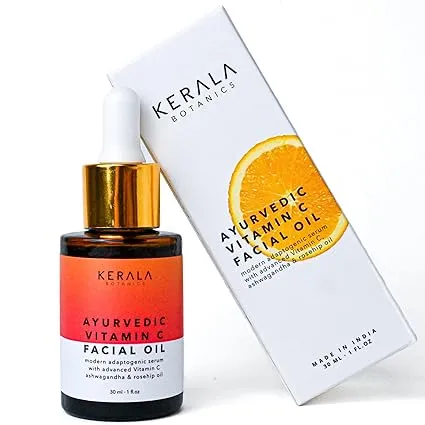
Ayurvedic Vitamin C Face Oil
Kerala Botanics
$49
★★★★☆
Algae-Derived Alternatives: The Interesting New Frontier
This is where it gets genuinely exciting — and where the hype-to-evidence ratio requires some scrutiny.
Biossance and the Sugarcane-to-Retinol Pipeline
Biossance’s Squalane + Phyto-Retinol Serum is built around a compound called bidens pilosa extract, sometimes marketed as “phyto-retinol.” It’s derived from a plant (bidens pilosa, a flowering herb), not algae specifically, but it sits in the same functional category. The mechanism: it acts on retinoid receptors without being a retinoid itself, similar to bakuchiol’s general approach but through a different compound entirely.
Does it work? User reviews are genuinely warm. The irritation profile is very low. The clinical evidence is thinner than bakuchiol — Biossance funds most of the research, which is worth noting — but the texture is lovely, it layers well, and for anyone whose skin simply cannot handle even a low-dose retinol, it’s a reasonable option.
Squalane + Phyto-Retinol Serum
Biossance
$62
★★★★☆
Algae Extracts Proper
A few brands are now working with actual algae-derived compounds — primarily extracts from Laminaria and Undaria species (brown seaweeds) — that have shown some retinoid-like activity in early research. The theory is sound: certain algae produce compounds that influence cell signaling in ways that parallel retinoid pathways.
The honest assessment right now: we’re early. The in-vitro data is promising. The in-vivo human trials are sparse. Brands will market these extracts as “retinol alternatives” and they may well be, eventually, but anyone who tells you algae extract has the same evidence base as retinol is selling you something.
If you want a proper breakdown of where algae sits compared to bakuchiol and retinol, our algae retinol vs bakuchiol vs retinol guide goes deep on the science without the spin.
Next-Gen Retinoids: The Gentler Prescription Adjacent
Here’s where things get a bit more interesting for people who actually want retinoid activity — not just a workaround.
Retinaldehyde (retinal) sits one conversion step closer to retinoic acid than retinol does. That means your skin does less enzymatic work to convert it, which translates to more potency at lower concentrations and, when formulated well, a much better tolerance profile than tretinoin.
The EU cap applies to retinol specifically. Retinaldehyde is regulated differently, which is part of why brands like Medik8 have invested heavily in it. The Crystal Retinal line is the most well-known example. It starts at 0.01% (their “level 1”) and scales up — the level 3 formula is what most people with some retinoid experience can handle comfortably.
I’ve been using Crystal Retinal 3 for about four months and it’s genuinely impressive. Less drama than tretinoin at similar efficacy — texture improvement, more even tone, the works. If you’re coming off a stronger retinol or you’re retinoid-experienced but intimidated by tretinoin, this is a smart middle ground.
Crystal Retinal 3
Medik8
$55
★★★★½
For a full comparison of retinol, retinaldehyde, and tretinoin and how to figure out which level you actually need, Retinol vs Retinaldehyde vs Tretinoin is the piece to read.
Hydroxypinacolone Retinoate (HPR): The Ester Option
HPR is a retinoic acid ester — it binds directly to retinoid receptors without needing conversion, but because it’s a gentler, stabilized form, the irritation is significantly lower than tretinoin. The Allies of Skin Molecular Saviour Retinoate Serum uses it, and it’s one of the more sophisticated formulations in the next-gen retinoid space.
At $105 it’s not cheap. But the HPR concentration is meaningful, the supporting cast of peptides and antioxidants is genuinely thoughtful, and for skin that’s struggled to tolerate anything in the retinoid family, it’s worth considering. The EU’s regulations treat HPR differently from retinol, which is partly why brands are investing in it.
Molecular Saviour Retinoate Youth Serum
Allies of Skin
$105
★★★★½
How to Actually Choose
The category is legitimately wide now, so here’s a practical way to think about it.
If you’ve never used retinol and you want to start simply: Bakuchiol is a genuinely good entry point. Lower risk, real evidence, and it plays nicely with the rest of your routine without demanding a skin-cycling schedule. Pair it with vitamin C in the morning and you’ve covered a lot of ground. Skin cycling becomes less urgent when your actives are this gentle.
If you want retinoid activity but your skin is reactive: Retinaldehyde, specifically in a well-formulated product like Crystal Retinal, gives you closer-to-clinical results with a tolerance profile that sensitive skin can usually handle. Start at the lowest level and don’t rush.
If you’re pregnant or might become pregnant: Stick to bakuchiol. The evidence for safety is strongest here, and most derms are comfortable recommending it. Avoid retinaldehyde and HPR during pregnancy — even if they’re gentler, they’re still retinoids.
If you’re interested in natural/clean formulations: Bakuchiol in an oil base or alongside botanical actives is a real category now, not just greenwashing. Just read the INCI list. “Phyto-retinol” on the front label doesn’t tell you what’s actually doing the work.
If you’re in the EU and your current retinol product is being reformulated: This is probably why you’re here. Retinaldehyde and HPR aren’t caught by the same cap. Worth exploring before you assume your entire routine needs to change.
One thing to know regardless of which route you take: don’t skip sunscreen. Every retinoid and retinoid-adjacent ingredient increases photosensitivity to some degree. The how much sunscreen to apply guide is a quick read if you want to make sure you’re actually getting the protection the SPF number promises.
The Ingredients That Are Mostly Hype
Quick housekeeping, because this category has attracted some noise.
Rosehip oil as “natural retinol”: It contains tretinoin precursors in very small amounts. Not enough to replicate retinol activity in any meaningful clinical sense. It’s a lovely oil with real benefits — just not those particular ones. We went deep on this in Rosehip Oil: The ‘Natural Retinol’ Base Oil, Evidence-Checked.
Random “plant stem cell” complexes marketed as retinol alternatives: Usually apple or grape stem cells. These tend to be stability theater. Plant stem cells can’t survive cosmetic processing in a form that interacts with human skin cells the way the marketing suggests.
Anything claiming “retinol-equivalent results without any irritation, ever”: If it’s genuinely working like retinol, your skin is going to notice. Some adaptation is part of the deal.
Putting It All Together
The EU cap on retinol concentration is a real regulatory change, and it’s worth understanding — but it’s also catalyzed genuinely useful innovation. We have better options now for people who couldn’t tolerate retinol, more sophisticated alternatives for people who want retinoid activity without the prescription, and a maturing conversation around plant-based actives that goes beyond “it worked in an in-vitro study.”
The honest summary:
- Bakuchiol is still the best-evidenced plant-based option. Slower, gentler, pregnancy-friendly.
- Retinaldehyde is the best next-gen retinoid for people who want real results without tretinoin-level drama.
- HPR is worth exploring if you’re retinoid-sensitive and want to spend on a sophisticated formula.
- Algae extracts are interesting and probably the next wave — just not there yet on the evidence front.
- “Phyto-retinol” and plant stem cells vary wildly. Read the full ingredient list before buying.
Whatever you choose, pair it with a solid barrier routine. Retinoids and their alternatives work harder when your skin isn’t already stressed. If you’re not sure where your barrier stands, Skin Barrier Burnout is a good gut-check before you add anything new.
The category is moving fast. The EU cap isn’t going away, and brands that can formulate around it without sacrificing efficacy will have a significant edge. Keep an eye on HPR and the algae-derived space specifically — those are the two areas I’d watch most closely over the next couple of years.