
Ingredients
Marula vs Argan Oil: Which Suits Your Skin
Marula vs argan oil: how oleic-heavy marula and balanced argan differ, which suits dry, oily, or combination skin, and where a vitamin C face oil fits in.
Disclosure — This article may contain affiliate links. We earn a small commission at no extra cost to you when you purchase through our links. This supports our ability to create independent, evidence-based skincare content.
Marula and argan get lumped together as “that nice golden oil from Africa.” They’re not interchangeable. Marula is oleic-heavy, which makes it rich and cushiony. Argan is more balanced between oleic and linoleic acid, which makes it lighter and easier for more skin types to live with.
This guide explains that difference in plain language. You’ll learn which oil suits dry, oily, combination, or reactive skin, how to use each one, and where a vitamin C oil belongs in the same conversation. Because here’s the thing: neither marula nor argan is a treatment. They’re carriers. What you want to do with your skin decides which carrier, if any, you need.
The Quick Answer
Pick marula if your skin is dry, tight, or mature, and you want a richer finish that cushions the barrier.
Pick argan if you’re normal, combination, or dry-leaning but easily congested, and you want something softer on the skin that absorbs faster.
Skip both, or at least be careful, if your skin is very oily or breakout-prone and you haven’t patch tested.
Want a face oil that does a specific job on top of moisturizing? That’s where the vitamin C option comes in, further down.
Oleic vs Linoleic: The Framing That Explains Everything
Every plant oil is a mix of fatty acids. Two of them matter most for your face: oleic acid and linoleic acid. We go deep on this in Linoleic vs Oleic: The Fatty Acid Ratio That Decides If an Oil Breaks You Out, but here’s the short version.
Think of oleic acid as a wool blanket. It’s thick, cozy, and great when you’re cold. It also traps heat, and some people get stuffy under it.
Linoleic acid is more like a cotton tee. Lighter, more breathable, easier to wear all day.
Oils high in oleic acid tend to feel richer and sit on top of the skin longer. Oils with more linoleic acid tend to feel thinner and sink in faster. Some research has also found that skin prone to clogged pores often has lower levels of linoleic acid in its surface oils. That’s a pattern, not a rule, and it’s the reason linoleic-rich oils get recommended so often for congestion.
Now the numbers. They shift a little from batch to batch, but roughly:
- Marula oil: about 70 to 78 percent oleic acid, with only a small amount of linoleic.
- Argan oil: about 43 to 49 percent oleic acid and 29 to 36 percent linoleic, plus a decent amount of vitamin E.
Same family of “luxury golden oils,” very different chemistry.
Marula Oil: The Rich, Cushiony One
Marula oil is pressed from the kernels of the marula fruit tree, native to southern Africa. The oil is high in oleic acid, which is why it feels so plush.
What it does well: It softens, smooths, and seals. If your skin is dry, flaky in winter, or just tired, marula can make it feel noticeably more comfortable. It also layers well as the last step over a hydrating serum, where it helps hold water in.
Who it’s for: Dry and mature skin, people with a compromised barrier who tolerate oils, and anyone who loves a dewy finish.
The cons: Because it’s so oleic-heavy, it can feel heavy on combination skin and may not sit well on skin that clogs easily. The finish is also slightly more noticeable than argan. And marketing sometimes leans on the vitamin C content of the marula fruit. The pressed kernel oil is not a stand-in for a real vitamin C product, so don’t buy it for that.
A note on comedogenic ratings, since you’ll see marula listed as a “3” or “4” on some charts. Those numbers came from old rabbit-ear tests and don’t predict what happens on human faces very well. We unpack that in Comedogenic Ratings, Debunked. Use the fatty acid profile as a rough guide and your own skin as the final judge.
For a no-frills version, The Ordinary’s cold-pressed marula is hard to argue with at about $10. It’s unscented, simple, and does what marula does.
100% Cold-Pressed Virgin Marula Oil
The Ordinary
$10
★★★★☆
Argan Oil: The Balanced All-Rounder
Argan oil comes from the kernels of the argan tree, grown in Morocco. It has become shorthand for “face oil” in a lot of bathroom cabinets, and honestly, the reputation is mostly earned.
What it does well: Argan’s oleic and linoleic acids are in a much more even split, so it feels lighter and spreads easily. It also contains tocopherols (vitamin E compounds), which help protect the oil itself and offer some antioxidant benefit on skin. Think of it as a good everyday moisturizer booster rather than a heavy sealant.
Who it’s for: Normal, combination, and dry skin, especially if marula feels like too much. It’s also a sensible first oil if you’re new to the category.
The cons: It’s not magic. The “anti-aging miracle” claims on some bottles go further than the evidence does. Argan is a nice emollient with some antioxidants, and that’s the honest summary. Quality also varies a lot. Cheap, refined, or diluted argan can smell off or feel greasy, so look for cold-pressed, 100 percent argan, ideally in a dark glass bottle.
100% Organic Cold-Pressed Moroccan Argan Oil
The Ordinary
$10
★★★★☆
Where a Vitamin C Oil Fits
Here’s the gap in the marula vs argan debate. Both are plain carrier oils. They moisturize and soften. Neither one tackles dark spots, dullness, or fine lines in any meaningful way.
If those are your goals, you’d normally add a separate vitamin C serum and a moisturizer on top. An oil-based vitamin C does it differently, using the oil itself as the delivery vehicle. We break down the trade-offs in Vitamin C Serum vs Vitamin C Oil: Which Is Right for You?.
One option in that category is Kerala Botanics’ Ayurvedic Vitamin C Face Oil. It pairs a stabilized form of vitamin C with bakuchiol, a plant-based alternative to retinol, in an oil base. The brand says its vitamin C form is up to four times more effective than standard L-ascorbic acid and stays in skin cells far longer. Those are the brand’s claims, and the independent data behind them is thinner than what exists for SkinCeuticals C E Ferulic. Treat the numbers as promising, not proven.
What we like is the simplicity. Where marula or argan would only be your moisturizer step, this oil can replace the serum, the moisturizer, and the oil, so you’re down to cleanser, oil, and sunscreen. If you’re a fan of Ayurvedic-style routines, it fits right in. Curious about the traditional side? Our guide to Modern Ayurvedic Skincare covers what that tradition got right.
The honest downsides:
- Oil format isn’t for everyone. If your skin is very oily, you may find it too much. Our piece on Kerala Botanics for oily skin walks through who should try it and who should pass.
- It can feel heavy under makeup for some people, so give it a few minutes to settle before foundation or sunscreen.
- Less clinical data than the big-name vitamin C serums.
- It costs $49, which is far more than a $10 bottle of argan. You’re paying for a multitasking formula, not a simple oil.
If you want to compare the carrier oils in this formula with the ones in this guide, the Kerala Botanics ingredient breakdown lists what’s in the bottle.
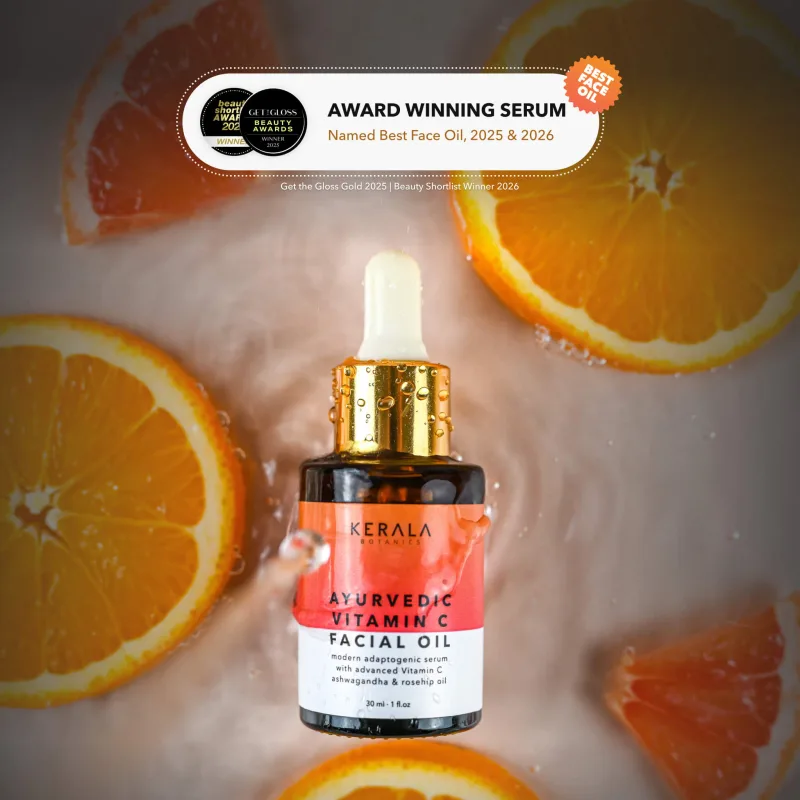
Ayurvedic Vitamin C Face Oil
Kerala Botanics
$49
★★★★☆
Side by Side
| Marula | Argan | Vitamin C face oil (Kerala Botanics) | |
|---|---|---|---|
| Main fatty acid | Oleic (very high) | Oleic and linoleic, more balanced | Varies by formula; check the label |
| Feel | Rich, cushiony | Light to medium | Medium; takes a few minutes to settle |
| Best for | Dry, mature skin | Normal, combination, dry-leaning | Dullness, uneven tone, simplified routines |
| Active benefits | Mostly emollient | Emollient plus vitamin E | Vitamin C plus bakuchiol |
| Watch out for | Heaviness, congestion | Low-quality, refined bottles | Oily skin, layering under makeup |
| Typical price | About $10 | About $10 | $49 |
How to Choose by Skin Type
Dry or mature skin
Start with marula. The oleic richness is exactly what thirsty skin wants. Press two or three drops over a hydrating serum or damp skin at night.
Combination skin
Argan is your safer bet. You get cushioning where you need it without a heavy film on your T-zone. If you only feel dry in patches, apply oil to those areas rather than the whole face.
Oily or acne-prone skin
Be careful with both. Argan is the more reasonable choice thanks to its linoleic content, but go slow. We cover this in face oil for oily, acne-prone skin. Patch test first, and add one oil at a time so you know what’s responsible if something changes.
Sensitive or reactive skin
Choose a single-ingredient, fragrance-free oil and skip anything with added essential oils. Marula and argan are both usually well tolerated, but “usually” isn’t “always.” Test behind the ear or on the jaw for a few days before committing.
You want more than moisture
Pick a formula with an active ingredient, like the vitamin C oil above, and keep your routine short. Plain marula or argan can still be a nice add-on on dry nights.
How to Use Face Oils Without Messing It Up
A few rules save a lot of regret.
Less is more. Two to four drops is plenty for the whole face. If your skin feels slick an hour later, you used too much.
Apply to damp skin. Oils seal in water; they don’t add it. A hydrating serum or even a splash of water underneath gives the oil something to hold in.
Oil goes after water-based products and before sunscreen in the morning, or last at night. Our guide to how to use facial oils covers layering in more detail.
Check the bottle. Dark glass, a short ingredient list, and a recent manufacture date all help. Oils go rancid, and a stale one smells like old crayons.
Patch test. Always. Even for the “gentle” stuff.
Putting It All Together
Marula and argan are both good oils, just for different people. Marula is rich, oleic-heavy, and ideal for dry or mature skin that wants cushioning. Argan is lighter and more balanced, a safer starting point for normal and combination skin.
Neither one fixes dark spots or fine lines. If that’s what you want, look at an oil that actually carries an active, like Kerala Botanics’ vitamin C formula, and accept that you’re trading a $10 bottle for a $49 multitasker with some honest caveats about texture and clinical data.
Our recommendation: if you have never used a face oil, start with argan. If your skin is properly dry, go marula. If your goal is brightening and a shorter routine, try the vitamin C oil. For more picks across every skin type, see our roundup of the best facial oils of 2026.
Pick one, patch test it, and give it a few weeks before you decide. Your skin will tell you.