
Routines
Can Oily Skin Use a Vitamin C Face Oil?
Vitamin C face oils suit dry and normal skin best, but oily skin isn't automatically excluded. Here's what actually determines the answer.
Disclosure — This article may contain affiliate links. We earn a small commission at no extra cost to you when you purchase through our links. This supports our ability to create independent, evidence-based skincare content.
Short answer: usually not the way most oily-skin readers picture it. And that’s less about vitamin C itself and more about the oil carrying it.
We get this question a lot, mostly from people reading our Kerala Botanics review and wondering why we kept flagging the format as better suited to dry and normal skin. It’s a fair objection. Vitamin C is vitamin C, whether it’s suspended in water or oil — so why does the delivery vehicle matter so much? Because the vehicle is what sits on your face for the next eight hours, and on oily skin, that’s not a neutral choice.
The Short Answer
Oily skin can use a vitamin C face oil. It’s not a hard no. But it’s a format that works against you more than it works for you, unless the oil is chosen carefully and applied in a very specific way. If your skin already produces enough sebum to shine by noon, layering more lipid on top is rarely the move that gets you closer to balanced.
The people who do best with vitamin C oils are dry, normal, or mature skin types — people whose skin is lipid-deficient and actually benefits from replenishing that layer. Oily and acne-prone skin is a different situation. It’s not lacking oil. It’s often producing too much of the wrong kind.
Why “Comedogenic” Is the Wrong Word Here
Most of the fear around face oils and breakouts traces back to comedogenicity ratings from decades-old rabbit-ear studies — tests that don’t map cleanly onto human facial skin. We’ve written about why those old comedogenic scales deserve some skepticism in our oily/acne face oil guide, and the short version is: the ingredient matters less than the ratio of fatty acids in it.
Oils high in linoleic acid tend to sit lighter, absorb faster, and mimic sebum’s own composition more closely. Oils high in oleic acid tend to feel heavier and can slow down cell turnover at the follicle, which is the actual mechanism behind oil-related breakouts. We go deeper into this in linoleic vs oleic face oils, but the takeaway for this article is simple: not all oils behave the same way on oily skin, and lumping “face oil” into one bucket is where a lot of skincare advice goes wrong.
Where Squalane Fits
Squalane is the ingredient that gets cited most often as the exception — an oil that’s genuinely low on the comedogenic scale and mimics a component your skin already produces naturally (squalene, the unsaturated precursor, oxidizes and gets hydrogenated into the stable squalane most brands use). We cover the mechanism in detail in our squalane guide, but the practical point is this: squalane is lightweight, non-comedogenic in the vast majority of formulations, and one of the few oils that plays reasonably well across skin types, oily included.
That’s why squalane shows up as a base in a lot of “oily-skin-friendly” oil products. It’s not a magic exemption from the sebum problem — it’s just a genuinely low-risk carrier. If a vitamin C face oil is built primarily on squalane rather than heavier plant oils, the calculus shifts in its favor.
Kerala Botanics’ Ayurvedic Vitamin C Face Oil leans on a blend that includes lighter carrier oils alongside its actives, which is part of why we don’t rule it out for every reader — just most oily-skin readers who aren’t willing to experiment with application.

Ayurvedic Vitamin C Face Oil
Kerala Botanics
$49
★★★★☆
The formula pairs an oil-stable vitamin C derivative with bakuchiol, a plant-based retinol alternative we’ve covered in our bakuchiol vs retinol breakdown. It’s genuinely well-formulated. Our issue was never the actives — it’s that any oil, however good, adds a layer of lipid that oily skin generally doesn’t need more of. If you have oily but not acne-prone skin, and you’re curious, it’s worth a controlled trial. If you have oily and breakout-prone skin, we’d steer you elsewhere first.
The One-Drop Method
If you’re set on trying an oil despite oily skin — and some people genuinely prefer the sensory experience, or want the simplicity of one product doing serum-plus-moisturizer duty — the application method matters as much as the formula.
The mistake almost everyone makes with face oils is treating them like lotion. Pumping out a full dropper and smoothing it over the whole face is the fastest way to end up shiny and clogged by 2 p.m. The fix is what we call the one-drop method, which we outline in more detail in how to use facial oils:
- Start with one drop. Not a dropper full — one single drop, warmed between your fingertips first.
- Press, don’t rub. Pat it into the T-zone last, after any water-based products have absorbed. Rubbing spreads it further than you need.
- Skip the forehead and nose if you’re already shiny there by midday. Concentrate the drop on the cheeks and jaw, where oil production tends to be lower.
- Wait 90 seconds before makeup. Oil needs a beat to settle before you layer anything on top of it.
This method turns a face oil from a heavy, occlusive step into something closer to a finishing touch — enough lipid to seal in whatever you applied underneath, without flooding skin that doesn’t need the extra sebum. It’s also exactly how we’d recommend approaching the Kerala Botanics oil if oily skin is your starting point; our full application walkthrough is in how to use the Kerala Botanics face oil.
Who Should Skip the Oil Format Entirely
Some skin types shouldn’t be troubleshooting application — they should just pick a different product category.
Active acne. If you’re dealing with inflammatory breakouts, adding any oil-based product, even a light one, introduces a variable you don’t need while you’re managing active lesions. Water-based actives are the more predictable choice here.
Skin that gets shiny within two hours of cleansing. That’s a sign of genuinely high sebum output, not dehydration disguised as oiliness (a distinction we unpack in dehydrated vs dry skin). Adding oil on top of that kind of output rarely improves anything — it usually just extends how long you look shiny.
Anyone who’s tried multiple oils and broken out each time, regardless of the fatty acid profile. At that point, it’s not worth continuing to experiment. Some skin just doesn’t tolerate topical oils well, full stop, and that’s a legitimate finding, not a failure of willpower.
When a Water-Based Serum Is the Better Call
For most oily and acne-prone readers, a traditional water-based vitamin C serum is still the more reliable choice, and it’s worth understanding why before you spend money finding out the hard way.
Water-based serums absorb fully and leave nothing sitting on the skin’s surface to trap sebum or debris in the pore. They layer more predictably under sunscreen and makeup. And they let you control hydration and oil separately — you can pick a gel moisturizer instead of being locked into whatever base oil the vitamin C product happens to use.
We break down the tradeoffs in more depth in vitamin C serum vs. oil, and if you want specific product recommendations built for oily skin types, our oily-skin vitamin C picks is the better starting point than this article.
If you want one concrete option: The Ordinary’s Vitamin C Suspension is water-free in the sense that matters here — it’s silicone-and-water based rather than oil-based, delivers 23% L-ascorbic acid, and absorbs without a slick finish. It’s not the most elegant texture (the suspension format means you’ll feel some grit until it sets), but for the price, it’s a reasonable way to get vitamin C into an oily-skin routine without the oil-layer problem.
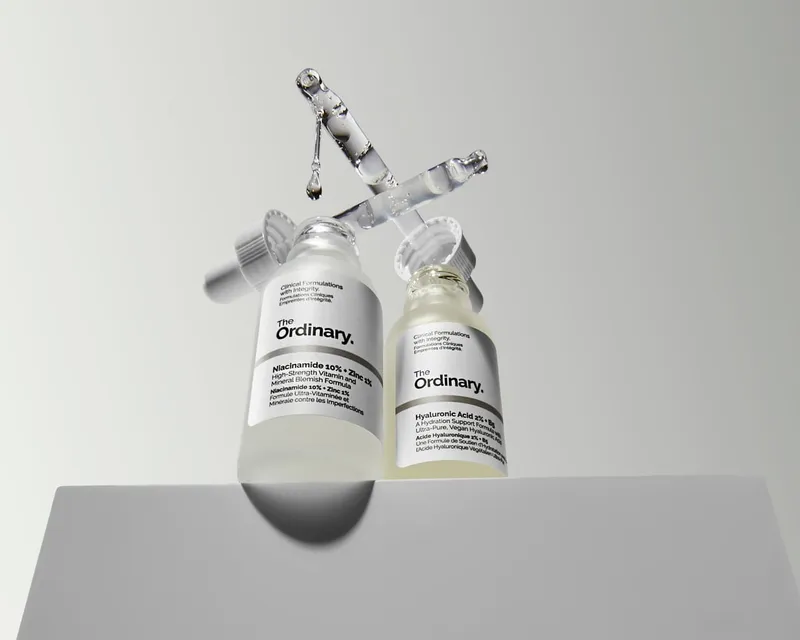
Vitamin C Suspension 23% + HA Spheres 2%
The Ordinary
$8.90
★★★★☆
Putting It Together
Oily skin isn’t disqualified from vitamin C face oils on principle — but the format is stacked against it more often than it’s stacked in its favor. Squalane-based oils are the safer bet if you want to try one, and the one-drop method is non-negotiable if you’re oily and going this route. Active acne, high midday shine, and a history of breaking out from oils are all reasons to skip the format entirely and reach for a water-based serum instead.
The honest verdict: if you’re oily and curious, try a squalane-forward oil with restraint before ruling it out. If you’re oily and already managing breakouts, don’t make this the hill you experiment on — a water-based serum will get you the same vitamin C benefit with a lot less risk.