
Ingredients
Linoleic vs Oleic: The Fatty Acid Ratio That Decides If an Oil Breaks You Out
Acne-prone skin is often linoleic-deficient. Here's the fatty acid ratio science that explains which face oils help—and which clog pores.
Disclosure — This article may contain affiliate links. We earn a small commission at no extra cost to you when you purchase through our links. This supports our ability to create independent, evidence-based skincare content.
Here’s a fact that still surprises people: if you have acne-prone or oily skin, your skin’s own sebum is probably short on linoleic acid. And that shortage is a big part of why you’re breaking out in the first place.
I know. It sounds backwards. You’re already oily, the last thing you want to slather on is more oil. But the research here is actually pretty compelling — and once you understand the difference between linoleic and oleic fatty acids, you’ll look at every face oil ingredient list completely differently.
This is the piece I wish existed when I was afraid to put anything remotely greasy near my face.
The Two Fatty Acids You Need to Know
Most face oils are made up of several fatty acids, but two dominate almost every formula: linoleic acid (omega-6) and oleic acid (omega-9). They have opposite properties, and your skin responds to them very differently.
Linoleic acid is lightweight, absorbs quickly, and — critically — is a key structural component of your skin barrier. Your body can’t produce it on its own. It has to come from diet or topical application. It’s also a precursor to ceramides, which are the lipids that hold your barrier together. Ceramides explained in more detail here.
Oleic acid is richer, heavier, and more occlusive. It’s the dominant fatty acid in olive oil and sweet almond oil. Your skin’s sebaceous glands produce it in abundance. It absorbs more slowly, sits on the surface longer, and on acne-prone skin, it has a tendency to plug follicles when it accumulates.
The ratio of these two — not just the oil type — is what determines whether a face oil helps your skin or sends you into a breakout spiral.
The Acne-Prone Sebum Study You’ve Probably Never Heard Of
In the 1980s and 1990s, a series of studies changed how dermatologists think about acne. Researchers comparing sebum samples from people with acne to those without found a consistent pattern: acne-prone sebum was significantly depleted in linoleic acid.
The hypothesis that emerged: when the skin is low on linoleic acid, it compensates by producing more oleic acid-rich sebum. That sebum is more viscous and more likely to form the sticky plugs (comedones) that set off the whole acne cascade. Linoleic-deficient sebum also appears to be more irritating to the follicle wall.
This isn’t a fringe theory. It’s been replicated enough that it shows up in mainstream dermatology literature and is the mechanism behind why some low-linoleic, high-oleic oils have comedogenic potential.
The practical takeaway: if your skin is already overproducing oleic-rich sebum, applying an oleic-heavy oil on top is redundant at best and pore-clogging at worst. Applying a linoleic-rich oil, on the other hand, helps replenish what your skin is actually missing.
The Ratio Table: Common Oils, Ranked
Most oils contain both fatty acids in varying proportions. Here’s where popular face oils actually land. Numbers are approximate — they vary by source, harvest, and processing.
| Oil | Linoleic (%) | Oleic (%) | Verdict for Acne-Prone Skin |
|---|---|---|---|
| Rosehip seed | 44–50% | 14–18% | High-linoleic. Generally well-tolerated. |
| Grape seed | 58–78% | 15–20% | Very high-linoleic. One of the lightest options. |
| Hemp seed | 50–60% | 10–15% | High-linoleic. Anti-inflammatory profile. |
| Sea buckthorn (seed) | 35–40% | 16–24% | Moderate-linoleic. Worth using diluted. |
| Sunflower | 60–75% | 14–20% | High-linoleic. Often used in barrier research. |
| Marula | 4–7% | 70–78% | High-oleic. Better for dry skin. |
| Argan | 28–38% | 43–49% | Balanced, slightly oleic-dominant. |
| Sweet almond | 20–30% | 60–70% | High-oleic. Risky for acne-prone. |
| Coconut (fractionated) | ~2% | ~6–8%* | Neither — mostly saturated MCTs. |
| Olive | 4–20% | 55–83% | High-oleic. Generally too heavy for acne-prone skin. |
| Jojoba | ~0% | ~11%** | Technically a wax ester. Different rules apply. |
*Coconut is dominated by lauric acid (a saturated fatty acid), which has antimicrobial properties but also a well-documented comedogenic reputation for some skin types.
**Jojoba is structurally similar to human sebum’s wax esters — it’s neither high-linoleic nor high-oleic in the usual sense, but it’s generally non-comedogenic and regulates oil production rather than adding to it.
The pattern is clear. Rosehip and grape seed sit at the top of the linoleic scale. Olive, sweet almond, and marula are on the opposite end.
What “Comedogenic” Ratings Actually Mean (And Why They’re Imperfect)
You’ve probably seen comedogenic ratings — a 0–5 scale used to predict whether an oil will clog pores. The problem is those scales were mostly derived from rabbit ear tests in the 1970s. Rabbit ear tissue is significantly more reactive than human facial skin. And the concentration of the ingredient matters enormously — something that’s mildly comedogenic at 100% concentration may be fine at 3% in a formula.
The linoleic/oleic framework is more useful than a comedogenic number alone, because it gives you a why. A high-oleic oil isn’t bad because of some arbitrary rating — it’s potentially problematic for acne-prone skin because it adds to an existing oleic surplus that your skin is already struggling with.
That said, individual response varies. Some people with acne-prone skin do fine with argan oil. Some don’t. Start with a patch test, use the ratio as a starting hypothesis, and adjust based on how your actual skin responds.
If you’re unsure how to layer oils into a routine, this guide on how to use facial oils walks through application order and timing.
The Best High-Linoleic Oils for Acne-Prone Skin
Grape Seed Oil
This is probably the most underrated oil in skincare. Linoleic content of 58–78% makes it one of the highest available. It’s nearly colorless, absorbs fast, and has a skin feel that’s genuinely closer to a lightweight serum than what most people imagine when they hear “face oil.”
It’s also cheap enough that you can use it generously without wincing at the cost.
Grape Seed Oil 100% Pure
NOW Solutions
$14
★★★★½
Rosehip Seed Oil
Rosehip gets recommended constantly, and for once the hype is mostly deserved. The linoleic acid content is high (around 44–50%), but the reason it appears in so many brightening routines is the natural trans-retinoic acid precursors it contains — the reason people call it “natural retinol,” though that framing is a stretch. The evidence behind that claim is unpacked in full here.
For acne-prone skin, it’s worth knowing that rosehip oxidizes faster than most oils — it’s high in polyunsaturated fatty acids, which are reactive. Buy it in small bottles, store it dark and cool, and don’t keep it past three to six months.
Rosehip Seed Oil
Trilogy
$27
★★★★½
Kerala Botanics Ayurvedic Vitamin C Face Oil
This one sits in a different category — it’s not a pure carrier oil but a formulated product. The base is rosehip and grape seed, which keeps the overall fatty acid profile firmly in high-linoleic territory. On top of that, Kerala Botanics uses an advanced vitamin C derivative that they describe as staying in skin cells significantly longer than standard L-ascorbic acid serums, plus bakuchiol — the plant-based retinol alternative worth understanding if you’re curious about the comparison.
What makes it interesting as an entry in this conversation: the oil format means the vitamin C is delivered alongside linoleic-rich carrier oils rather than dissolved in water, which suits drier-leaning acne-prone skin better than it would suit very oily types. People with extremely oily skin may find it a bit much as a standalone moisturizer — that’s the honest caveat. But if you’re combination, or you’re looking to replace a serum, a vitamin C treatment, and a facial oil in one step, it’s a solid way to do it while staying in linoleic territory.
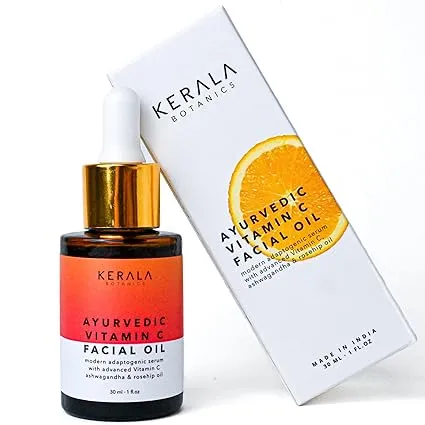
Ayurvedic Vitamin C Face Oil
Kerala Botanics
$49
★★★★☆
Squalane
Technically not a fatty acid oil in the linoleic/oleic sense at all — squalane is a hydrocarbon. It doesn’t add to your oleic or linoleic load either way. What it does is mimic your skin’s own squalene (a sebum component) and act as a lightweight emollient. It’s compatible with essentially every skin type, absorbs cleanly, and won’t oxidize. If you’re nervous about introducing any oil, squalane is the safest starting point by a wide margin.
The Ordinary 100% Plant-Derived Squalane
The Ordinary
$9
★★★★½
Oils to Be Careful With If You Break Out Easily
This isn’t a blacklist. It’s just being honest about the oleic math.
Olive oil is the worst offender in the “natural = gentle” misunderstanding. It’s 55–83% oleic. It’s also been shown in some studies to disrupt barrier function in neonates and eczema-prone skin. You probably shouldn’t put it on your face if you’re breakout-prone, no matter how many Italian grandmothers have.
Sweet almond oil is 60–70% oleic. It’s lovely for the body, fine for very dry facial skin. Acne-prone? Risky.
Coconut oil is a special case. It’s not high in oleic — it’s high in saturated lauric acid, which is antimicrobial. Some people swear by it. But it’s on almost every comedogenic list for a reason, and the range of reactions is wide enough that I’d test carefully on a small area before committing.
Argan is the nuanced one. At 43–49% oleic and 28–38% linoleic, it’s balanced enough that many acne-prone people use it without issues — especially in small amounts. It’s a closer call than the others.
How to Actually Use This Information
A few practical moves:
Read ingredient lists differently. If a facial oil or serum contains sweet almond, olive, or avocado oil (another high-oleic option at ~70%) high up in the list, that’s the dominant fatty acid profile. The positioning matters.
Go high-linoleic for oily and acne-prone skin. Start with grape seed, rosehip, or hemp seed. Use a small amount — a drop or two — and apply after any water-based serums but before SPF in the morning, or as your final step at night. For more on order, this routine guide covers layering in detail.
Oxidation is real. Linoleic-rich oils (polyunsaturated) oxidize faster than oleic-rich ones (monounsaturated). Oxidized oil is inflammatory and potentially more comedogenic than fresh oil. Store them properly. Buy smaller bottles. This is one reason formulated products with antioxidant stabilizers — vitamin C, vitamin E, rosemary extract — are sometimes more practical than raw carrier oils sitting on a bathroom shelf.
Expect variation. If you’ve tried rosehip and broken out, it doesn’t necessarily mean high-linoleic oils are off the table. The issue may have been oxidation, other formula ingredients, or a graininess in application. Try grape seed separately. Compare results.
If you’re specifically navigating oil-based approaches alongside face oils designed for oily and acne-prone skin, that piece has more product-specific testing notes worth reading alongside this.
Putting It All Together
The linoleic/oleic framework explains something that confused people for years: why oily skin can benefit from the right facial oil. Acne-prone sebum is consistently low in linoleic acid. Replenishing it topically — with high-linoleic oils like grape seed, rosehip, or hemp seed — supports barrier function and may help normalize sebum composition over time. High-oleic oils (olive, sweet almond, avocado, marula) add to the fatty acid profile your skin is already overproducing, which can make things worse.
The ratio matters more than the comedogenic rating. The oxidation state of the oil matters too. And individual variation means a patch test is still the only honest way to know for certain.
Start with the science, then let your skin have the final word.