
Ingredients
Waterless Skincare: What 'No Water, No Preservatives' Really Means
Waterless skincare isn't just a trend. Here's the real chemistry behind anhydrous formulas, why they skip preservatives, and what they can't do.
Disclosure — This article may contain affiliate links. We earn a small commission at no extra cost to you when you purchase through our links. This supports our ability to create independent, evidence-based skincare content.
The “no water, no preservatives” claim sounds simple. It’s not wrong, exactly — but it’s missing about half the story.
Waterless skincare has grown from a niche formulation category into a genuine marketing angle, with brands leaning hard on sustainability credentials and clean-beauty appeal. Some of that is earned. Some of it is positioning. Understanding the chemistry behind it helps you separate the two.
Here’s what anhydrous formulas actually are, why water creates the need for preservatives in the first place, and where the format genuinely delivers — and where it doesn’t.
Why Water and Preservatives Go Together
Water is not inert in a skincare formula. The moment you introduce water — even highly purified, deionized water — you create an environment where bacteria, mold, and yeast can grow. Microorganisms need moisture to survive. Remove the moisture, and there’s nothing to colonize.
Most conventional skincare products are water-based. A typical moisturizer might be 60–80% water. Toners, essences, serums, and gel cleansers are mostly water with active ingredients dissolved in or suspended through it. That water phase is biologically active enough to support microbial growth within days or weeks if left unpreserved.
So preservatives aren’t added arbitrarily. They’re added because the formula requires them to stay safe. Parabens, phenoxyethanol, sodium benzoate, ethylhexylglycerin — these are the ingredients keeping your moisturizer from becoming a petri dish by the third week of use.
This is a feature, not a flaw. A properly preserved water-based product is safe to use for 12–24 months. An improperly preserved one can cause serious skin infections. If you’re interested in how to read what’s actually in your formulas, how to read skincare ingredient labels is worth a look.
The clean-beauty industry sometimes frames preservatives as the enemy. They’re not. The real question is whether your formula needs them — and anhydrous formulas, genuinely, don’t.
What “Anhydrous” Actually Means
Anhydrous means containing no water. In skincare, this covers a specific category of formats: facial oils, balms, waxes, butter-based products, oil serums, and some solid formats like cleansing balms and oil-based sunscreen sticks.
When a product contains zero water — not even in a minor ingredient that’s water-based — there’s nothing for microorganisms to grow in. The formula is self-preserving by nature. No synthetic preservative system is needed.
This is the legitimate chemistry behind the claim. It’s not marketing language. An anhydrous oil product genuinely does not require preservatives to stay safe for its expected shelf life.
What it does need: antioxidants. Oils oxidize over time through exposure to light, heat, and air. Vitamin E (tocopherol), rosemary extract, and astaxanthin are common additions that slow oxidative rancidity. These are not preservatives in the traditional sense — they’re protecting the oil from degrading, not from microbial contamination.
A product that includes “no parabens, no preservatives” in its marketing because it’s anhydrous isn’t making a safety compromise. It’s accurately describing its chemistry. But a water-based product making the same claim is a different story — that one warrants scrutiny.
What Anhydrous Formulas Can Do
Face oils and anhydrous products have a genuine functional profile. A few things they do well:
- Occlusion. Oils sit on top of the skin and slow transepidermal water loss. This is especially useful in dry climates, during winter, or for anyone whose barrier is compromised. Our guide on barrier-adaptive moisturizers covers when this becomes relevant.
- Lipid delivery. Skin barrier lipids — ceramides, fatty acids, squalane — are oil-soluble. Anhydrous formats can deliver these efficiently without diluting them in water.
- Stability for oil-soluble actives. Certain vitamin C derivatives, fat-soluble antioxidants, and retinol alternatives perform better in an oil carrier than in a water-based serum. If you’re curious about how that plays out specifically with vitamin C, vitamin C serum vs oil breaks it down.
One product worth discussing here is the Kerala Botanics Ayurvedic Vitamin C Face Oil ($49). It’s a fully anhydrous formula — which is exactly why it skips preservatives without making any compromise. The vitamin C it uses is an advanced oil-soluble derivative that’s designed to stay stable in the oil carrier and remain in skin cells significantly longer than standard L-ascorbic acid. It also contains bakuchiol, a plant-based compound with a growing body of evidence supporting its use as a retinol alternative. More on that at bakuchiol vs retinol.
The honest case against it: an oil format won’t work for everyone. If your skin trends oily or acne-prone, layering another oil on top may not be welcome. It can also feel heavy under makeup if absorption time is rushed. But as a multi-step replacement — serum, oil, and some of the moisturizing work in one product — it’s a reasonable option for the right skin type.
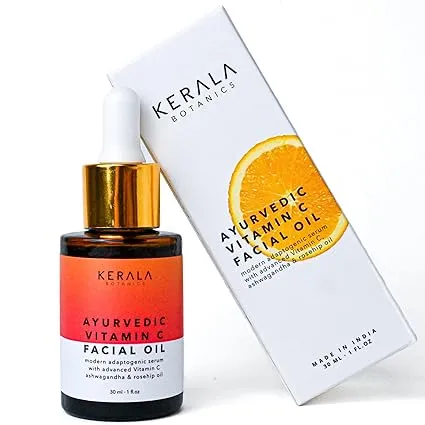
Ayurvedic Vitamin C Face Oil
Kerala Botanics
$49
★★★★☆
What Anhydrous Formulas Cannot Do
This is the part that gets skipped in the marketing.
Water-based ingredients don’t dissolve in oil. Hyaluronic acid, niacinamide, glycerin, water-soluble peptides — none of these can be delivered meaningfully through a pure oil formula. If your skin needs humectants to pull water into the epidermis, an anhydrous product isn’t doing that work. It might seal in moisture that’s already there, but it’s not adding it.
This matters for dry and dehydrated skin. The two aren’t the same — dehydrated vs dry skin explains the distinction properly — and conflating them leads to routines that feel heavy but don’t actually address what the skin needs.
An anhydrous product also doesn’t replace a water-based serum with actives like azelaic acid, niacinamide, or most forms of L-ascorbic acid vitamin C. These are water-soluble. They need water to work and to absorb properly.
So “waterless skincare” as a complete routine philosophy has real limits. As a format among several, it’s useful. As a wholesale replacement for everything water-based in your lineup, it’s often not the right call.
For most people, the practical question isn’t water-based vs. anhydrous. It’s which products in each category are worth using, and in what order. How to layer skincare gets into the sequencing logic.
The Sustainability Claim
Waterless skincare is frequently positioned as more sustainable than conventional products. The logic runs like this: if water is the primary ingredient and water is heavy, shipping water-heavy products generates more carbon than shipping concentrated, anhydrous ones. Plus, no water means no water usage in manufacturing.
That’s partially true. Anhydrous products are often more concentrated, so you use less per application. Shipping weight can be lower. And manufacturing doesn’t consume water as a formula ingredient.
But the full picture is more complicated.
Packaging still exists. If a face oil ships in a 30ml glass dropper bottle with a box, the environmental calculation includes that packaging — and glass is heavy and energy-intensive to produce. Some waterless brands use this claim while shipping in over-packaged formats that offset the gains.
Then there’s sourcing. Plant oils come from crops that require land, water, and agricultural inputs. A marula oil or rosehip oil isn’t inherently low-impact just because the finished product contains no added water.
None of this means the sustainability angle is false. Concentrated formulas generally do have a smaller footprint when the total lifecycle is measured carefully. But “no water” alone isn’t a complete sustainability credential. It’s one factor among several.
The Preservative-Free Claim in Water-Based Products
This is where the “no preservatives” messaging gets genuinely problematic.
Some water-based products market themselves as preservative-free. A few use fermentation, low pH, or high alcohol content to create a self-preserving environment. Some of these work. Others are genuinely under-preserved and pose a shelf-life or contamination risk.
A water-based product that’s truly free of any antimicrobial strategy is a product to be cautious about — especially if it’s sold without refrigeration and expected to last a year. If you’re curious how regulation currently handles these claims, MoCRA in 2026 covers how the FDA’s newer framework is changing what brands have to substantiate.
The anhydrous category doesn’t have this problem. The self-preserving nature is structural, not a claim requiring verification. That’s a legitimate differentiator.
Anhydrous Products Worth Knowing
A few formats that earn their place in this category:
Squalane. One of the cleanest anhydrous options — lightweight, non-comedogenic, shelf-stable. Biossance’s 100% Plant-Derived Squalane is a reliable single-ingredient option that works across skin types. Our full squalane guide covers why it behaves differently from heavier oils.
100% Plant-Derived Squalane
Biossance
$32
★★★★½
Marula oil. High in oleic acid, absorbs reasonably quickly, and stable enough to use as a standalone oil step. Drunk Elephant’s Marula Oil is a known quantity — it’s been around long enough that the formulation track record is clear.
Marula Pure Beauty Oil
Drunk Elephant
$40
★★★★½
If you’re working out how facial oils fit into a routine generally, how to use facial oils is a practical starting point.
Putting It All Together
Anhydrous skincare is a genuinely distinct category with real chemistry behind it. “No water, no preservatives” is accurate when the product is truly waterless — it’s not greenwashing in the strict sense. The self-preserving nature of oils and balms is structural, not claimed.
What the marketing tends to skip: anhydrous products can’t deliver water-soluble actives, and they’re not a complete routine on their own for most skin types. The sustainability story is real but partial.
The useful reframe is this — anhydrous products aren’t better or worse than water-based ones. They’re built to do different things. Knowing which format serves which function is more useful than picking a side.
If oil-based skincare fits your routine, it fits. If it doesn’t, a well-preserved water-based product is not a compromise. It’s just chemistry doing its job.