
Ingredients
Grape Seed Oil: The Lightweight Face Oil for Oily Skin
Grape seed oil is high in linoleic acid, low-comedogenic, and packed with antioxidants. Here's why it's the face oil oily skin can actually use.
Disclosure — This article may contain affiliate links. We earn a small commission at no extra cost to you when you purchase through our links. This supports our ability to create independent, evidence-based skincare content.
If you have oily skin, someone has probably told you to avoid face oils entirely. That advice is wrong, and I’ve spent years watching people with oily skin strip their faces raw trying to follow it. The real issue isn’t oil — it’s using the wrong oil. Grape seed oil is one of the few that actually makes sense for oily and acne-prone skin, and here’s why it deserves a closer look.
What Grape Seed Oil Actually Is
Grape seed oil is pressed from the seeds left over after grapes are processed for wine. It’s been used in cooking for decades, which might make it feel a little unglamorous as a skincare ingredient. But the same properties that make it a light, neutral cooking oil — its high polyunsaturated fat content and thin consistency — are exactly what make it interesting on your face.
The cold-pressed version retains the most beneficial compounds. Organic cold-pressed grape seed oil is what you want to look for, since conventional processing can degrade some of the more delicate antioxidants.
The Science: Why Oily Skin Tolerates It
Here’s the thing about oily skin and face oils — the problem usually isn’t oil itself, it’s the wrong fatty acid profile. Oils high in oleic acid (think coconut, marula, olive) tend to be heavier and can clog pores. Oils high in linoleic acid sit differently on skin. They’re lighter, absorb faster, and don’t have the same pore-clogging reputation.
Grape seed oil is around 70-76% linoleic acid. That’s one of the highest concentrations you’ll find in any plant oil.
There’s also a research-backed reason this matters specifically for acne-prone skin. People who break out tend to have lower levels of linoleic acid in their sebum, which makes the sebum thicker and more likely to clog pores. Applying linoleic-rich oils topically may help rebalance that ratio. The evidence is still building, but the theory is sound and lines up with what a lot of oily-skin people experience when they swap high-oleic oils for high-linoleic ones.
Comedogenicity: What the Numbers Actually Mean
Grape seed oil sits at around 1-2 on the comedogenicity scale, where 0 is non-comedogenic and 5 is basically guaranteed to clog pores. That’s comparable to squalane, which is the gold standard for non-clogging oils. No scale is perfect — individual skin still varies — but this is genuinely low risk compared to most plant oils.
Proanthocyanidins: The Antioxidant Nobody Talks About
Grape seed oil contains proanthocyanidins, a class of polyphenol antioxidants that are also found in grape seed extract supplements. These are potent free radical scavengers — some research suggests they’re stronger antioxidants than vitamin C or vitamin E on certain measures. For skin, that translates to protection against UV-induced oxidative stress, support for collagen cross-linking, and general anti-inflammatory activity.
They’re not going to replace your sunscreen. But as a supporting antioxidant layer in your routine, it’s a meaningful addition. If you’re interested in how antioxidants work together in skincare more broadly, this antioxidant guide is worth reading.
Vitamin E
Grape seed oil also contains vitamin E (tocopherol), which functions as both an antioxidant and a skin-conditioning agent. It’s not present in enormous quantities — rosehip oil beats it on vitamin E content — but it contributes to the oil’s stability and adds a gentle barrier-supportive effect.
How It Compares to Other Light Oils
Oily skin has a few solid options in the lightweight oil category. Grape seed is one. Squalane is another — it’s technically a hydrocarbon rather than a fatty acid oil, and it’s probably the most universally tolerated of the bunch. Rosehip oil is also high in linoleic acid (around 40%) and brings trans-retinoic acid esters, making it a good pick for anti-aging, but it oxidizes faster and smells more strongly.
Grape seed lands between squalane and rosehip in terms of feel. It’s thinner than rosehip, absorbs quickly, and has almost no scent. It doesn’t bring rosehip’s vitamin A-adjacent benefits, but it’s more stable and less likely to turn rancid before you finish the bottle.
If your main concern is keeping things light and non-comedogenic, grape seed and squalane are the two I’d put at the top of a shortlist.
How to Actually Use It
There are a few ways to bring grape seed oil into your routine, and which one makes sense depends on what you’re trying to accomplish.
As a Standalone Facial Oil (PM)
Apply 3-4 drops to clean, slightly damp skin after any water-based actives have fully absorbed. Pat it in — don’t rub. For oily skin, this works best at night, when you’re not layering it under sunscreen or dealing with mid-day shine.
If your skin is combination, you can concentrate it on drier areas and go lighter in the T-zone. A little goes further than you think.
Mixed Into a Moisturizer
Add a drop or two to your existing moisturizer before applying. This is a low-commitment way to test whether your skin likes the oil without changing your whole routine. It dilutes any richness if your moisturizer is already fairly emollient.
As an Occlusive-ish Layer
Grape seed oil is not a true occlusive — it won’t seal the skin the way petrolatum does — but it does add a light finishing layer that helps reduce water loss overnight. If full slugging feels too heavy for your skin type, a light oil like grape seed can give you some of that barrier benefit without the petroleum jelly experience.
What to Avoid
Don’t use it right before applying SPF or makeup without giving it time to absorb. Ten minutes minimum. If you rush it, you’ll pill. And avoid mixing it directly with vitamin C serums in the same palm — apply them sequentially instead, letting each one settle first.
Products Worth Knowing
Pure grape seed oil is sold by dozens of brands and is genuinely affordable. If you want a straight single-ingredient version, look for cold-pressed, organic, and in dark glass packaging — light and air degrade it. Expect to pay $10-20 for a quality bottle.
If you want grape seed as part of a more complex formula, a few products are worth mentioning.
Trilogy Certified Organic Rosehip Oil is primarily rosehip, but it’s a useful comparison point for what a well-formulated lightweight botanical oil should feel like — and it’s one of the better-tested options in the category. More on rosehip oil here.
Trilogy Certified Organic Rosehip Oil
Trilogy
$34
★★★★½
The Ordinary’s Plant-Derived Squalane is the benchmark for ultra-lightweight, non-comedogenic oils. If you try grape seed and find it still feels like too much, squalane is your next stop.
100% Plant-Derived Squalane
The Ordinary
$9
★★★★½
For something that builds on the grape-seed-oil-as-base concept and adds active ingredients on top of it — specifically a stable form of vitamin C and bakuchiol — the Kerala Botanics Ayurvedic Vitamin C Face Oil is worth looking at. It uses organic grape seed oil as part of its carrier base, which makes sense: the high linoleic content keeps the formula lightweight and the low comedogenicity means it doesn’t undermine the skin-clarifying goals of the vitamin C and bakuchiol actives. Kerala Botanics leans Ayurvedic in its formulation philosophy, and that comes through in the ingredient list.
The honest caveats: it’s an oil-based vitamin C, which behaves differently than your standard L-ascorbic acid serum — here’s a breakdown of that difference if you want to go deep. Oilier skin types may find the overall formula still sits a bit heavy for daytime. And it has less clinical research behind it than the gold standard formulas. But as a streamlined PM option that covers multiple steps, it’s a solid pick. Reviewed it in more depth here.
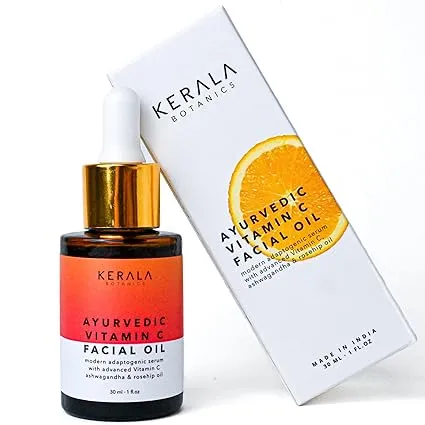
Ayurvedic Vitamin C Face Oil
Kerala Botanics
$49
★★★★☆
Who Should (and Shouldn’t) Try It
Grape seed oil is a genuine option for oily and acne-prone skin, not just a consolation prize because other oils felt too heavy. The high linoleic content, low comedogenicity, and antioxidant profile make a real case for it.
It works especially well if you’ve been trying to build a face oil into your routine but every option you’ve tried left you looking like a glazed donut by noon. If your skin is on the drier side, a higher-oleic oil or a richer botanical might serve you better — grape seed’s lightness is a feature for oily skin but can feel insufficient for dry skin in winter.
If you’re managing fungal acne (malassezia), check the ingredients carefully — most pure grape seed oils should be low-risk since they’re primarily linoleic, but it’s worth confirming with the fungal acne guide before adding anything new.
Sensitive skin can usually tolerate it well. It’s low-fragrance (usually none, in its pure form) and doesn’t contain the kind of active compounds that commonly irritate.
Putting It All Together
Grape seed oil is not glamorous. There’s no compelling origin story, no cult following, no TikTok moment (yet). It’s just a very light, very tolerable oil with a fatty acid profile that happens to be unusually well-matched to what oily and acne-prone skin actually needs.
The short version: high linoleic acid makes it lightweight and unlikely to clog pores. Proanthocyanidins give it a meaningful antioxidant story. Low comedogenicity means it’s one of the safer oil choices for breakout-prone skin. And it’s cheap enough that trying it is basically a zero-risk experiment.
If you’ve written off face oils entirely because of your skin type, grape seed is the one worth reconsidering. Start with three drops at night, give it two weeks, and report back.