
Routines
Do Face Oils Work in Summer Heat and Humidity? (Yes, But Here's the Catch)
Face oils in summer aren't the problem — the wrong oil is. Here's how to pick one that won't wreck your skin when it's hot and humid.
Disclosure — This article may contain affiliate links. We earn a small commission at no extra cost to you when you purchase through our links. This supports our ability to create independent, evidence-based skincare content.
Every August, someone in my life texts me a variation of the same question. “It’s 35 degrees and I’m sweating through my moisturizer — should I even be using a face oil right now?” And every August, I give the same answer: it depends entirely on which oil you’re reaching for.
The instinct to ditch oils in summer makes sense on the surface. It’s hot. Your skin already feels greasy. The last thing you want is to add more oil to that situation. But that instinct is based on a misunderstanding of what face oils actually do — and more specifically, it ignores the fact that “face oil” covers an enormous range of formulas with very different effects on your skin.
Some oils will make you break out in July. Others will genuinely help. The seasonal framing here matters, because the oil that’s perfect for your dry, flaky skin in January might be exactly the wrong call when your pores are working overtime in a heat wave. Here’s how to think about it.
Why Skin Behaves Differently in Summer
Before we get into specific oils, it’s worth understanding what’s actually happening to your skin when temperatures spike.
Heat increases sebum production. Full stop. Your skin’s oil glands ramp up in warm weather, which is why people who have normal or dry skin in winter often feel oily by June. On top of that, humidity changes how your skin loses moisture — in a very humid environment, transepidermal water loss slows down because there’s already water in the air. So your skin’s natural moisture isn’t evaporating as fast.
What this means practically: in summer, your skin often needs less occlusion (sealing moisture in) and more support regulating what’s already happening at the surface. That shifts what you’re asking a face oil to do.
Heavy, occlusive oils — think marula, argan, coconut — can sit on top of already-congested pores and trap everything underneath. In winter, that’s a feature. In summer, it’s a problem.
The answer isn’t to quit oils entirely. It’s to switch to lighter, high-linoleic formulas that work with your skin rather than on top of it.
The Oil Chemistry That Actually Matters in Heat
There are two fatty acids worth understanding here: oleic acid and linoleic acid.
Oleic acid is rich, emollient, and deeply moisturizing. Great for dry, barrier-compromised skin. But it’s also heavier and more likely to clog pores for people who are already prone to congestion — and in summer heat, that tendency amplifies.
Linoleic acid is lighter and, crucially, it’s actually deficient in the skin of people with acne-prone skin. Research has shown that acne-prone skin has lower linoleic acid levels in sebum. Adding linoleic-rich oils back in can help normalize sebum consistency and keep pores from getting blocked. In summer, when sebum production is already elevated, this matters more.
High-linoleic oils include rosehip, hemp seed, sea buckthorn (in small amounts — it’s bright orange, don’t go overboard), and certain botanical blends. These are the oils worth keeping in your routine when the temperature climbs. The rest — argan (high oleic), marula (high oleic), coconut (saturated, comedogenic for many) — are worth setting aside until fall.
If you want more context on how oils slot into a full routine, how to use facial oils breaks it down step by step.
The Case for Rosehip Oil Specifically
Rosehip is the MVP of summer face oils. It’s around 50% linoleic acid, lightweight enough to absorb without leaving a film, and it comes with a legitimate brightening benefit from naturally occurring trans-retinoic acid (which is why it gets called a “natural retinol” — though that’s a bit of an oversimplification; we’ve gone deeper on that here).
For oily and acne-prone skin, rosehip in summer is genuinely worth trying even if you’ve always assumed face oils aren’t for you. A few drops at night — not on top of heavy moisturizer, just rosehip by itself or mixed into a lightweight moisturizer — can help balance sebum without triggering more breakouts. And it’s cheap enough that the barrier to entry is low.
The texture matters too. A good cold-pressed rosehip oil should feel dry and absorb quickly. If it’s sitting on your face after 60 seconds, that’s a sign it’s either poor quality or you’ve used too much. Two or three drops is enough for your whole face.
Trilogy Certified Organic Rosehip Oil
Trilogy
$29
★★★★½
What About Vitamin C Oils in Summer?
This is where things get interesting. Vitamin C is one of the few ingredients that works harder for you in summer, specifically because UV exposure and heat both trigger oxidative stress in skin. Antioxidants like vitamin C act as a kind of buffer against that environmental damage. The problem is that traditional L-ascorbic acid serums are notoriously unstable — they oxidize fast, especially in warm conditions.
Oil-based vitamin C formulas sidestep a lot of that instability because they use different forms of the vitamin that are more shelf-stable and less reactive. The trade-off is that you’re combining active treatment with a face oil in one step, which is either efficient or too heavy, depending on your skin type.
The Kerala Botanics Ayurvedic Vitamin C Face Oil is an interesting case here. It uses an advanced form of vitamin C that the brand claims stays in skin cells significantly longer than standard L-ascorbic acid serums, combined with bakuchiol as a retinol alternative. The Ayurvedic formulation angle is genuinely distinctive — it’s not just a vitamin C serum in oil form, it’s a considered blend with botanical ingredients including ashwagandha that have real skin calming data behind them. (More on those Ayurvedic actives here.)
In summer terms: it’s a legitimate option if you want a simplified routine and your skin handles oils well. The bakuchiol inclusion means you’re getting retinol-alternative benefits without the peeling risk that makes retinol tricky in heat and sun. You can read our full take here.
The honest con: it’s not the call for oily or acne-prone skin in high humidity. If you’re already dealing with congestion in summer, a formula this multi-layered can tip the balance toward clogged pores. It works best for combination-to-normal skin that just wants to simplify its summer routine. Not everyone will get along with it, and that’s okay.
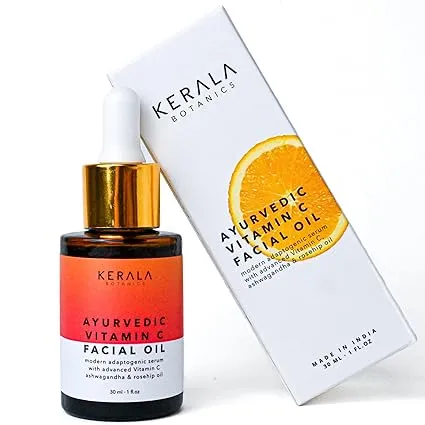
Ayurvedic Vitamin C Face Oil
Kerala Botanics
$49
★★★★☆
Squalane: The Genuinely Summer-Proof Oil
If you want a face oil that works in every season without thinking about it, squalane is your answer. It’s technically not a traditional fatty acid oil — it’s a hydrocarbon — and it behaves differently from plant-based oils. It doesn’t oxidize. It doesn’t clog pores. It’s lightweight, mimics your skin’s natural lipids, and plays nicely with literally everything else in your routine.
We’ve covered squalane in depth here, but the short version for summer: it’s the oil for people who are nervous about face oils. It sits on the skin comfortably, absorbs reasonably fast, and won’t exacerbate heat-related congestion. The Ordinary’s version is $9 for a decent-sized bottle, which makes it an easy thing to test.

The Ordinary 100% Plant-Derived Squalane
The Ordinary
$9
★★★★½
If you want something that pairs squalane with a vitamin C boost in a slightly more elegant format, the Biossance Squalane + Vitamin C Rose Oil is a good midpoint — lighter than a pure botanical face oil, with some antioxidant action built in. It works well under sunscreen, which a lot of heavier oils don’t.
Squalane + Vitamin C Rose Oil
Biossance
$52
★★★★½
How to Actually Use a Face Oil in Summer
A few rules that make the difference:
Use less than you think. In winter, two to four drops feels right. In summer, one to two drops is often enough. Warm skin absorbs oil faster — you don’t need to compensate by adding more.
Night is easier than morning. Oils in summer can make sunscreen application complicated. Heavy oils especially can prevent SPF from sitting properly on skin. If you’re using a drier oil like squalane or rosehip, a single drop mixed into your moisturizer before sunscreen usually works. But if you’re new to summer face oils, just use them at night and skip the juggling act in the morning.
Layering order still matters. Oil goes after water-based steps, before SPF if you’re going morning. Don’t apply it straight onto dry, sweaty skin — cleanse first, apply any serums, then oil. The full layering logic is here if you want the detailed breakdown.
Skip oils on active breakout days. If you’re mid-flare, even a lightweight rosehip can feel like too much. Use your targeted acne treatment, skip the oil, try again when things calm down.
Oils to Bench Until Fall
Just so we’re clear about what to avoid when it’s hot:
- Coconut oil — comedogenic for a significant portion of people even in winter, worse in summer
- Marula oil — high oleic, lovely in cold weather, too heavy for most in humidity
- Argan oil — same oleic issue; great moisturizer, wrong season for oily-prone skin
- Castor oil — thick, viscous, genuinely has no business being on your face in August
- Any oil-heavy “balm cleanser” used as a leave-on — fine as a first cleanse, not as a moisturizing layer in summer
Putting It All Together
Face oils in summer: not a category to avoid, but one to edit carefully.
If your skin is oily or acne-prone, the shift to high-linoleic oils like rosehip can actually help you more in summer than in winter — because it’s working with your skin’s sebum chemistry, not against it. If your skin is more balanced, squalane is the no-brainer option that works regardless of what the weather’s doing. And if you want antioxidant protection plus oil-based moisturizing in a single step, an oil-based vitamin C formula makes sense — just know it works best for skin that doesn’t already run congested.
The only wrong move is writing off the whole category because it’s hot. Your skin still needs lipids in summer. The question is just which ones, and how much. Two drops of the right oil is not the same thing as slathering on coconut oil and hoping for the best. Choose accordingly.
For more on navigating face oils across skin types, our full facial oil guide for 2026 has options broken down by formula weight and skin concern. And if you’ve been on the fence about whether your skin barrier can handle summer actives at all, this guide on barrier-adaptive moisturizers is worth a read before you overhaul your routine.