
Routines
Enlarged Pores: What Can Change and What Can't
Pores don't open and close. Here's what genetics, sebum, and sun damage actually do—and which ingredients and treatments have real evidence.
Disclosure — This article may contain affiliate links. We earn a small commission at no extra cost to you when you purchase through our links. This supports our ability to create independent, evidence-based skincare content.
Pores are one of the most misunderstood structures in skincare. There are thousands of products promising to “minimize,” “tighten,” and “erase” them. Most of those claims collapse under scrutiny. This guide is about separating the biology from the marketing — understanding which factors actually determine pore size, what ingredients and treatments can genuinely move the needle, and what to stop buying.
What Actually Determines Pore Size
A pore is the opening of a hair follicle. Each one contains a sebaceous gland. The size of that opening is shaped by three things:
- Genetics. The number and caliber of your follicles is inherited. Some people have naturally larger, more visible follicles — particularly on the nose, cheeks, and chin. No topical can change the underlying anatomy.
- Sebum volume. Pores that drain more oil appear larger because the follicle walls are consistently distended. Oily and combination skin types see more visible pores for this reason — not because the pore itself is bigger, but because it’s always working harder.
- Photoaged laxity. UV exposure degrades collagen and elastin over time. The follicle walls lose their structural support, and the pore stretches. This is why pores tend to look larger and more irregular with age, especially around the cheeks and temples.
That’s the complete list. Pores do not open with heat or close with cold water. They are not a valve system. They have no muscle. When you see “minimizes pores” on a label, the product is almost always referring to a temporary optical effect — it’s filling in or blurring the surface, not changing the follicle itself.
Permanently shrinking a pore would require either reducing the volume of what’s flowing through it, rebuilding the collagen scaffolding around it, or both. This is possible, but it’s a slower process than most people expect — and it requires consistency, not clever ingredients.
What Can Actually Change
There’s a real and important distinction between apparent pore size and structural pore size. Most topicals work on the former. Some clinical treatments begin to work on the latter. Knowing which category you’re targeting will help set realistic expectations.
Sebum Control (Fast Effect, Temporary)
Reducing the amount of oil flowing through the follicle makes the opening appear smaller in real time. Niacinamide is the most well-studied topical here. At concentrations of 2–5%, it measurably reduces sebum production and has clinical data supporting visible pore reduction after 8–12 weeks of consistent use. It’s also one of the gentlest actives available — no purging, no adjustment period.
Zinc PCA has supporting evidence for sebosuppression as well, and many niacinamide formulations combine the two. Zinc PCA’s evidence is solid if modest — useful as part of a pore routine, not strong enough to stand alone.
The Ordinary’s niacinamide serum is the obvious starting point. It’s $7, it’s concentrated, and it works. That’s the whole argument.
Niacinamide 10% + Zinc 1% Serum
The Ordinary
$7
★★★★☆
One caveat: if your skin is already oily and prone to breakouts, layering too many actives will not improve your pores. Simplifying the routine often does more than adding a new serum. We covered this in the sebaceous filaments piece, which is the companion to this one — worth reading together.
Retinoids (Slow Effect, Structural)
Retinoids are the only topicals with meaningful evidence for improving pore size at a structural level. They work through two pathways: accelerating cell turnover, which keeps the follicle opening clearer, and stimulating collagen production, which tightens the follicle walls over time.
The hierarchy here is well-established:
- Tretinoin (prescription) — the most studied, fastest acting. At 0.025–0.05%, visible improvement in 12–24 weeks. It’s irritating at first, which means a slow start: two nights a week, then three, then every other night, until your skin adjusts. Starting tretinoin has a learning curve worth respecting.
Tretinoin 0.025% Cream
Generic Rx
$30
★★★★½
- Adapalene 0.1% (OTC in the US) — gentler than tretinoin, slower results, but accessible without a prescription and easier to tolerate. It’s a reasonable starting point if tretinoin sounds like too much friction, or if your skin is sensitive. The full comparison of these two is here.
Adapalene 0.1% Gel
Differin
$17
★★★★½
- Retinol/retinaldehyde (OTC, various) — less potent than the above, but useful for people who want to start somewhere. Retinaldehyde converts to retinoic acid more efficiently than retinol, so it punches slightly above its weight. Retinol vs retinaldehyde vs tretinoin, broken down properly.
Bakuchiol is sometimes positioned as a pore alternative to retinol. The evidence for bakuchiol on pore size specifically is thin — it has reasonable data for fine lines and evening tone, but we wouldn’t build a pore routine around it. That said, for people who genuinely can’t tolerate retinoids (pregnant, extremely sensitive, committed to plant-based actives), bakuchiol vs retinol is worth reading.
For those interested in oil-based formats — which layer well under retinoid nights or on rotation nights — the Kerala Botanics Ayurvedic Vitamin C Face Oil is worth knowing about. It combines a stabilized vitamin C with bakuchiol, so it works on both brightening and gentle cell turnover in a single step. It won’t replace a retinoid for pore work, but as a supporting player in a simplified routine, it’s genuinely useful. The oil format means it’s not for everyone — particularly not for very oily skin — but for normal-to-dry types who find serums irritating, it’s a cleaner way to get both actives in one step.
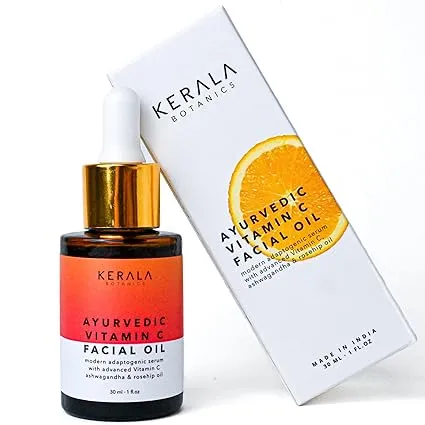
Ayurvedic Vitamin C Face Oil
Kerala Botanics
$49
★★★★☆
Exfoliation (Maintenance)
Pores that are clogged with dead cells and sebum look larger. Regular chemical exfoliation — salicylic acid in particular, given its oil solubility — keeps the follicle clear and reduces the optical distension effect. This isn’t changing the pore; it’s stopping one of the factors that makes it more visible.
Salicylic acid at 0.5–2%, used two or three times a week, is the workhouse ingredient here. It’s not dramatic. It’s maintenance. The kind of thing you stop noticing because nothing gets worse.
Glycolic acid and other AHAs have some supporting data for pore appearance, mostly through their effect on surface texture. The chemical vs physical exfoliation guide has more on the tradeoffs.
What Can’t Change (Topically)
The follicle itself. The number of follicles you have. The inherited caliber of those follicles. No serum, no toner, no weekly mask changes these things.
Cold water doesn’t close pores. Steaming doesn’t open them in any meaningful, beneficial way. Pore strips remove the very tip of a sebaceous filament — which reforms within days. We’ve written extensively about this in the sebaceous filaments piece, but the short version: if you’re doing pore strips more than occasionally, you’re in a loop that isn’t getting you anywhere.
Products with silicones, certain starches, and film-forming ingredients can blur the appearance of pores under makeup or in photos. That’s a legitimate use — there’s nothing wrong with a smoothing primer. Just don’t confuse the optical effect for a treatment outcome.
In-Clinic Options: When They’re Worth It
If the topical route has plateaued or the genetic component is significant, in-clinic treatments can address pore size more directly.
Laser and radiofrequency are the most evidence-backed options. Both work by stimulating collagen remodeling, effectively rebuilding the scaffolding around the follicle. Non-ablative fractional lasers (like Fraxel) and radiofrequency microneedling (like Morpheus8) have clinical data for pore reduction — especially pores that have enlarged due to sun damage and age. Multiple sessions are typically needed. Results are real but gradual. At-home RF devices exist, but they operate at much lower energies — think of them as a maintenance tool, not a substitute.
Chemical peels — particularly TCA at moderate concentrations — can temporarily reduce pore appearance through resurfacing. The effect is shorter-lived than laser. Worth considering if you’re already getting peels for texture or uneven tone and want to address pores at the same time.
Microneedling (in-office, not at-home rollers) stimulates collagen around the follicle walls. The data is reasonable. The effect is gradual. It tends to work better for pores related to laxity than for pores enlarged primarily by sebum volume.
A word on cost: all of these require investment — multiple sessions, maintenance visits, and realistic expectations. They are not a cure. They are a meaningful improvement, particularly for photoaged pores.
The Sunscreen Non-Negotiable
Every one of the structural factors that enlarges pores over time — collagen breakdown, elastin loss, follicle laxity — is worsened by UV exposure. Daily SPF is the most reliable long-term pore strategy available. Not because it shrinks pores, but because it stops one of the primary mechanisms that makes them worse with age.
This is obvious and often ignored in pore conversations, which tend to focus entirely on actives. The retinoid does more if the skin isn’t being re-damaged every day. The in-clinic result holds longer if sun protection is consistent.
Putting It Together
The honest picture:
- Genetics and sebum volume are the two biggest drivers. You can’t change the first; you can manage the second.
- Niacinamide handles sebum and is a good place to start. No irritation, fast to add.
- Retinoids do the slow structural work. Tretinoin if you can access it; adapalene if you’re starting out. Consistency over months is what creates real change.
- Chemical exfoliation keeps the follicle clear. Salicylic acid, two or three times a week.
- In-clinic options are worth considering when the topical plateau is real — especially for pores driven by photoaged laxity.
- SPF daily. This is the part most people underweight.
A reasonable starting routine: niacinamide in the morning, SPF after. Retinoid or adapalene two nights a week, building from there. Salicylic acid exfoliant on off nights. That’s it. There’s no product in the world that closes a pore — but this approach, held consistently, will make them meaningfully less visible over time.