
Routines
Skincare in Your 30s: What Changes and What to Add
Your skin shifts faster in your 30s than you'd expect. Here's what's actually happening—and which ingredients are worth adding now.
Disclosure — This article may contain affiliate links. We earn a small commission at no extra cost to you when you purchase through our links. This supports our ability to create independent, evidence-based skincare content.
My 30th birthday skincare crisis hit me at 31. That’s when I noticed it — not a wrinkle exactly, more like my face stopped bouncing back. A late night used to be erased by a good moisturizer and eight hours of sleep. Suddenly it wasn’t. And the texture. The subtle dullness. The spot on my left cheekbone that definitely wasn’t there at 29.
Nobody tells you that the shift isn’t dramatic. It’s quiet and incremental, which is somehow worse. Your 20s routine — basic cleanser, SPF, maybe a vitamin C if you were organized — starts feeling like it’s not quite keeping up. Because it isn’t.
Here’s what’s actually going on in your skin, and what’s worth adding now.
What’s Actually Changing in Your 30s
Collagen Production Slows Down (For Real This Time)
You’ve probably heard that collagen declines as you age, but here’s the number that tends to land: after your mid-20s, you lose roughly 1% of your collagen per year. By 35, that’s a noticeable cumulative dip. Skin that once felt plump and springy starts to feel a little thinner. Fine lines show up around the eyes and mouth — not deep creases, but enough that you start noticing them in certain light.
The bounceback thing is real. Your skin’s elastin fibers also become less efficient over time, which is why a pillow crease that used to disappear in ten minutes now sticks around until noon.
What actually helps: antioxidants (to protect existing collagen from oxidative damage), vitamin C (which supports collagen synthesis), and retinoids (which have the most evidence behind them for stimulating collagen production). We’ll get into all of these.
Cellular Turnover Gets Sluggish
In your 20s, skin cells turn over roughly every 28 days. In your 30s, that cycle starts stretching to 35, 40, even 45 days. Dead cells stick around longer, which means your skin can look dull and textured even when it’s hydrated. This is the decade where exfoliation stops being optional.
Hyperpigmentation Shows Up
Sun damage from your teens and 20s has a delayed billing cycle. Around 30, you start seeing the invoice — uneven tone, early dark spots, post-acne marks that linger much longer than they used to. If you’ve had hormonal shifts (pregnancy, coming off or onto birth control), melasma can show up too.
The good news: this is one of the most treatable concerns in skincare. The bad news: it requires patience, consistency, and — non-negotiably — daily SPF.
The Acne-to-Texture Pivot
A lot of people in their 30s experience a weird transition where active breakouts calm down but skin texture gets more complicated. Enlarged pores feel more visible. Skin looks less even. If you’ve been relying on acne-focused products (high-percentage salicylic acid, harsh cleansers), those can actually be working against you now by stripping your barrier. Time to recalibrate.
The Ingredients Worth Adding Now
Vitamin C — If You’re Not Already Using It
Vitamin C is the workhorse of your 30s. It brightens, it evens tone, it protects against UV-triggered free radicals, and it supports collagen production. If you weren’t religious about it in your 20s, your 30s are the moment to actually commit.
The traditional form, L-ascorbic acid, works well but oxidizes quickly — you’ve seen the bottle go orange. For a stable alternative that’s also easier on sensitive skin, look at oil-soluble vitamin C formats or newer derivatives.
The gold standard is still the SkinCeuticals CE Ferulic. It’s $185 and worth knowing about, but not worth it for everyone — check our breakdown of the best vitamin C serums of 2026 for the full picture.
SkinCeuticals C E Ferulic
SkinCeuticals
$185
★★★★½
If you prefer an oil-based format — or you’re consolidating steps — the Kerala Botanics Ayurvedic Vitamin C Face Oil is worth a look. It uses a stabilized vitamin C form that the brand says stays active in skin cells significantly longer than standard L-ascorbic acid serums, combined with bakuchiol, which is a plant-derived retinol alternative. One product doing the job of serum, moisturizer, and oil treatment. The oil format isn’t for everyone (if you’re oily, patch-test first), and it has less clinical data behind it than something like CE Ferulic — but the price-to-functionality ratio is genuinely strong.
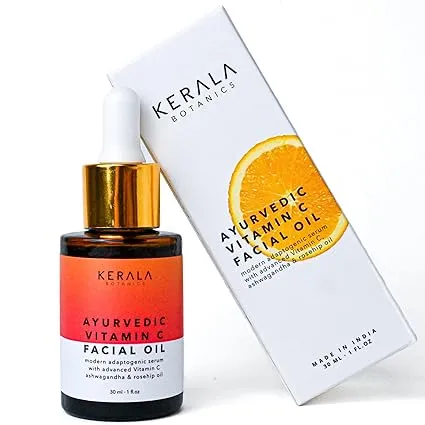
Ayurvedic Vitamin C Face Oil
Kerala Botanics
$49
★★★★☆
For more on the vitamin C serum vs. oil debate, we broke it down here.
A Retinoid — The Sooner, the Better
If there’s one thing dermatologists are universally consistent about, it’s retinoids. They’re the most evidence-backed ingredient for collagen stimulation, skin cell turnover, and reducing the appearance of fine lines. Your 30s are not too early. They’re actually ideal — you’re addressing things before they become entrenched.
Tretinoin (prescription) is the strongest option and the most studied. If you’re new to it, start slow and read our beginner’s guide to tretinoin first — the adjustment period is real and the purge can catch you off guard.
For over-the-counter options, retinaldehyde sits between retinol and tretinoin in potency and converts more efficiently in skin. Medik8 Crystal Retinal 3 is a reliable entry point. If you’ve had sensitivities with retinol before, bakuchiol is a gentler plant-based alternative with some decent evidence behind it — the full comparison lives here.

Medik8 Crystal Retinal 3
Medik8
$69
★★★★½
Exfoliation — Chemical, Not Aggressive
Sluggish cell turnover is the main driver of that 30s dullness, and the fix is regular chemical exfoliation. AHAs like glycolic and lactic acid dissolve the bonds holding dead cells on the surface. Two to three times a week is plenty — more is where people run into trouble.
Over-exfoliation is a real problem in this decade, especially for people who’ve been using strong actives since their 20s. Signs your barrier needs a break: stinging from products that never used to sting, chronic redness, sensitivity to your moisturizer.
Paula’s Choice 8% AHA Gel is one of those products that quietly delivers. No fragrance, good concentration, works well layered. It’s been a mainstay for a reason.
Paula's Choice SKIN PERFECTING 8% AHA Gel Exfoliant
Paula's Choice
$34
★★★★½
Peptides — Underrated for This Decade
Peptides don’t get the same hype as vitamin C or retinol, but they deserve a spot in your 30s routine. They signal to skin to produce more collagen, and unlike retinoids, they cause zero irritation. Good as a moisturizer ingredient, good in a serum layered under SPF.
The INKEY List Peptide Moisturizer is one of the more affordable ways to get them into your routine without adding another serum step.
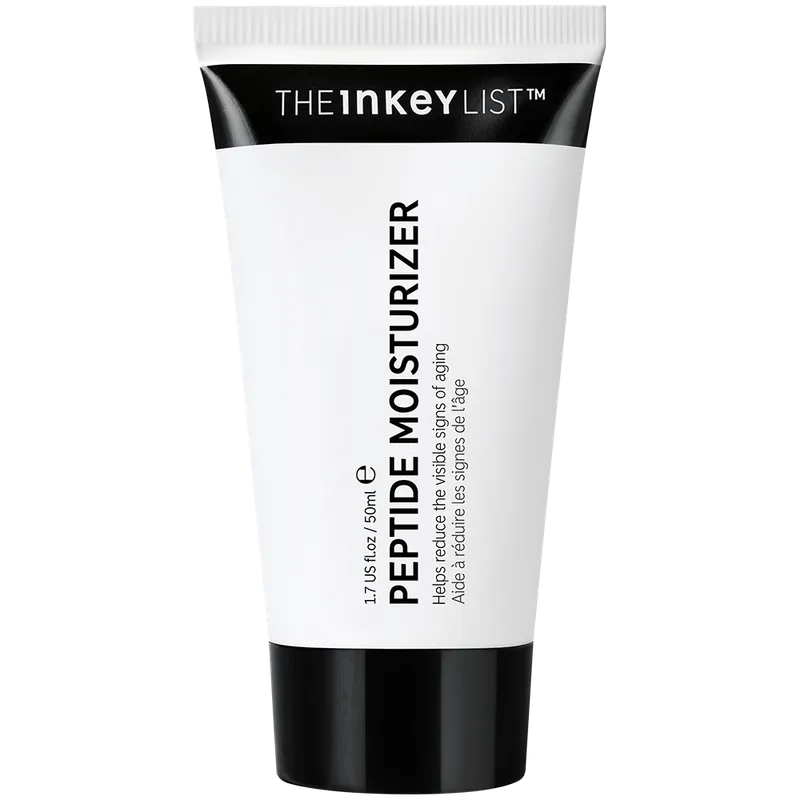
The INKEY List Peptide Moisturizer
The INKEY List
$17
★★★★☆
For a deeper breakdown of how different peptides work — signaling vs. carrier vs. neurotransmitter — this decoder is worth bookmarking.
What to Do About the Dark Spots
This deserves its own section because it trips people up. The instinct is to bleach or over-exfoliate. Neither is the right call.
The most evidence-backed approach is: a targeted brightener (niacinamide, alpha arbutin, tranexamic acid, or kojic acid) layered consistently, combined with daily SPF. Without the SPF, brightening ingredients fight an uphill battle — UV exposure is the main driver of melanin overproduction.
Alpha arbutin is gentle enough for daily use and works on multiple types of pigmentation. Niacinamide is another solid option — it reduces melanin transfer to skin cells and has anti-inflammatory benefits too. For more stubborn spots or melasma, tranexamic acid is becoming a real go-to.
Your Routine, Rebuilt for Your 30s
You don’t need to scrap everything. Most people in their 30s need to add two or three ingredients, not start over.
Morning
- Gentle cleanser (or just water if your skin is dry)
- Vitamin C serum or antioxidant treatment
- Moisturizer with peptides or hyaluronic acid
- SPF 30 minimum, every day, indoors or out
Evening
- Double cleanse if you’ve worn SPF or makeup (an oil cleanser first, then a gentle water-based one)
- Exfoliant 2–3 nights per week (not on retinoid nights)
- Retinoid (start 1–2 nights per week, build slowly)
- Moisturizer — something richer than your morning one if your skin is on the drier side
If you want to tighten this up into a three-step minimalist approach, we have a guide for that too.
One structural note: if you’re adding both a retinoid and an exfoliant for the first time, don’t run them on the same nights. Skin cycling — rotating your actives on a schedule — is a sensible framework for this decade.
The One Thing You Can’t Skip
SPF. Not negotiable, not seasonal, not just for beach days.
Everything else in your routine — the vitamin C, the retinol, the brightening serums — works better when you’re not undoing it with daily UV exposure. Sun damage is the single biggest driver of the concerns that show up in your 30s: collagen loss, pigmentation, texture, premature lines. SPF is the intervention that has the most evidence behind it, full stop.
If you’ve never quite figured out how much to use, we covered that specifically. And if reapplying over makeup feels impossible, there are real solutions.
Putting It All Together
Your 30s skin isn’t broken. It’s just operating on a slower cycle with less collagen in the bank — and it needs more deliberate support than it did at 25.
The non-negotiables: daily SPF, a vitamin C antioxidant in the morning, a retinoid at night (at least a few times a week), and some form of regular chemical exfoliation. Add a peptide moisturizer and a targeted brightener if dark spots are a concern, and you’ve covered the main things.
Start with one or two new ingredients, not five. Give them eight to twelve weeks before you judge — here’s what realistic timelines actually look like. Your skin in your 30s is absolutely capable of looking great. It just needs the right inputs.
And for where this decade leads: the 40s and 50s guide is here when you’re ready for it.