
Routines
What Skincare Cannot Fix
Volume loss, deep lines, broken capillaries, scars, and pore size: what skincare cannot fix, what topicals really reach, and when to see a professional.
Disclosure — This article may contain affiliate links. We earn a small commission at no extra cost to you when you purchase through our links. This supports our ability to create independent, evidence-based skincare content.
Some things on your face are not skin problems. They’re structure problems, and a cream can’t rebuild structure. This guide covers five of them: volume loss, deep static lines, broken capillaries, true scarring, and pore size. For each, we’ll say what a topical can reach, what it can’t, and which professional treatments actually exist.
Knowing the limit saves money. It also saves months of waiting for a result that was never coming.
Why Topicals Hit a Ceiling
Skin has layers. The outermost, the stratum corneum, is built to keep things out. It does that job well.
Most of what we apply sits in the top layers of the epidermis. A few small molecules get further. Retinoids and some forms of vitamin C can influence what living cells do. But the structures behind most cosmetic complaints sit deeper, in the dermis, in fat pads, in the bone underneath, or in the walls of blood vessels.
A rough rule: if an ingredient’s molecules are large, they stay on the surface. That includes most collagen, many peptides, and a lot of the “complexes” on a label. They can hydrate and soften. They can’t rebuild. (We looked at this in topical collagen and it holds for most big-molecule claims.)
So the question to ask of any concern is simple. Where does it actually live?
Volume Loss
Faces lose volume with age. Fat pads shrink and shift, and the bone under the face slowly resorbs. That’s why cheeks flatten, temples hollow, and the area under the eyes gets deeper.
No cream touches this. Fat pads and bone are well below anything a topical reaches. A moisturizer can plump the surface for a few hours by pulling water into the top layer, but it isn’t restoring anything.
The same goes for rapid weight loss, including on GLP-1 medications. The facial changes are real and mostly structural. We wrote about what skincare can and can’t do there in our guide to “Ozempic face”.
What professionals offer:
- Hyaluronic acid fillers replace volume directly and are the most common option.
- Biostimulators, such as poly-L-lactic acid, prompt the body to build collagen over several sessions.
- Fat grafting uses your own tissue and lasts longer, but it’s a surgical procedure.
- Surgery addresses sagging that volume alone can’t.
What skincare can still do: keep the skin over the volume in good shape. Sunscreen daily, a retinoid if your skin tolerates one, and a barrier-friendly moisturizer. That won’t refill a cheek. It will make the cheek’s skin look better.
Deep Static Lines
There are two kinds of lines, and they behave differently.
Dynamic lines appear when you move: frowning, squinting, raising your brows. Static lines stay when your face is at rest. Early on, a line is only dynamic. After years of repeated folding, plus sun damage and collagen loss, it etches in.
Fine, shallow lines respond to topicals. Prescription tretinoin has the strongest evidence, with visible improvement over months of steady use. Over-the-counter retinol works more slowly and more gently. Bakuchiol is a milder, plant-based option with a smaller body of research (we compared them here).
Deep lines are another matter. A retinoid can soften their edges, but it won’t erase a crease that’s been carved over decades. And the “Botox in a bottle” peptides don’t relax muscles in any meaningful way. We covered the evidence in the argireline piece.
What professionals offer:
- Neuromodulators (botulinum toxin) relax the muscle causing dynamic lines. Over time, that can let static lines soften too.
- Filler can lift a deep line from underneath.
- Resurfacing lasers and microneedling with radiofrequency stimulate new collagen in the dermis.
- Often it’s a combination. Deep lines rarely respond to one tool alone.
What to try first: a retinoid, patiently. Adapalene is the easiest on-ramp, and it’s sold over the counter.
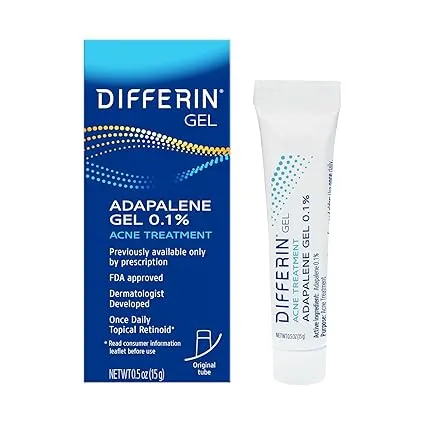
Differin Adapalene Gel 0.1%
Differin
$15
★★★★½
Differin is formulated for acne, and its evidence base is strongest there. It’s a reasonable, inexpensive way to test how your skin handles a retinoid before deciding whether to move up to tretinoin. Expect dryness at first and don’t expect miracles on deep lines.
Broken Capillaries
Those small red threads around the nose and cheeks are dilated blood vessels, called telangiectasia. Once a vessel stays widened, it stays widened. Nothing you apply will shrink it back.
You’ll see creams promising to fix this, usually built around vitamin K, horse chestnut, or similar extracts. The evidence is thin. We’d skip them.
Redness that comes and goes, with flushing and bumps, may not be capillaries at all. It could be rosacea, which has its own treatments. A dermatologist can tell the difference in a couple of minutes, and prescription options exist for the redness itself.
What professionals offer:
- Vascular lasers (pulsed dye, KTP, Nd:YAG) target the vessel directly.
- Intense pulsed light can treat diffuse redness and small vessels.
- Results are good for isolated vessels. Some people need a few sessions, and new ones can appear later.
What skincare can still do: protect against what makes them worse. That means daily sunscreen, gentle cleansing, avoiding harsh scrubs, and noticing personal triggers like heat or alcohol. If redness is the main concern, our rosacea-friendly routine is a calm place to start.
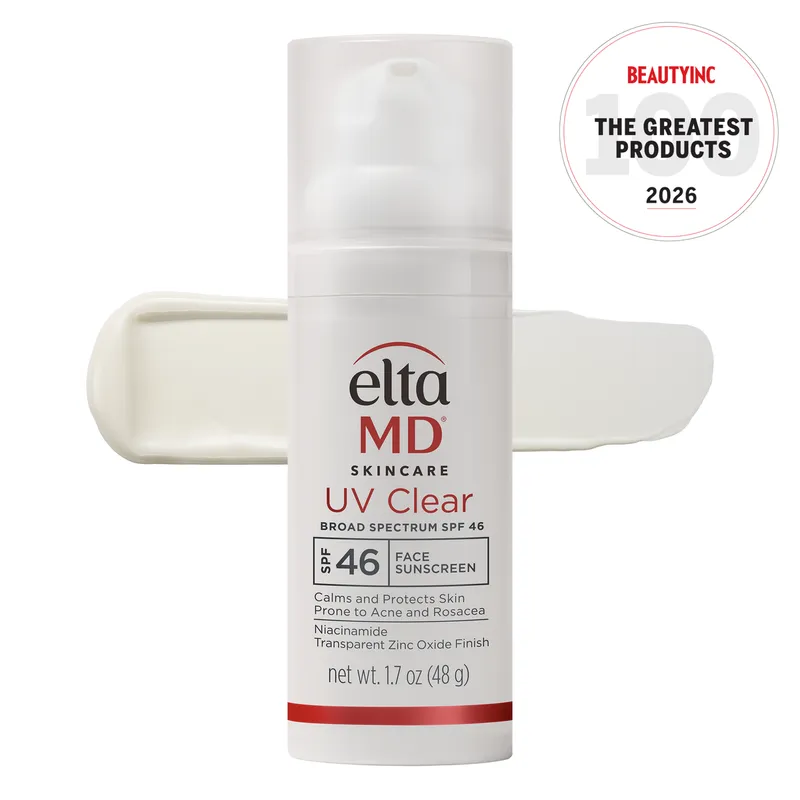
UV Clear Broad-Spectrum SPF 46
EltaMD
$43
★★★★½
EltaMD UV Clear is a common dermatologist pick for reactive and redness-prone skin. It’s pricey for a sunscreen. Any sunscreen you’ll actually wear every day does the same protective job, so if this one stretches your budget, skip it.
True Scarring
First, a sorting step. Many “scars” are marks, not scars.
Flat red or brown spots left after a breakout are post-inflammatory erythema or hyperpigmentation. They fade with time, sun protection, and the right actives. We broke the difference down in PIE vs PIH.
A true scar is a change in the skin’s texture. Pitted ice-pick scars, boxcar scars with defined edges, rolling scars that look like gentle dents. The dermis was damaged and rebuilt differently. Thick raised scars, including keloids, are the opposite problem: too much tissue.
Topicals can’t undo any of this. Retinoids can help texture a little over a long period, and exfoliating acids can smooth the surface, but a depressed scar is a structural dent below the skin line.
What professionals offer:
- Subcision releases the fibrous bands that tether rolling scars.
- Fractional lasers and radiofrequency microneedling remodel collagen.
- TCA CROSS is a targeted technique for ice-pick scars.
- Fillers can lift some depressed scars temporarily.
- Raised scars and keloids are often treated with steroid injections, among other options.
Different scar types need different tools, and the wrong procedure can make some scars worse. This is where a board-certified dermatologist matters most. At-home microneedling gets a lot of attention, but its reach is shallow. We explain the limits in our microneedling safety guide.
Pore Size
Pores are openings for hair follicles and oil glands. Their size is largely set by genetics, oil production, and age. Sun damage and lost elasticity can make them look larger over time.
Skincare can’t shrink them. No ingredient closes a pore, because pores don’t open and close like doors. Anyone selling “pore-minimizing” is selling an illusion, though sometimes a decent one.
What actually helps pores look smaller is clearing the debris inside them and keeping the surrounding skin firm. That means a salicylic acid product a few times a week, a retinoid, and daily sunscreen. Results are modest, and they’re gone if you stop. Our full breakdown is in enlarged pores: what can change and what can’t.
What professionals offer:
- Fractional lasers and microneedling can tighten the look of pores by remodeling collagen.
- Results vary and are rarely dramatic.
Most people should probably stop at the salicylic acid and the sunscreen. Pores are normal, and a face with no visible pores is a filter, not a face.
What Topicals Really Do Well
None of this means skincare is pointless. It means skincare has a job.
A short, honest list of what it does:
- Sunscreen prevents. Daily use slows nearly every sign of aging we’ve covered here. It’s the single best investment.
- Retinoids remodel the surface. Tretinoin, adapalene, and retinol have the deepest evidence for texture, fine lines, and tone.
- Vitamin C brightens and protects. Regular use can improve dullness and uneven tone, and it adds antioxidant protection under sunscreen.
- Moisturizers repair the barrier. A healthy barrier means fewer irritation problems and better-looking skin.
Vitamin C comes in many formats. Serums are the standard. Some people prefer an oil, which can stand in for a serum and a moisturizer at once. Kerala Botanics’ Ayurvedic Vitamin C Face Oil is one such option, pairing an advanced vitamin C with bakuchiol.
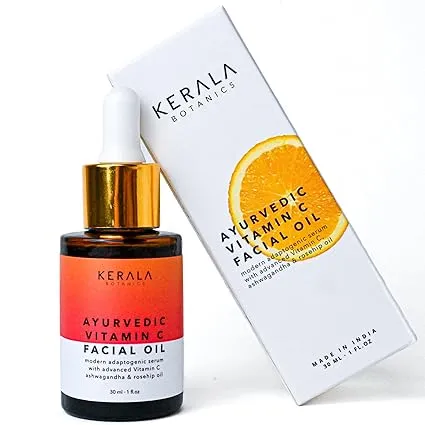
Ayurvedic Vitamin C Face Oil
Kerala Botanics
$49
★★★★☆
It suits people who want fewer steps. The downsides are real, though. Oily or acne-prone skin may find an oil too rich, it can feel heavy under makeup, and it has less clinical data behind it than SkinCeuticals C E Ferulic. It will brighten and soften. It won’t change a scar, a vessel, or a lost fat pad, and neither will anything else at that price.
How to Find the Right Professional
If something on this list bothers you, a consultation is cheap compared to years of guessing.
- Look for a board-certified dermatologist or a plastic surgeon with a lot of experience in your specific concern.
- Ask what they’d do, what it costs, how many sessions, and what the downsides are.
- Be wary of any consultation that ends with a package price and a deadline.
- Getting a recommendation to do nothing is a good sign. It means they’re being straight with you.
You can also say no. A consultation isn’t a commitment, and plenty of people decide that what they have is fine.
Putting It All Together
Skincare works on the surface and a little below it. Volume, deep lines, vessels, scars, and pores live partly or entirely deeper than that.
Sunscreen daily. A retinoid if your skin likes it. Vitamin C if you want one. A moisturizer that keeps your barrier calm. That’s most of what a topical routine can honestly deliver.
For everything else, a good professional is the better use of your money. And sometimes the right answer is to stop buying things and leave your face alone.