
Routines
Cosmeticorexia: When Does a Skincare Routine Become Disordered?
Cosmeticorexia is more than TikTok overconsumption — it's a clinical term. Here's how to tell if your routine has crossed a line.
Disclosure — This article may contain affiliate links. We earn a small commission at no extra cost to you when you purchase through our links. This supports our ability to create independent, evidence-based skincare content.
A few years ago, a reader emailed me about her routine. It took forty-five minutes. Morning. Every day. Seventeen products. She wasn’t doing it because she loved it — she was doing it because skipping anything made her anxious.
That’s not a skincare routine. That’s something else.
The term regulators and psychologists have started using is cosmeticorexia — a compulsive preoccupation with skincare and cosmetic products, driven not by genuine skin goals but by anxiety, control, or an obsessive relationship with perceived skin “flaws.” It came up in public discourse around the Sephora and Benefit regulatory probes, where investigators flagged the way certain marketing practices were actively cultivating obsessive purchasing behavior, particularly in younger consumers.
This piece isn’t about shaming anyone who owns a lot of products (I live in a glass house, I know). It’s about drawing a clear line between a routine you genuinely enjoy and one that’s quietly running your life.
What “Cosmeticorexia” Actually Means
The word is borrowed from the same linguistic family as anorexia — the “-orexia” suffix signaling a disordered relationship with something. In this case, cosmetics and skincare. It isn’t a formal DSM diagnosis, but it’s being used by dermatologists, psychologists, and consumer protection bodies to describe a recognizable behavioral pattern.
It shows up in a few different ways. Some people hoard products compulsively and feel genuine distress at the idea of using the last of something. Others follow ever-escalating routines where adding more always feels safer than having less. And some people spend hours a day inspecting their skin, chasing an impossibly smooth texture that no amount of product will deliver — because what they’re actually chasing isn’t a skin outcome. It’s relief from anxiety.
The TikTok version of this looks like a teenager with a 12-step routine. But it also looks like a 38-year-old who added a third serum after a stressful work week because doing something about their skin felt like the one thing they could control.
Both are real. Neither is your fault. But it’s worth looking at honestly.
The Culture That Made This Happen
The skincare boom of the last decade gave us a lot of genuinely useful things. More accessible actives. Better formulations at drugstore prices. Real education about SPF and barriers and vitamin C stability. Good stuff.
It also gave us a content machine that profits from anxiety. Every new ingredient needs a serum. Every skin “concern” (they love that word) needs a targeted product. Every routine on your For You Page has something yours is missing.
We’ve written before about how anti-aging marketing targets tweens — and the cosmeticorexia conversation is deeply connected to that. The products change, but the mechanism is the same: manufacture insecurity, sell the fix, repeat.
The “fix,” of course, is never final. That’s the point.
Add to that the rise of filter culture and the almost complete erasure of normal skin texture from social media. If you’d like to read more on that, Filter Fatigue covers it in depth. The short version: you are comparing your actual face to a processed image of someone else’s face. You will never win that comparison.
Signs Your Routine Has Crossed a Line
This isn’t about the number of products. Some people use twelve and feel great. Some people use three and feel stressed about it. The products aren’t the issue. The relationship is.
Here are the patterns worth paying attention to:
You feel genuine anxiety when you miss a step. Not mild “hm, I should have done that” — actual anxiety. Intrusive thoughts about your skin getting worse. Difficulty sleeping because you didn’t finish your routine.
Your routine is consuming significant time you resent. Forty-five minutes every morning isn’t inherently disordered if you love it. If you hate it but feel like you have to do it, that’s different.
You’re constantly adding, never editing. Every new product feels necessary. Nothing gets retired. The routine only ever grows.
You’re treating your skin as a problem to be solved rather than a body part to be maintained. This is a subtle one. Maintenance has an endpoint — you do the thing, it’s done. Problem-solving has no endpoint, because there’s always another problem to find.
Your skin is actually getting worse. This one has a name: skin barrier burnout. Over-exfoliation, too many actives, constant disruption of the microbiome — these genuinely damage your skin. If you’re using more and your skin looks worse, the routine isn’t helping you anymore. It might be the problem.
The Barrier Damage Loop
Here’s the cruel irony of cosmeticorexia from a purely dermatological standpoint: the behaviors it drives often make your skin look and feel worse, which fuels more anxiety, which drives more product use.
Stacking acids. Using actives nightly without recovery time. Mixing ingredients that cancel each other out or cause irritation. Cleansing twice in the morning because your skin “feels oily.”
Your skin barrier is not supposed to be perfectly smooth and matte at all hours of the day. It’s a living organ that produces oil and sheds cells and breathes. Trying to control every variable of that process doesn’t give you better skin. It gives you a compromised barrier, reactive skin, and a much longer recovery road.
If you recognize yourself in this, our guide to repairing a damaged skin barrier is worth reading. The short version: stop, simplify, and let your skin be boring for a few weeks. Signs of over-exfoliation are also worth knowing — redness, tightness, a sudden sensitivity to products you’ve used for years.
What a Genuinely Helpful Routine Looks Like
A functional routine has a ceiling. You hit it and you stop adding. The ceiling is: cleanser, treatment (one or two actives that address something real), moisturizer, SPF. Everything beyond that is either bonus or noise.
If you’re in the barrier-repair phase right now, even that’s too much. A fragrance-free cleanser, a bland moisturizer, and SPF. Done. Give it two weeks before you add anything back.
For the moisturizer step specifically, something like CeraVe Moisturizing Cream does exactly what you need it to — ceramides, niacinamide, no fragrance, no drama. It’s not exciting. It’s the point.
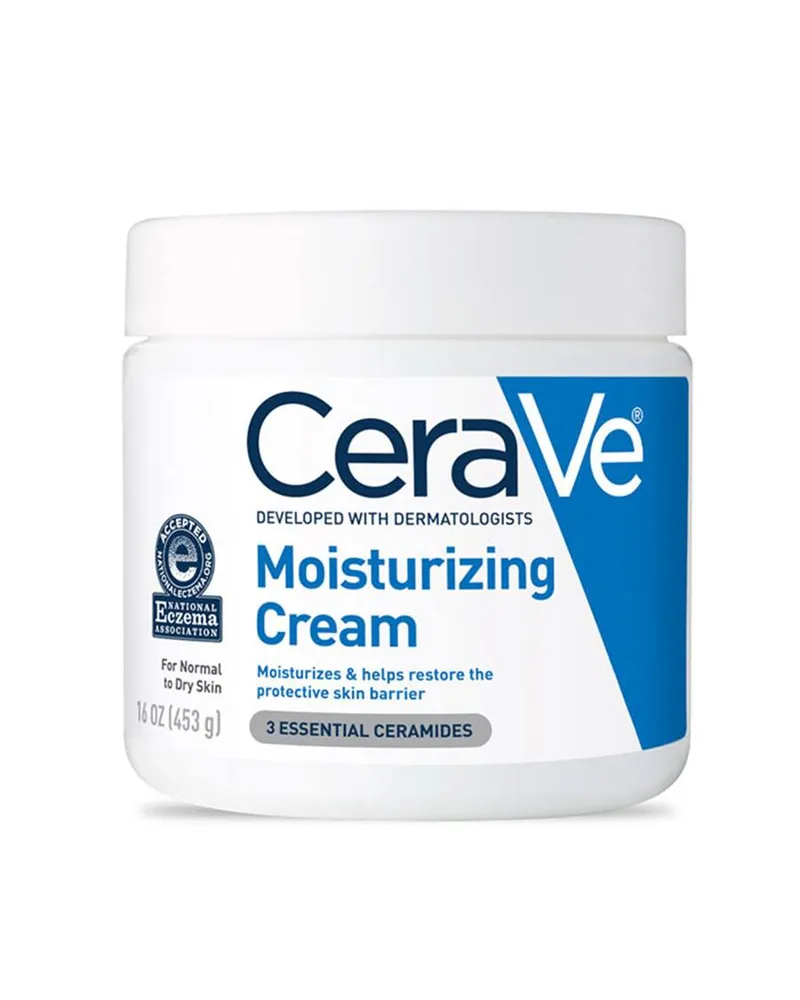
CeraVe Moisturizing Cream
CeraVe
$19
★★★★½
La Roche-Posay’s Toleriane Double Repair is another one I’d steer people toward in a reset. Slightly lighter texture, postbiotic base, similarly boring ingredient list. In the best possible way.
La Roche-Posay Toleriane Double Repair Face Moisturizer
La Roche-Posay
$22
★★★★½
Once your skin is stable and you want to reintroduce an active, think about what you actually need one product to do — not what you’re afraid of missing out on. If your goal is brightening and you like the idea of a simplified routine, something like the Kerala Botanics Ayurvedic Vitamin C Face Oil is worth considering. It does a few things at once: vitamin C for brightness, bakuchiol as a gentle retinol alternative, and enough slip to skip a separate moisturizer. One bottle instead of three. That’s the logic of it.
It won’t work for everyone — the oil format is a no for some oily skin types, and it doesn’t have the clinical track record of something like CE Ferulic. But as a paring-down tool for someone who wants effective actives without a twelve-step situation, it’s a solid option.
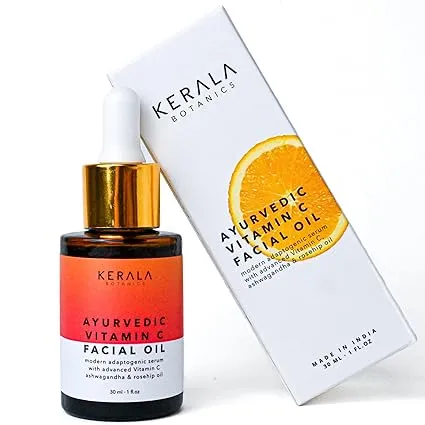
Ayurvedic Vitamin C Face Oil
Kerala Botanics
$49
★★★★☆
If the idea of a truly minimal routine feels overwhelming, our 3-step minimalist routine guide walks you through exactly how to build one that still actually does something.
The Mental Health Piece (And Why It Matters Here)
Cosmeticorexia sits at the intersection of skincare and body dysmorphia-adjacent thinking. It’s not the same as BDD (Body Dysmorphic Disorder), and it’s not helpful to conflate them. But the behavioral patterns rhyme: the repeated checking, the feeling that something is wrong even when others can’t see it, the rituals that feel controlling rather than pleasurable.
If you recognize significant anxiety around your appearance — not just “ugh, my pores look big today” but real, persistent, life-interrupting distress — that’s worth talking to someone about. A dermatologist can address the skin. A therapist who works with body image concerns can address what’s underneath it. Both things can be true at once.
The cortisol and stress-skin connection is also real in both directions: stress worsens skin, and stress about skin worsens stress. Breaking that loop usually requires working on both ends.
Putting It All Together
Cosmeticorexia isn’t a diagnosis most people will relate to on the extreme end. But the low-level version — the creeping anxiety, the routine that keeps growing, the sense that your skin is always one product away from being acceptable — that’s everywhere right now. The culture makes it almost impossible not to absorb some of it.
The antidote isn’t nihilism about skincare. A good routine is genuinely useful. SPF prevents real damage. Actives do real things. Barrier support matters. But a routine should take care of your skin — not take over your morning, your bathroom counter, and your nervous system.
The benchmark I’d suggest: does this routine feel like brushing your teeth, or does it feel like defusing a bomb? One is sustainable maintenance. The other is a sign something has gone sideways.
If it’s the latter, you don’t need more products. You probably need fewer. Start there.