
Routines
Is a $49 Face Oil Worth It? The Cost-Per-Use Math
We break down the real cost per use of Kerala Botanics' $49 vitamin C face oil against the three-product routine it replaces. The math surprised us.
Disclosure — This article may contain affiliate links. We earn a small commission at no extra cost to you when you purchase through our links. This supports our ability to create independent, evidence-based skincare content.
A $49 price tag on a single bottle of face oil looks steep until you ask the only question that actually matters: how many days does that bottle last? Cost per bottle is marketing math. Cost per use is the number that decides whether something belongs in your routine or your regret pile.
Kerala Botanics markets its Ayurvedic Vitamin C Face Oil as a replacement for three products — a vitamin C serum, a facial oil, and a light moisturizer. That’s a real claim worth testing, not just accepting. So we ran the numbers: drop counts, bottle lifespan, and what a comparable three-product routine actually costs per month. The answer isn’t a flat yes or no. It depends almost entirely on how much product you use and how often.
What You’re Actually Comparing
To do this fairly, we need a baseline three-product routine that does roughly the same job: brightening, hydration, and a lipid layer to seal it in. We picked widely available, reasonably priced versions of each — not the cheapest possible options, and not luxury ones either.
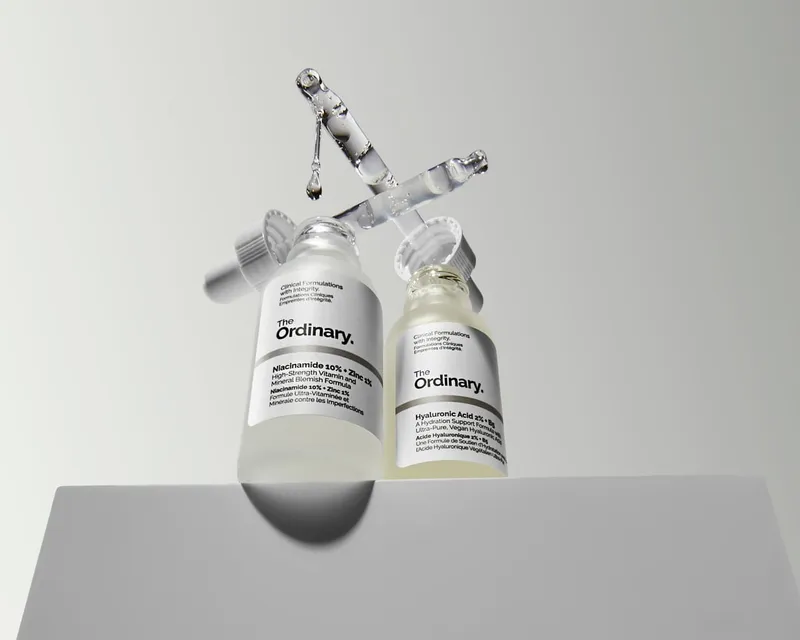
Vitamin C Suspension 23% + HA Spheres 2%
The Ordinary
$8.70
★★★★☆
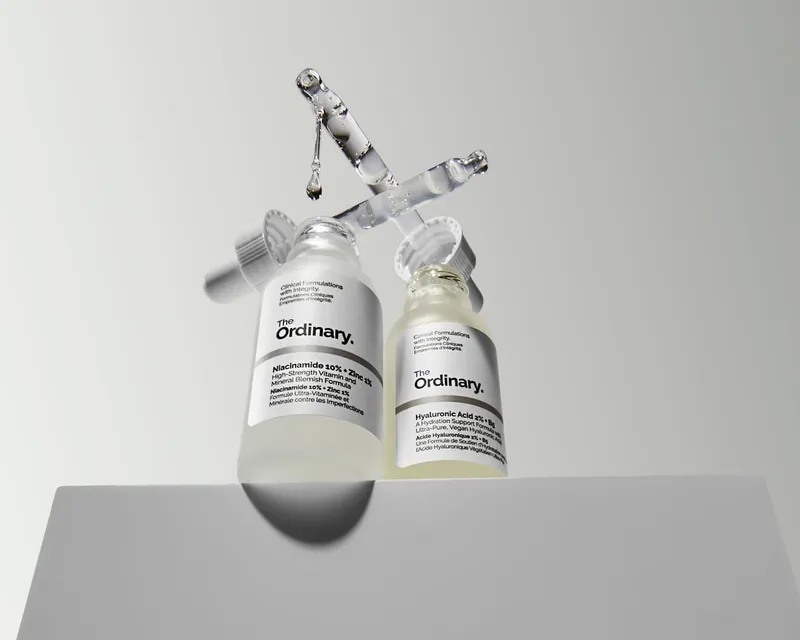
100% Organic Cold-Pressed Rose Hip Seed Oil
The Ordinary
$10.20
★★★★☆
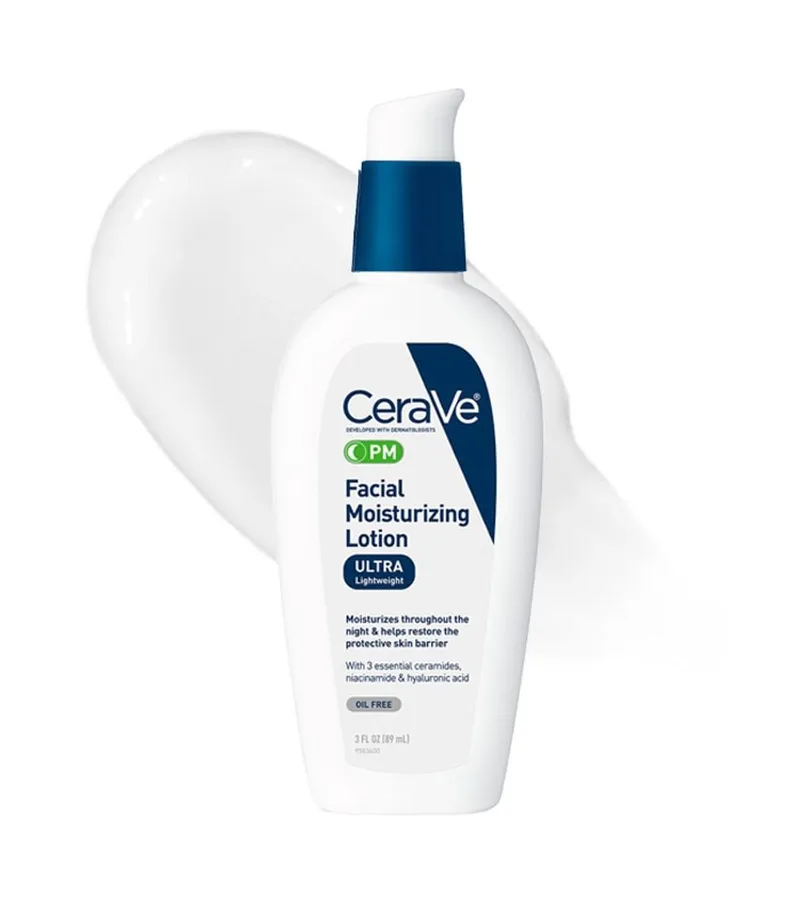
PM Facial Moisturizing Lotion
CeraVe
$14.99
★★★★☆
Upfront, that’s $33.89 for all three — already cheaper than one bottle of the Kerala Botanics oil. But upfront cost isn’t the same as cost over time, and that’s where this gets interesting. For more on how these formats differ mechanically, our vitamin C serum vs. oil breakdown covers the absorption and stability tradeoffs in more depth.
The Drop Math Nobody Puts on the Label
Here’s the part every “replaces three products” claim conveniently skips: bottle size and dropper output.
A standard glass dropper delivers roughly 0.05 mL per drop — about 20 drops per milliliter. Kerala Botanics sells its oil in a 30 mL bottle, which works out to approximately 600 drops per bottle, assuming a standard dropper (the brand doesn’t publish exact drop yield, so we’re using the industry norm here).
The brand’s own usage guidance suggests 4 to 6 drops per application. That range matters more than it sounds like it should, because the difference between 4 drops and 6 drops, applied once versus twice a day, changes the cost-per-use math by more than double.
Running the Numbers: Two Scenarios
We ran two realistic use cases, because “it depends on your skin” isn’t a cop-out here — it’s the actual variable driving the math.
Scenario 1: Once Daily, Simplified Routine
If you’re using the oil as a true one-step replacement — applied once at night, 5 drops, covering face and neck — a 30 mL bottle lasts about 120 applications. That’s four months.
$49 ÷ 120 uses = $0.41 per day, or roughly $12.25 per month.
Scenario 2: Twice Daily, Drier Skin
Dry skin often needs more than a nighttime pass, and some people layer the oil morning and night to get enough occlusion without a separate moisturizer. At 5 drops twice a day (10 drops daily), that same bottle lasts 60 days — two months.
$49 ÷ 60 uses = $0.82 per day, or roughly $24.50 per month.
Now the split routine. Using the same “how much do you realistically use” logic: 4 drops of serum once daily, 3 drops of oil once daily, and about a gram of moisturizer applied twice a day (moisturizer gets used faster than serum or oil — it’s meant to cover more surface at a heavier hand).
| Routine | Monthly Cost | Cost Per Day |
|---|---|---|
| Kerala Botanics (once daily) | $12.25 | $0.41 |
| Kerala Botanics (twice daily) | $24.50 | $0.82 |
| Split routine (serum + oil + moisturizer) | $13.37 | $0.45 |
Look at that middle row against the split routine. If you’re a twice-daily user, the three-product routine is nearly half the monthly cost. If you’re a once-daily user, the oil edges out slightly cheaper — by about a dollar a month, which is close enough to call a wash.
Where the Split Routine Wins
The three-product routine wins clearly in one specific case: if your skin needs product twice a day and a heavier hand each time. Very dry skin, cold climates, indoor heating season — anyone who needs more than a light oil layer to stay comfortable is going to burn through a $49 bottle twice as fast as the “once daily” math assumes.
It also wins if you like to customize. A serum, oil, and moisturizer let you swap one piece without replacing the whole system — bump the vitamin C percentage, switch oils based on season, use a richer cream in winter. Our guide on linoleic vs. oleic face oils gets into why oil choice isn’t one-size-fits-all, and that flexibility disappears the moment everything’s bundled into a single bottle.
And if you have oily or acne-prone skin, a single rich oil trying to do three jobs at once may not sit well regardless of price. We cover that tension in more detail in face oil for oily, acne-prone skin — worth a read before you commit to any one-step oil, this one included.
Where the Oil Wins
The math favors Kerala Botanics when you’re a once-a-day user who values simplicity as much as the dollar figure. Three bottles means three expiration dates, three chances to forget a step, three products taking up counter space. If you travel often, one bottle instead of three is a real, if hard-to-price, advantage — fewer liquids to pack, fewer things to run out of mid-trip.
There’s also the ingredient angle. The formula pairs an oil-soluble vitamin C derivative with bakuchiol, a plant-based retinol alternative — so you’re not just buying convenience, you’re buying two active ingredients in one step that would otherwise require a fourth product to get separately. If you’re curious how bakuchiol stacks up against actual retinol, our bakuchiol vs. retinol piece walks through the evidence, and it’s a fair comparison, not a hype piece.

Ayurvedic Vitamin C Face Oil
Kerala Botanics
$49
★★★★☆
What the Extra Cost Buys (or Doesn’t)
Kerala Botanics markets its vitamin C form as staying active in skin cells “up to 80 times longer” than standard L-ascorbic acid, with “up to 4 times” the effectiveness. We’ll say what we always say about proprietary stability claims like this: they’re plausible mechanistically — oil-soluble vitamin C derivatives genuinely do resist oxidation better than L-ascorbic acid — but the specific multipliers are brand-supplied, not independently verified in peer-reviewed research. That doesn’t make the product bad. It means you should weigh the claim as directional, not gospel. Our reading a skincare claim guide is a good gut check for language like this on any label, not just this one.
What you’re reliably paying for is oxidation resistance (a real, documented weakness of standard L-ascorbic acid serums), the bakuchiol inclusion, and the one-bottle format. What you’re not necessarily paying for is a dramatically superior result to a well-formulated three-product routine — the split routine, done right, delivers comparable actives at a comparable or lower monthly cost, just with more steps.
Putting It All Together
The honest verdict: this isn’t a case where one option is objectively “worth it” and the other isn’t. It’s a case where your habits decide the winner.
If you’re disciplined about a once-daily application and you value having one bottle instead of three, the Kerala Botanics oil comes out slightly cheaper per month than the split routine — and a lot simpler. If your skin needs twice-daily layering, or you tend to overapply (most people do), the three-product routine wins on cost by a wide enough margin to notice on a bank statement.
Neither answer is wrong. Just don’t buy the $49 bottle assuming it’s automatically the frugal choice — run your own numbers first. Count your drops for a week, do the division, and let the math tell you what the label won’t. For a deeper look at whether a single oil can genuinely carry a full routine, our guide on the 3-in-1 minimalist oil routine is a useful next stop.