
Routines
When to Throw Out Skincare: Expiry, PAO, and Oxidation
Learn when to actually toss your skincare — PAO symbols, batch codes, oxidation signs, and category-specific rules for sunscreen and vitamin C.
Disclosure — This article may contain affiliate links. We earn a small commission at no extra cost to you when you purchase through our links. This supports our ability to create independent, evidence-based skincare content.
The expiry date on your moisturizer is not a suggestion. But it’s also not the whole story. Most products don’t come with a traditional expiry date at all — they come with a PAO symbol, a batch code, and the assumption that you’ll figure out the rest yourself.
Most people don’t. So here’s what you actually need to know.
What the PAO Symbol Means (and What It Doesn’t Tell You)
The Period After Opening symbol — that small open-jar icon with a number and the letter M on it — tells you how many months a product is considered stable and safe after you first open it. 6M means six months. 12M means one year. You’ve seen it on everything from SPF to eye cream.
The catch: PAO assumes ideal storage conditions. That means room temperature, away from light, with the lid closed between uses. Your bathroom shelf in direct sunlight, with a slightly loose cap, is not ideal storage. In practice, products degrade faster than PAO suggests when they’re stored poorly.
PAO also says nothing about what happens before you open the product. A serum sitting in a warehouse or on a retailer’s shelf for 18 months before you buy it has already aged. The clock hasn’t officially started, but chemistry doesn’t care about technicalities.
How to Find the Manufacture Date
This is where batch codes come in. The batch code (usually a string of letters and numbers stamped on the bottom or side of the packaging) tells you when the product was made. You can decode most of them at CheckFresh or CheckCosmetic. Paste in the code, select your brand, and it spits out the manufacture date.
Cross-reference the manufacture date against the product’s shelf life (listed in the PAO or on the brand’s website) to figure out how much runway is left before you even open it. This is especially worth doing for products you buy on Amazon or from discount retailers — third-party sellers sometimes offload old stock. If you’re worried about counterfeits or old inventory, our guide to buying skincare on Amazon covers what to watch for.
General Signs a Product Has Turned
Before you even check the date, your senses can tell you a lot.
Smell. Most skincare products have either a characteristic scent or no scent at all. A product that suddenly smells rancid, sour, or “off” has likely undergone oxidation or microbial growth. Trust this signal.
Color change. Any product that has significantly shifted in color — especially toward yellow, orange, or brown — is a red flag. Some color change is expected in certain ingredients, but a dramatic shift usually means degradation.
Texture change. Separation is normal in some natural formulas. But if a previously smooth emulsion has become grainy, clumpy, or watery in a way it wasn’t before, the formula has destabilized. Using it won’t necessarily hurt you, but it won’t work the way it’s supposed to either.
Performance change. This is the most subjective one, but if a product you’ve used consistently stops feeling or working the same way, degradation is a legitimate possibility.
Vitamin C: The Category With Its Own Rules
Vitamin C serums deserve a separate section because they degrade faster and more visibly than almost anything else in a routine.
L-ascorbic acid (the gold standard, water-soluble form) starts oxidizing the moment it contacts air. At low pH (under 3.5), it’s more stable — but not indefinitely. The amber-to-orange-to-brown color progression is the most reliable indicator. A serum that’s turned visibly orange or brown has already oxidized significantly. Using it isn’t dangerous, but the antioxidant activity is largely gone. You’re applying expensive disappointment.
Even before visible color change, potency drops. A serum stored in a clear bottle on a sunny windowsill will lose meaningful efficacy within weeks. Dark glass or opaque packaging buys you more time. So does refrigerator storage, if you can manage it.
Functionally, toss a vitamin C serum when:
- It has visibly darkened beyond a pale yellow
- It smells sour or vinegary
- The PAO has elapsed, regardless of appearance
- You can’t remember when you opened it and it’s been longer than six months
If you want to understand the chemistry behind why this happens, our piece on why vitamin C oxidizes orange goes deep on the mechanism.
One way to sidestep the oxidation problem entirely is to use a vitamin C format that’s inherently more stable. Oil-soluble derivatives like ascorbyl tetraisopalmitate don’t carry the same shelf-life vulnerabilities as L-ascorbic acid because they don’t exist in an aqueous environment where oxidation accelerates.
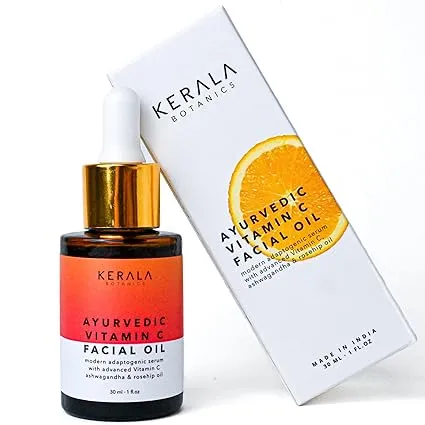
The Kerala Botanics Ayurvedic Vitamin C Face Oil uses an advanced oil-soluble vitamin C form that the brand claims stays active in skin cells significantly longer than standard serums. It also contains bakuchiol, a plant-based retinol alternative that’s relevant if you’re simplifying a multi-step routine. The oil format is genuinely unusual for vitamin C and solves the oxidation problem by changing the delivery medium. It won’t appeal to everyone — it’s heavier than a serum, and if you have oily skin or wear heavy makeup, it may not be your first choice. But for people who want vitamin C without the shelf-stability anxiety, it’s a reasonable option.
Ayurvedic Vitamin C Face Oil
Kerala Botanics
$49
★★★★☆
For more on the serum-versus-oil format debate, Vitamin C Serum vs Vitamin C Oil breaks down the tradeoffs directly.
Sunscreen: Non-Negotiable Expiry Rules
Sunscreen is the one category where expiry is a safety issue, not just a performance issue. An expired sunscreen may not provide the SPF on the label. That matters.
In the US, sunscreen is regulated as an OTC drug. By law, it must carry an expiration date — and that date reflects stability testing for the UV filters inside. When chemical filters like avobenzone or octocrylene degrade, they lose the ability to absorb UV radiation at the claimed wavelengths. The number on the bottle is no longer accurate.
The rules for sunscreen are simple:
- Always check the expiration date. If there isn’t one, assume it’s good for three years from the manufacture date (FDA guidance for unlabeled product).
- Toss it if it’s expired. No exceptions.
- Watch for earlier signs of degradation: separation, a grainy texture in a mineral formula, or any unusual smell. These mean it’s gone before the date on the label.
- Heat accelerates degradation. A sunscreen left in a hot car, beach bag, or sunny windowsill may expire months ahead of schedule. Storage matters here more than almost anywhere else.
For how much you should be applying in the first place, our sunscreen application guide has the numbers.
By Category: A Quick-Reference Breakdown
Different product types have different typical lifespans and different failure modes. Here’s a working guide.
Cleansers
Most last 12 months after opening. Foaming and gel cleansers are water-based and can harbor bacteria over time. Signs of a turned cleanser: smell change, separation, or unusual texture. If you’ve had the same cleanser for 18 months, replace it.
Moisturizers and Creams
PAO is typically 12M. Jar formulas degrade faster than pump or tube formats because every use introduces air and bacteria. If you use a spatula and store it away from humidity, you’ll get closer to the full PAO. If you’re scooping it out with your fingers directly after washing your face, shorten your estimate.
Serums (Non-Vitamin C)
Most last 6–12 months, depending on active ingredients. Retinol (the OTC version of tretinoin) is light- and air-sensitive — store it in a closed, opaque container away from sunlight. Peptide serums are generally more stable. Hyaluronic acid serums can be contaminated by bacteria over time, especially if you touch the dropper to your face.
Eye Creams
12 months is standard. Apply with your ring finger, not directly from the tube or jar onto the eye area, to minimize contamination.
Exfoliants (AHAs, BHAs)
Acid-based products can actually remain effective for a while because low pH inhibits microbial growth. But stability is still finite. If the smell has changed or the texture has shifted, it’s time.
Oils
Pure facial oils without water can last longer than most products — some up to two years — but they do go rancid. The smell tells you: rancid oil smells distinctly off, like old cooking oil. Rancid oil isn’t just ineffective, it can actually irritate skin. Our guide to using facial oils includes storage tips worth reading.
Storage Habits That Buy You More Time
There’s no point knowing the PAO if your storage conditions are actively working against you.
Bathroom humidity and heat are the enemies. A medicine cabinet in a steam-filled bathroom accelerates degradation in almost every product category. If you can keep active serums — vitamin C, retinol, peptides — in a bedroom drawer or a small skincare fridge, you’ll get longer stable shelf lives.
Keep lids closed. Every second a product is open, it’s exposed to air. Screw caps on tight. Push pumps down when not in use.
Write the date on the product. Low-tech, but effective. Take a permanent marker and write the month and year you opened it on the bottom of the bottle. No more guessing.
Don’t dilute products with water or mix them. Adding anything to a product — water, another serum, a drop of something else — can destabilize the formula, introduce bacteria, or change the pH in a way that accelerates breakdown.
Putting It All Together
The hierarchy for deciding whether to toss a product looks like this:
- Is it sunscreen? Check the expiration date first. If it’s past it, throw it out. Full stop.
- Does it smell, look, or feel different? Trust your senses. A color change or off smell is a reliable signal of degradation.
- Check the PAO. Count months from when you opened it. When in doubt, write it on the packaging when you first use it.
- Look up the batch code. If you’re buying from a third-party retailer and the manufacture date predates your purchase by more than a year, be skeptical.
- Consider format and storage. Jar moisturizer stored in a humid bathroom has a shorter real-world lifespan than its PAO suggests. Factor that in.
Vitamin C serums get special scrutiny: watch for color change and don’t push past six months, regardless of what the packaging says.
Most products won’t make you sick after they’ve expired. But they may not work. For products like sunscreen and active serums, that’s not an acceptable trade-off.
If you’re rebuilding a routine from scratch after clearing out old stock, our beginner skincare routine is a good place to start without overcomplicating it.