
Routines
Does a $200 Cream Do Anything a $25 One Can't?
We break down where price actually buys better results in skincare — and where you're just paying for a prettier jar.
Disclosure — This article may contain affiliate links. We earn a small commission at no extra cost to you when you purchase through our links. This supports our ability to create independent, evidence-based skincare content.
I have a $9 toner on my bathroom shelf right now, sitting next to a $190 serum. Both are doing their jobs. But for a long time, I assumed price was at least some signal of quality — that the $200 cream must be doing something the drugstore one couldn’t. Turns out, it depends entirely on what you’re buying and why.
The honest answer isn’t “luxury is a scam” or “you get what you pay for.” It’s more frustrating than either of those. Sometimes price reflects real chemistry — patented delivery systems, stability-tested formulas, active concentrations that actually move the needle. And sometimes it reflects a heavy glass jar, a celebrity campaign, and a very optimistic markup.
Here’s how to tell which is which, category by category.
Where Price Actually Buys You Something
Vitamin C Serums
This is the one category where I’ll defend a triple-digit price tag without hesitation — with caveats.
L-ascorbic acid, the form of vitamin C with the most clinical data behind it, is notoriously unstable. It oxidizes fast, especially when formulated in water. Getting it to stay active long enough to absorb into skin requires a specific pH window (below 3.5), airtight packaging, and ideally a ferulic acid and vitamin E chaperone to slow degradation. Doing all of that correctly is genuinely hard and genuinely expensive.
SkinCeuticals C E Ferulic has the patent on its specific LAA + vitamin E + ferulic acid ratio, and the clinical data to back it up. The $185 price tag is real gatekeeping — not vanity pricing. We’ve written about whether it’s actually worth it, and the short version is: for serious photoprotection and antioxidant support, nothing has quite matched it in peer-reviewed studies.
C E Ferulic
SkinCeuticals
$185
★★★★½
That said, $185 is $185. If you want a vitamin C treatment without the serum format — or without the clinical-research price premium — an oil-based vitamin C is worth knowing about. Kerala Botanics’ Ayurvedic Vitamin C Face Oil uses a stabilized form of vitamin C that’s engineered to stay in skin cells significantly longer than standard L-ascorbic acid, paired with bakuchiol, a plant-based alternative to retinol. The oil format sidesteps a lot of the oxidation problems that plague water-based serums.
It’s not a like-for-like swap — the ingredient chemistry is different, and it doesn’t have the same clinical trial depth as CE Ferulic. If you have oily skin it may feel heavy, and it can take some adjustment under makeup. But for someone who wants antioxidant + retinol-alternative + facial oil in one step at $49, it’s a genuinely smart choice. More on the vitamin C serum vs. oil question here.
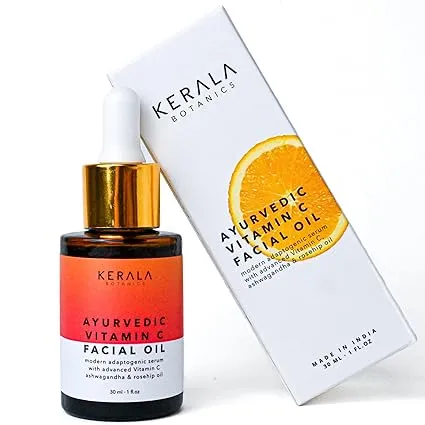
Ayurvedic Vitamin C Face Oil
Kerala Botanics
$49
★★★★☆
Retinoids
Price matters here too, but in a different way than you might expect.
Prescription tretinoin is extremely cheap — sometimes under $15 with a coupon — and it’s the most evidence-backed retinoid on the market. So “expensive” doesn’t automatically mean “better” when it comes to vitamin A.
What mid-range brands like Medik8 do well is retinaldehyde: a retinoid that converts to retinoic acid in the skin with less irritation than tretinoin. You can’t get that at the drugstore for $12. The formulation also matters — encapsulated retinol degrades less in the bottle and releases more steadily on skin, which is why a $75 product might actually outperform a $20 one with the same listed concentration. The full breakdown of retinol vs. retinaldehyde vs. tretinoin is here.
Crystal Retinal 6
Medik8
$75
★★★★½
Packaging and Stability
This one sounds boring, but it’s real. Air-pump dispensers and opaque tubes protect light-sensitive and oxygen-sensitive ingredients — vitamin C, retinol, benzoyl peroxide — in a way that open jars simply can’t. If you’re paying $60 for a vitamin C serum in a clear glass dropper bottle, you might as well leave it on your windowsill.
Luxury brands usually (not always) get this right. But so does The Ordinary, for what it’s worth. Stable packaging doesn’t have to cost $200.
Where You’re Mostly Paying for the Jar
Moisturizers
Deep breath. Here’s where the luxury brands really lose me.
A moisturizer’s job is to hydrate skin, support the barrier, and prevent transepidermal water loss. The ingredients that do that — ceramides, glycerin, hyaluronic acid, niacinamide, squalane — are not exotic or expensive to source. They’re commodity cosmetic ingredients. CeraVe Moisturizing Cream has three essential ceramides, hyaluronic acid, and a patented slow-release delivery system for around $19. Dermatologists recommend it constantly, and not ironically.
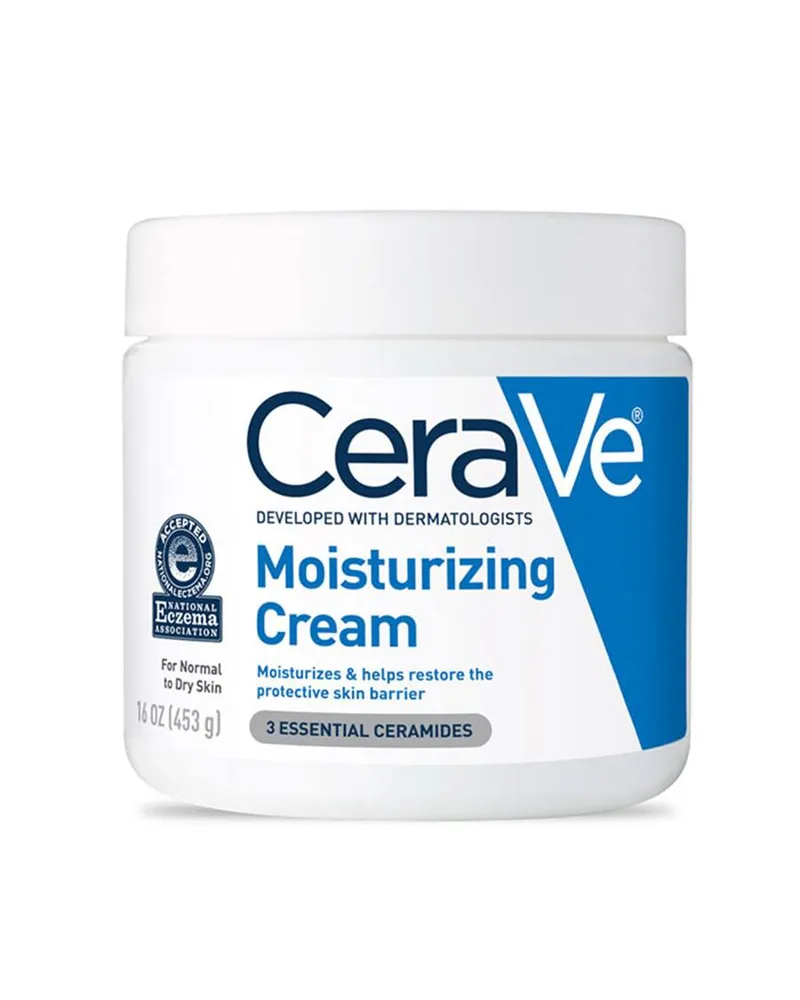
CeraVe Moisturizing Cream
CeraVe
$19
★★★★½
When a luxury moisturizer costs $200, you’re usually paying for one or more of the following: a fragrance blend, a striking texture, a proprietary ingredient complex with a trademarked name and a press release, or a very heavy glass jar. None of those things are bad, exactly. Texture and sensory experience genuinely affect whether you’ll use something consistently, and that matters. But the skin results? Largely equivalent at much lower price points. Our ceramide moisturizer guide has the receipts on this.
Cleansers
Cleanser is on your face for thirty seconds. Maybe sixty if you’re being thorough. The case for spending $45 on one is almost impossible to make. Active ingredients don’t have time to absorb. Fancy botanical extracts go straight down the drain. A gentle, low-pH cleanser with no fragrance does the job, full stop.
Eye Creams
Eye creams are moisturizers in smaller packaging with a higher price per ounce and a very targeted marketing strategy. The skin around your eyes is thin and sensitive, which means it actually benefits from less — fragrance-free, gentle, occlusive. Most of what your regular moisturizer is already doing. Our eye cream guide includes some honest talk about what can and can’t actually reach fine lines topically.
Exfoliants
Glycolic acid is glycolic acid. The molecule doesn’t care what logo is on the bottle. Concentration and pH are what matter, and The Ordinary’s 7% Glycolic Acid Toning Solution delivers both for $10.
Glycolic Acid 7% Toning Solution
The Ordinary
$10
★★★★☆
The Things That Genuinely Blur the Line
Delivery Systems
This is where formulation science gets interesting and where some luxury products earn their keep. Liposomal encapsulation, time-release microspheres, emulsion stability at low pH — these are real technologies that affect how well an active actually penetrates and works. They’re not free to develop or manufacture.
The challenge is that most brands don’t tell you enough about their delivery system to evaluate it. “Advanced encapsulation” on a press release is meaningless without data. Look for brands that publish formulation details or have third-party clinical testing, not just in-house “clinical studies” where 23 participants self-reported feeling more hydrated.
Concentration of Actives
A $15 niacinamide serum with 2% niacinamide and a $50 one with 10% are genuinely different products. So are retinol serums at 0.025% vs. 0.5%. Price doesn’t always track concentration, but when it does, that price difference is justified. Reading ingredient labels is the single most useful skill for making these calls.
Sensory Experience and Ritual
I’m not going to tell you this doesn’t matter. If a $60 moisturizer smells like something you love and makes you actually do your routine every morning, it’s doing something a $12 one that smells like nothing doesn’t. The placebo effect in skincare is real and studied. Consistency is everything. If splurging makes you consistent, that’s not irrational spending — it’s knowing yourself.
Category-by-Category Verdict
| Category | Worth Splurging? | Why |
|---|---|---|
| Vitamin C serums | Sometimes | Stability, delivery, patented ratios are real |
| Retinoids | Sometimes | Retinaldehyde, encapsulation matter |
| Moisturizers | Rarely | Commodity ingredients; drugstore delivers |
| Cleansers | No | On your face for 60 seconds |
| Eye creams | Rarely | Usually moisturizer in smaller packaging |
| Exfoliants | No | The molecule doesn’t know you paid more |
| Serums (other actives) | Depends on the active | Read the label; concentration matters |
Putting It All Together
The question isn’t really “is expensive skincare worth it?” It’s whether the specific product you’re considering is priced based on the formula or based on the brand story.
For actives — vitamin C, retinoids, some peptides — the chemistry is genuinely complex, stability is a real concern, and delivery systems matter. Paying more for those, from brands with real formulation chops, usually makes sense. Check the shrinkflation piece while you’re at it, because price is going up even when products aren’t getting better.
For moisturizers, cleansers, and exfoliants, the drugstore version with the right ingredients beats a luxury version with a pretty bottle almost every time. CeraVe is not a compromise. It’s the answer.
The practical move: spend where it counts (your vitamin C, your retinoid, your SPF), and stop feeling guilty about the $8 moisturizer. Your skin doesn’t read price tags.