
Ingredients
Niacinamide: Is 10% Better Than 5%?
Niacinamide 10% vs 5%: we break down the dose-response evidence at 2%, 4-5% and 10%, plus flushing risks and why the label number sells. Is more better?
Disclosure — This article may contain affiliate links. We earn a small commission at no extra cost to you when you purchase through our links. This supports our ability to create independent, evidence-based skincare content.
No, 10% niacinamide is not better than 5%. For most people it’s the same result with a higher chance of redness, tingling, and a face that looks like you just ran for a bus.
That’s the short answer. The longer one is more interesting, because it explains why the big number on the bottle keeps winning at the shelf even though it isn’t winning in the research. We’ll walk through what the studies tested at 2%, 4-5%, and 10%, what the flushing reports actually mean, and how to pick a percentage without overthinking it.
What the research actually tested
Here’s the thing most people miss. The famous niacinamide trials didn’t use 10%. They used 2%, 4%, and 5%.
Those were the doses that earned niacinamide its reputation as the ingredient that does a bit of everything. The studies were small and often funded by cosmetic companies, which is worth remembering. But they’re consistent, and they cluster in a narrow range.
| Concentration | What studies looked at | Typical timeframe |
|---|---|---|
| 2% | Oil output, barrier function | 4 weeks |
| 4% | Acne, melasma | 8 weeks |
| 5% | Dark spots, sallowness, fine lines | 8-12 weeks |
| 10% | Very little controlled data | n/a |
Look at that bottom row. That’s the problem.
The 2% evidence: more than you’d expect
Two percent sounds like a rounding error. It isn’t.
In a 2006 study led by Dr. Zoe Draelos, a 2% niacinamide formula reduced how much oil skin produced over four weeks. Earlier lab work found that 2% niacinamide helped skin build more of its own ceramides and lose less water through the barrier. Think of ceramides as the mortar between bricks. Niacinamide seems to nudge your skin into making more mortar.
So if your goals are calmer, less greasy, better-hydrated skin, 2% is a real dose. Plenty of well-liked moisturizers sit in this range. If you want the broader picture of what the ingredient does, our complete niacinamide guide covers it.
What to do with this: If your skin is sensitive or reactive, start at 2% or in a moisturizer. You lose very little.
The 4-5% evidence: where the data lives
This is the sweet spot, and it’s where most of the clinical evidence sits.
A 1995 trial compared a 4% niacinamide gel with 1% clindamycin gel for acne over eight weeks. Both helped, and the results were comparable. A 2011 trial pitted 4% niacinamide against 4% hydroquinone for melasma. Both improved, and niacinamide caused fewer side effects. Hydroquinone is a heavy hitter, so that comparison matters.
At 5%, the studies from the early 2000s found visible fading of dark spots and less sallow, yellowish tone after about eight weeks. Fine lines and skin texture also improved with longer use, around 12 weeks.
Notice the pattern. None of these trials came back and said, “We tried 10% and it was twice as good.” The strongest results came from a modest dose used consistently for two to three months.
What to do with this: If you want to target dark marks, breakouts, or uneven tone, 4-5% is where the proof is. Use it daily and give it eight weeks. Our skincare timelines guide explains why that wait is normal and not you doing something wrong.
What about 10%?
Honest answer: we couldn’t find a well-designed human trial showing 10% beats 5% on the same outcome. That doesn’t prove it’s useless. It means the claim “more is better” is mostly an assumption.
There’s a plausible reason the benefits flatten. Skin can only take up so much niacinamide, and your cells convert it into a coenzyme (NAD+) that’s already in good supply once you hit a decent dose. It’s a bit like watering a plant. Once the soil is moist, pouring in a second bucket doesn’t make the plant grow faster. It makes a puddle.
Some people do get good results from 10% formulas. But that’s not the same as 10% being the reason. Their skin might do just as well at 5%.
Flushing, tingling, and irritation at high percentages
This is the downside nobody puts on the front of the box.
Plenty of people report redness, warmth, itching, or a hot, flushed feeling after using 10% and higher products. There are a few likely culprits.
Nicotinic acid contamination. Niacinamide can contain trace amounts of nicotinic acid (niacin), the form of vitamin B3 that causes the classic hot flush. It can also form if the product breaks down over time, especially in a very acidic formula. Quality manufacturing keeps this low, but it’s one reason cheap, old, or poorly stored bottles can sting.
Concentration itself. Higher amounts of almost any active raise the odds of irritation. A compromised barrier, from over-exfoliating or a cold snap, makes this worse. If your face is already angry, check our guide on skin barrier burnout before adding another active.
The rest of the formula. Zinc, acids, or fragrance in the same bottle can be the real troublemaker. The niacinamide gets blamed anyway.
One caveat. These reports are mostly anecdotal. We don’t have clean data on how common the problem is at 10%. But it’s consistent enough that we’d take it seriously.
If you see redness, stop for a few days. Reintroduce a lower percentage, or apply it every other night. And patch test new products first. Here’s how to patch test properly.
Why the label number sells better than it performs
A bigger number is easy to sell. “10%” fits on a bottle, in a headline, and in a comparison chart. “Clinically studied at 4%” doesn’t pop the same way.
It also feels like value. If 5% is good, 10% must be twice as good, and twice as good for the same six bucks is a deal. Our brains love that math. Skincare brands know it.
But concentration is only one piece. The pH of the formula, the other ingredients, and how well it’s stabilized all change how the product feels and performs on skin. A well-made 5% can easily beat a sloppy 10%. And a percentage without context is a bit like a car’s horsepower with no mention of the brakes.
If you want to get better at spotting this, our piece on how to read a skincare claim walks through the usual tricks. Pay attention to whether a brand cites a trial at the same strength it’s selling.
How to choose your percentage
Keep it simple.
- Sensitive, reactive, or new to actives: Start with 2-4%, often in a moisturizer.
- Dark marks, uneven tone, or breakouts: Aim for 4-5%. That’s where the evidence is.
- Oily skin and enlarged-looking pores: 2-5% works. You don’t need more.
- Already tolerate 10% fine and like it: Keep going. There’s no reason to switch, but don’t expect a bonus.
Apply it once or twice a day, on clean skin, before your moisturizer. If you’re pairing it with vitamin C, relax. That old fear is a myth, and we explain why in our niacinamide and vitamin C myth piece.
Products we’d reach for
The 5% pick
Good Molecules’ serum is a simple, affordable way to land in the studied range. The texture is light and a bit watery, it layers well under moisturizer, and it doesn’t leave a tacky film. The con: it’s a straightforward formula, so there are no bells or whistles if you want extras.
Niacinamide Serum
Good Molecules
$8
★★★★½
The moisturizer route
Not everyone wants another serum step. CeraVe’s PM lotion puts niacinamide in a light, fragrance-free moisturizer alongside ceramides. The brand doesn’t publish the exact percentage, so treat it as a gentle, low-to-moderate dose. It’s a great starting point for sensitive skin, and it’s easy to find. The downside is that it won’t give you a stronger, targeted dose.
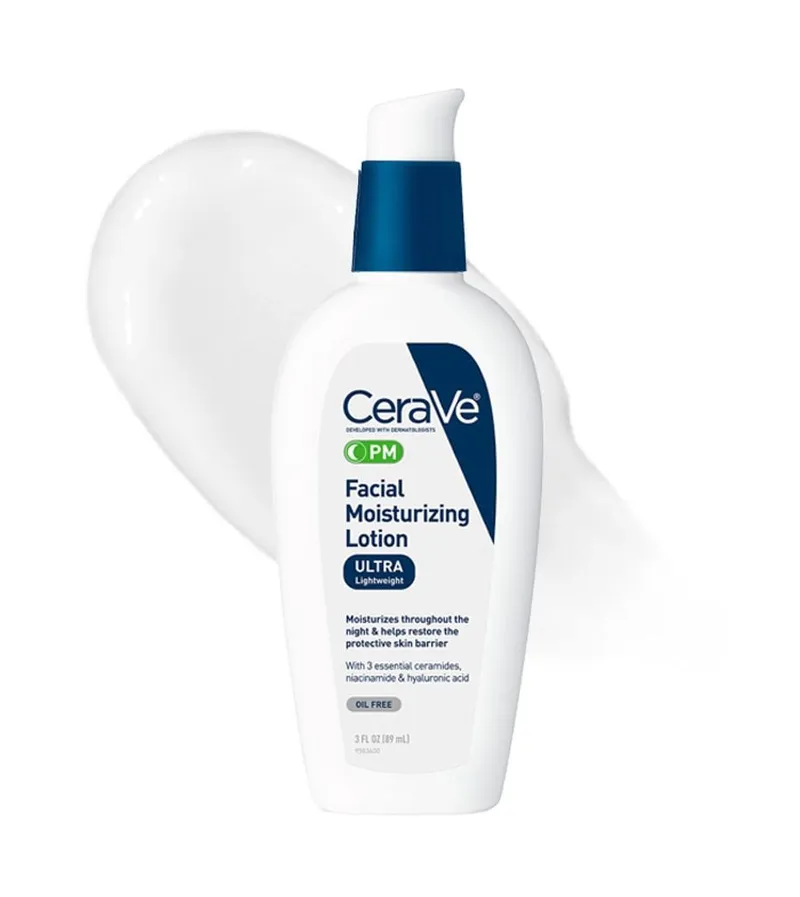
PM Facial Moisturizing Lotion
CeraVe
$17
★★★★½
The 10% option, if you’re curious
The Ordinary’s 10% serum is the reason so many people think higher is better. It’s cheap, it’s everywhere, and plenty of people use it happily. Others get flushed or find it pills under other products. It also contains 1% zinc, which can add to irritation for some. If you try it, patch test, start every other night, and don’t be a hero.
Niacinamide 10% + Zinc 1%
The Ordinary
$6
★★★★☆
Putting it all together
Ten percent isn’t better than 5%. The evidence points to 2% for barrier and oil, 4-5% for acne, dark spots, and tone, and very little data to support going beyond that. Higher doses mostly add a shot at redness and flushing.
So here’s the plan. Pick a well-made product in the 4-5% range, use it daily for eight to twelve weeks, and judge it by your skin, not the label. If you’re sensitive, go lower. If 10% already works for you, fine, but don’t chase it.
Skip the arms race. Your skin doesn’t care about the number.