
Acne
Perioral Dermatitis: Why the Rash Around Your Mouth Won't Clear
Perioral dermatitis is chronically misdiagnosed and made worse by common treatments. Here's what's actually causing it and how to clear it.
Disclosure — This article may contain affiliate links. We earn a small commission at no extra cost to you when you purchase through our links. This supports our ability to create independent, evidence-based skincare content.
Perioral dermatitis has a cruel irony at its center. The harder you treat it, the worse it gets. Most people who have it spend months cycling through the wrong solutions — acne creams, hydrocortisone, heavy moisturizers — each one making the rash angrier than the last. By the time they get an accurate diagnosis, the barrier is a mess and the skin is sensitized to half their routine.
This is a condition that’s badly served online. Most acne content doesn’t cover it. Most rosacea content gets it partially right but misses the triggers. And the standard advice to “see a dermatologist” — while correct — leaves a lot of gaps in the meantime.
Here’s what’s actually going on, what’s making it worse, and how the clearing process actually works.
What Perioral Dermatitis Actually Is
The name is misleading. “Peri” means around, “oral” means mouth — so perioral dermatitis describes a rash that clusters around the mouth, nose folds, and sometimes the eyes (periocular). It looks like a mix of small red papules, pustules, and general redness, often with a ring of clear skin right at the lip border. That pale ring is one of the diagnostic giveaways.
It’s not acne. It’s not rosacea, though it can look similar to both. The underlying mechanism is closer to a contact dermatitis or barrier disruption response — but even that’s not fully settled. What we do know is that it’s driven by specific triggers, it responds to specific treatments, and it reliably flares when those triggers are present.
It affects mostly people between 20 and 45, and disproportionately people assigned female at birth — though the reasons for that skew aren’t entirely clear. It can last months or years if the triggers aren’t removed.
The Most Common Misdiagnosis
Perioral dermatitis is frequently treated as acne. The logic makes sense visually — there are pustules, there’s redness, it’s on the face. So people reach for benzoyl peroxide, salicylic acid, or retinoids. These don’t help and often worsen the irritation significantly.
It’s also mistaken for fungal acne, contact dermatitis, rosacea, and seborrheic dermatitis. Each misdiagnosis leads to the wrong treatment, which delays clearing and often damages the barrier further. If you’ve been treating a “breakout” around your mouth for more than six weeks with no improvement, perioral dermatitis belongs on the list of possibilities.
The Three Main Triggers
Understanding what causes flares is more important than finding the right cream. Most cases of perioral dermatitis are driven by one or more of three primary triggers.
Topical Steroids
This is the most well-documented cause. Topical corticosteroids — even mild ones — can trigger and perpetuate perioral dermatitis with regular facial use. Hydrocortisone creams bought over the counter are a common culprit. People apply them to calm redness, see short-term improvement, and then experience rebound flaring when the steroid is withdrawn. The skin becomes dependent on the steroid, and each attempt to stop causes a worse reaction than the one before.
This cycle is sometimes called steroid-induced or steroid-modified perioral dermatitis. The fix is complete cessation of the steroid, which causes an initial flare — often significant — before things improve. That rebound period can last two to four weeks and is genuinely uncomfortable. Knowing it’s coming makes it possible to push through.
Fluoride Toothpaste and SLS
Fluoride in toothpaste has been linked to perioral dermatitis in a subset of people, though it’s not universal. The mechanism is irritation and possible alteration of the perioral microbiome. Switching to a fluoride-free toothpaste — being careful to rinse the mouth area thoroughly after brushing — is worth trying if other interventions aren’t working.
SLS (sodium lauryl sulfate), a foaming agent found in most conventional toothpastes and many cleansers, is a known irritant. On the skin around the mouth, repeated low-level SLS exposure can be enough to trigger and maintain a flare. This is especially relevant if your cleanser contains SLS and you’re noticing the rash extends beyond the immediate lip border.
Heavy Topical Products and Barrier Overload
Rich moisturizers, occlusive creams, and heavy face oils applied to the perioral area can create an environment where the disrupted barrier can’t recover. The skin around the mouth is thinner and more reactive than most facial zones. Products that work perfectly elsewhere — thick ceramide creams, petrolatum-heavy slugging products — can worsen perioral dermatitis when applied directly to the affected area.
For more on how barrier products can sometimes backfire, the guide on damaged skin barrier repair covers when less intervention is the right call.
Zero Therapy: The Treatment Most People Don’t Expect
The most effective first step for perioral dermatitis is often subtraction, not addition. “Zero therapy” — also called null therapy — means stripping the routine down to the bare minimum and removing all potential triggers. No actives, no heavy moisturizers, no fragranced products, minimal contact with the perioral area.
This isn’t intuitive. When skin looks bad, the instinct is to add something. But perioral dermatitis is a condition where more products mean more inflammation. The skin needs space to regulate itself.
What Zero Therapy Looks Like in Practice
- Switch to the most basic, unfragranced, SLS-free cleanser available. One cleanse per day if possible.
- Stop all actives — retinoids, acids, vitamin C — on the affected area.
- If you’re using a topical steroid, stop. Expect a flare. Continue anyway.
- Switch toothpaste to an SLS-free, fluoride-free formula. Rinse thoroughly after brushing.
- Apply nothing to the perioral area beyond a minimal, unfragranced moisturizer — and only if the skin is tight. Some people do better with no moisturizer at all on the active rash.
- Leave it alone.
This phase typically lasts four to eight weeks. It’s slow. That’s normal.

Vanicream Gentle Facial Cleanser
Vanicream
$10
★★★★½
Vanicream’s cleanser is genuinely one of the best options here. No fragrance, no SLS, no dye, no formaldehyde-releasing preservatives. It’s the kind of cleanser that feels like nothing happened — which, for perioral dermatitis, is exactly what you want. It’s also inexpensive enough that you won’t resent using it for months.
For moisturizer, if you need one, the goal is something equally stripped-back.
Toleriane Double Repair Face Moisturizer
La Roche-Posay
$22
★★★★½
La Roche-Posay’s Toleriane Double Repair is fragrance-free, non-comedogenic, and leans on ceramides and niacinamide without overwhelming the skin. Apply a small amount — and avoid the actively rashy area if you can.
When to Add Treatment Back In
Zero therapy resolves some mild cases on its own. For moderate to severe perioral dermatitis, or cases where the trigger removal hasn’t been enough, prescription-level treatment is usually needed.
Topical Antibiotics and Metronidazole
Topical metronidazole 0.75% or 1% is a first-line prescription treatment and works well for most people. It has anti-inflammatory properties beyond its antibiotic action, which is probably why it works for perioral dermatitis specifically. It’s available as a gel or cream — the gel formulation is generally better tolerated on the perioral area.
Topical clindamycin 1% is another option, sometimes used in combination with other treatments. Results take four to eight weeks. Consistent application matters more than aggressive use.
Metronidazole Gel 0.75%
Various (prescription)
$15–$40
★★★★½
GoodRx can bring the cost of generic metronidazole down significantly — often under $20 with coupon. This is a medication that requires a prescription, but telehealth platforms have made that easier to access than it used to be.
Oral Antibiotics
For persistent or widespread cases, a dermatologist may prescribe oral doxycycline or tetracycline. The course is usually four to six weeks. This is the faster route when topical treatment alone isn’t making progress. It’s not a permanent solution — stopping antibiotics without removing the underlying triggers will result in recurrence.
Azelaic Acid as a Gentler Alternative
Azelaic acid is anti-inflammatory, mildly antimicrobial, and well-tolerated on reactive skin. It’s not a first-line treatment for perioral dermatitis specifically, but there’s evidence it helps, and it’s a reasonable option for people who want to avoid antibiotics or can’t access a prescription quickly. Start with 10% — 20% can be too much for already-irritated skin. If azelaic acid is new to your routine, go slowly.
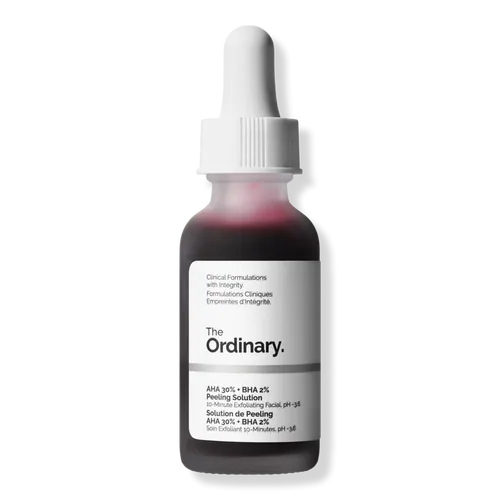
Azelaic Acid Suspension 10%
The Ordinary
$10
★★★★☆
The Ordinary’s 10% suspension is not glamorous, but it works and it’s accessible. Texture is slightly gritty — not ideal if skin is very irritated. In that case, wait until acute inflammation has settled before introducing it.
What Not to Use on Perioral Dermatitis
A few categories of products that frequently make things worse:
Topical steroids. Already covered, but worth repeating. Even short-term use of hydrocortisone can set the cycle off again. Avoid.
Heavy oils and occlusives. Face oils, petroleum jelly, and thick balms applied directly to the affected area tend to worsen things. The perioral skin is already compromised — it doesn’t need more occlusion on top of that. This includes popular barrier-repair products that work beautifully elsewhere. If you’re in a simplified, oil-forward routine, keep the oil away from the chin and mouth area until things are clear. The guide to using facial oils has more on targeted application.
Benzoyl peroxide. Too drying and irritating. It treats acne bacteria — that’s not what’s happening here.
Retinoids. Pause them on the affected area during active flares. Retinoids are a possible trigger for some people, and even if they’re not the cause, the irritation they produce will slow clearing. They can be reintroduced carefully once the rash has resolved.
Fragranced products. Any fragrance on already-reactive skin is a risk. This includes natural fragrance. Simplify everything.
The Recurrence Problem
Perioral dermatitis has a tendency to come back. That’s frustrating but also useful information — it means the triggers were never fully removed, or a new one was introduced.
The most common reasons for recurrence:
- Returning to a steroid product (even briefly)
- Reintroducing a heavy moisturizer or occlusive to the perioral area
- Stress (cortisol is a real driver of inflammatory skin conditions — the relationship between stress and skin flares is worth reading about at Cortisol Face and the Stress-Skin Axis)
- Hormonal fluctuations, particularly around the menstrual cycle
- Travel or seasonal changes that disrupt the routine
Some people manage perioral dermatitis long-term by maintaining a permanent stripped-down routine around the mouth. No actives directly on that zone, basic cleanser only, and watchfulness about anything new in the routine that contacts the skin there.
Putting It Together
Perioral dermatitis clears slowly and requires patience with the process. The core of clearing it looks like this:
- Remove the triggers first. Steroids out, SLS-free toothpaste and cleanser in, heavy products off the perioral area.
- Give zero therapy genuine time. Four to eight weeks minimum. The initial steroid rebound flare is expected — don’t reach for the hydrocortisone again.
- Get a prescription if needed. Topical metronidazole is the most accessible starting point. A dermatologist can confirm diagnosis and guide treatment.
- Reintroduce products slowly. Once clear, add things back one at a time. Keep the perioral area in its own category — what works on your cheeks may not be right there.
The skin around the mouth is not the same as the rest of your face. Treating it like it is — throwing the full routine at it, adding layer after layer — is what keeps most people stuck. Less, slower, simpler: that’s the direction that works.