
Anti-Aging
Salmon Sperm Facials vs PDRN Creams: What's Legal and What's Worth It
In-clinic polynucleotide facials vs topical PDRN creams: what's FDA-cleared, what's not, and whether it's worth your money.
Disclosure — This article may contain affiliate links. We earn a small commission at no extra cost to you when you purchase through our links. This supports our ability to create independent, evidence-based skincare content.
My friend came back from a week in Seoul in early 2026 and would not stop talking about her “salmon facial.” She had the skin of someone who’d been asleep for nine hours every night for a month. Dewy. Plump. Slightly unfair.
The treatment she got was a polynucleotide injection — marketed everywhere as a PDRN facial, sometimes as a “salmon sperm facial” because that’s exactly what it sounds like. Salmon DNA, filtered and processed, injected into your face to stimulate collagen and repair cellular damage. It went full mainstream in 2026, especially in Korean and European clinics. Now everyone wants it. And now every skincare brand is selling a PDRN cream and implying you can get the same results at home.
You cannot get the same results at home. But that doesn’t mean the creams are worthless. Here’s what’s actually going on, what’s legal where, and how to think about this if you’re not flying to Seoul anytime soon.
What PDRN Actually Is (Without the Hype)
PDRN stands for polydeoxyribonucleotide. It’s a fragment of DNA — specifically, it comes from salmon sperm or salmon testes (yes, really) and is purified to the point where you’re not actually putting fish genetic material on your face. It works primarily by binding to adenosine receptors in your skin, which triggers a cascade of tissue repair: collagen synthesis, reduced inflammation, better wound healing.
The injectable form has solid clinical backing. It’s been used in orthopedics and wound care for years before skincare got hold of it. The skin-specific research, mostly out of Korea and Italy, shows measurable improvement in fine lines, skin laxity, and overall radiance after a series of injections. The injectable data is genuinely interesting.
Topical PDRN is a different conversation. The molecule is large. Skin absorption through the epidermis is limited. What topical PDRN can realistically do is provide surface-level soothing, support barrier function, and deliver some indirect benefits — not the deep dermal stimulation that makes the injectable version worth the trip. If you want the full science breakdown on polynucleotides, our dedicated PDRN ingredient guide covers the mechanism in a lot more detail.
The Legal Situation in the US (It’s Complicated)
Here’s where it gets important: in-clinic polynucleotide injections are not FDA-cleared in the United States as of mid-2026.
That’s the short version. The longer version is that PDRN injectables are approved in South Korea, Italy, and several other countries for skin rejuvenation. In the US, injectables used for cosmetic purposes require FDA clearance, and polynucleotides haven’t gone through that process yet. Some clinics are offering them anyway, either imported or administered by providers who argue they fall under a gray zone of off-label use. The FDA has been inconsistent about enforcement.
So if a US-based med-spa is advertising a “PDRN facial” with injections, ask directly: what product are you using, is it FDA-approved, and can I see documentation? A legitimate provider will not be offended by that question. If they get cagey, walk out.
The topical side is much simpler. PDRN as a skincare ingredient — in creams, serums, essences — is legal to sell and use in the US. The FDA doesn’t regulate cosmetic ingredients the same way it regulates injectables. You can buy PDRN creams freely. Whether they do much is a separate question.
Clinic vs. At-Home: Realistic Expectations
Let me give you a framework for how to think about this.
What the In-Clinic Treatment Actually Does
A proper PDRN injection series — typically three to five sessions spaced two to four weeks apart — delivers the active compound directly into the dermis. No barrier to cross, no absorption issues. The results people are seeing: improved skin texture, plumper-looking skin, reduction in fine lines, faster healing after other procedures. My friend’s glow was real.
In countries where it’s legally available, the cost runs roughly $200–$500 per session depending on the clinic and whether it’s combined with microneedling (common) or other treatments. It’s not cheap, but it’s not Botox prices either. The results are more gradual and more subtle than fillers — think restoration rather than transformation.
What the At-Home Creams Realistically Offer
Topical PDRN products are proliferating fast. Most of the ones with actual evidence behind them come from Korean brands — some have published small but real studies on their topical formulas. The mechanism at the skin surface involves adenosine receptor activity and anti-inflammatory effects that don’t require deep penetration to work.
What you can expect: calmer, less reactive skin. A modest boost to hydration and barrier function. Post-procedure support (if you’ve had microneedling or laser, topical PDRN is genuinely useful for healing). What you should not expect: the structural collagen remodeling that injections deliver.
Think of topical PDRN like a very good supporting cast. The creams fit neatly into the broader category of repair-focused skincare, similar to how copper peptides work — they support skin health in ways that are real but incremental.
The Products Worth Knowing About
The topical market is a mess right now. Every brand is sticking “PDRN” on a label to chase the trend. Some of them actually have meaningful concentrations. A lot of them don’t. Here’s how to filter:
Look for brands that list the concentration (anything over 1% is credible), have published or referenced clinical testing, and don’t bury PDRN at the bottom of a 40-ingredient list. Korean brands have a head start here — they’ve been formulating with polynucleotides longer and the regulatory framework in Korea for cosmetic actives is more rigorous than most people realize.
For a curated list of what’s actually worth buying, our best PDRN skincare roundup has done the filtering work.
One product worth mentioning in a broader anti-aging context: if you’re drawn to PDRN partly because you want simplified, multi-action skincare rather than a seven-step routine of actives, the Kerala Botanics Ayurvedic Vitamin C Face Oil is doing something adjacent — not PDRN, but similarly multi-functional. It combines a stabilized, highly bioavailable form of vitamin C with bakuchiol (the plant-based retinol alternative), in an oil that pulls serum, moisturizer, and treatment duties into one step. It’s a different mechanism entirely, but if “fewer products, real results” is the goal, it’s worth knowing about.
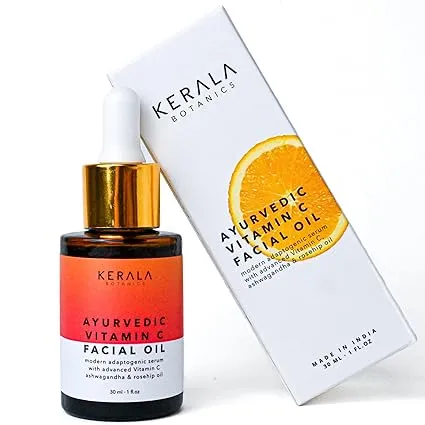
Ayurvedic Vitamin C Face Oil
Kerala Botanics
$49
★★★★☆
Honest caveats: the oil format isn’t ideal for oily or acne-prone skin, and it doesn’t have the clinical trial depth of something like CE Ferulic. But for dry skin types building an anti-aging routine around fewer steps, it’s a smart pick.
Who Should Actually Get the In-Clinic Treatment
If you’re outside the US and have access to a reputable clinic offering licensed PDRN injections, here’s who it makes the most sense for:
People in their 30s–50s noticing early laxity. PDRN isn’t a dramatic filler — it’s tissue repair. The effects are most visible when skin is starting to lose density but hasn’t fully lost structural integrity.
Post-procedure skin. Polynucleotide injections are increasingly used as a “booster” after laser resurfacing or microneedling, to accelerate healing and amplify results. If you’re already investing in in-clinic treatments, this combination has real logic behind it.
People who want subtle, natural-looking results. PDRN doesn’t change your face. It makes your skin look more like itself, but younger. If you’re chasing the frozen-forehead look, this isn’t it.
Who should skip it for now: Anyone in the US going to a clinic that can’t clearly explain the regulatory status of what they’re injecting. The risk isn’t necessarily that the product is dangerous — PDRN has a strong safety profile in the literature. The risk is that you’re getting something unverified from an unregulated supply chain. That’s a real concern.
Pairing PDRN Creams With Your Existing Routine
If you’re going the topical route, the good news is PDRN plays well with almost everything. It’s not an acid, not a retinoid, not a vitamin C. It won’t destabilize your other actives. A few practical notes:
It works best as part of an evening routine or after actives that create any skin stress — think post-exfoliation or post-retinol nights. If you’re already skin cycling, topical PDRN fits cleanly into recovery nights.
Layer it after your water-based serum, before your moisturizer. If you’re using a rich oil or occlusant at the end of your routine, PDRN can go before that too.
It pairs particularly well with barrier-supportive moisturizers and centella asiatica products — both are in the tissue-repair space and the combination feels logical for nights when your skin needs recovery rather than actives.
Don’t combine it with high-concentration vitamin C or strong AHAs in the same application step. Not because they’re dangerous together, but because PDRN’s soothing benefits are a bit wasted when you’re also applying things that cause mild irritation.
The Gimmick Detector
One thing worth flagging: the term “salmon sperm facial” gets used to describe three very different things. Clarify before you book or buy.
- Topical PDRN cream or mask — legal everywhere, widely available, mild benefits
- PDRN injection — significant clinical backing, not FDA-cleared for US clinics, real results
- Microneedling + topical PDRN — a hybrid that improves absorption somewhat but doesn’t fully replicate injections; offered in some US clinics as a workaround
The third one is the most common in US med-spas right now. Does it work better than topical alone? Probably a little. Does it replicate injectable results? No. Is it being marketed like it does? Absolutely yes.
For context on another trend that’s navigating similar clinic-vs-at-home questions, the exosomes piece covers a lot of the same regulatory and efficacy territory.
Putting It All Together
The salmon sperm facial trend is not pure hype. The injectable version has real science and real results. The problem is that most people reading about it can’t get the injectable version legally in the US right now — and the industry knows that, so they’re selling topical PDRN creams with the same marketing language as if they’re equivalent.
They’re not equivalent. But topical PDRN is still a legitimately useful ingredient for barrier repair, post-procedure healing, and general skin health. Buy it for what it actually does.
If you’re outside the US or considering travel for the injectable version: do your homework on the clinic, verify the product is licensed in that country, and go in with realistic expectations. It won’t erase a decade overnight. It will, with a proper series, make your skin look noticeably better. My friend’s glow was earned, not filtered.
And if you’re in the US waiting for FDA clearance? Invest in your topicals, keep your actives well-sequenced, and check back in a year. The regulatory wheels are moving, slowly.