
Acne
Acne from Masks, Helmets and Straps
Acne mechanica comes from friction, heat and trapped sweat, not ordinary breakouts. Here's a simple routine for commuters, athletes and healthcare workers.
Disclosure — This article may contain affiliate links. We earn a small commission at no extra cost to you when you purchase through our links. This supports our ability to create independent, evidence-based skincare content.
If your breakouts line up with where something sits on your face, it isn’t ordinary acne. It’s acne mechanica: breakouts caused by friction, pressure, heat and trapped sweat. The fix isn’t a stronger active. It’s changing what happens under the mask, helmet or strap.
That narrows things down a lot. Here’s what’s going on, what to change first, and the short routine that covers most people.
What acne mechanica actually is
Regular acne starts inside the pore, driven by oil, bacteria and inflammation. Acne mechanica starts outside. Something rubs, presses or seals the skin, and the pore follicle gets irritated and clogged as a result.
Three things combine:
- Friction. Repeated rubbing from elastic, chin straps or a mask edge damages the top layer of skin and inflames the follicles beneath it.
- Occlusion. A mask or helmet liner traps moisture. Skin stays damp and swollen, and pores clog more easily.
- Heat. Warm, humid air under a barrier means more sweat and a looser, more irritated skin surface.
Any one of these is manageable. Together, they’re a reliable recipe for bumps.
You’ll usually see small red bumps, whiteheads and the occasional pustule in a pattern. Cheeks, chin and nose bridge for masks. Forehead and hairline for helmets. Jaw and neck for chin straps. Shoulders and upper back for backpack and sports bra straps.
If the pattern is fuzzy and the bumps are uniform and itchy, that’s a different problem. More on that below.
Why the usual acne routine often backfires
The instinct is to attack it. Scrub harder, use a stronger cleanser, layer on spot treatments.
But friction has already damaged the surface. Adding harsh exfoliation on top makes the skin more reactive, and reactive skin breaks out more under a mask. This is the same loop we see in over-exfoliated skin: irritation, more breakouts, more scrubbing.
So the order of priorities is:
- Reduce friction and trapped moisture.
- Keep the skin barrier intact.
- Treat the breakouts gently, and only where needed.
Most people skip straight to step three.
Fix the gear before the skin
This part is unglamorous, and it matters most.
Masks
- Fit matters more than fabric. A mask that’s too tight rubs and presses. One that’s too loose slides and rubs. Find the version that seals without digging into skin.
- Change damp masks. Moisture is the occlusion problem. If a disposable mask is soaked through, it’s done.
- Wash cloth masks after every wear. Use a fragrance-free detergent. Residual fragrance can cause its own contact rash.
- Check the nose clip and ear loops. Metal and elastic can trigger contact dermatitis, which looks a lot like acne but itches or burns.
Helmets and headgear
- Wipe pads and liners after each use. Sweat, oil and sunscreen build up there and get pressed back into the skin.
- Wear a thin, moisture-wicking skull cap or headband between your forehead and the padding. It’s cheap and it works.
- Wash it often. Once a week for regular use, more often for heavy sweat.
Straps
- Look at what’s rubbing. Chin straps, backpack straps and bra straps all create the same friction pattern. Padding, a smoother fabric layer or a small adjustment in position can matter more than any cream.
- Don’t cinch. Pressure plus sweat is the whole problem.
A routine for friction-prone skin
Keep it short. Three steps, and a fourth only when you need it.
Cleanse once, gently, then rinse the sweat off
One thing most people get wrong: they wash too often. Sweat should be rinsed off, but over-washing strips the barrier.
Use a gentle, non-foaming or low-foaming cleanser morning and night. After a workout or a long shift, rinse with lukewarm water within 30 minutes if you can. Don’t sit in sweaty gear.
If your face feels tight, the cleanser is too strong. If you’re curious about whether it needs to be more than that, we don’t think it does.
Treat on a schedule, not constantly
Two options handle most cases. Pick one.
Benzoyl peroxide wash. A short-contact 2.5% to 5% wash helps reduce acne-causing bacteria on skin that’s sealed up for hours. Lather for 30 seconds on the affected zone, rinse, and stop there. It can bleach towels and dry the skin, so we’d use it once a day to start. If you’re not sure how it compares with the alternative, salicylic acid vs benzoyl peroxide breaks it down.
Acne Foaming Wash 4% Benzoyl Peroxide
PanOxyl
$11
★★★★½
It’s effective and inexpensive. The downside is dryness and the way it stains fabric, so keep it off pillowcases and masks until it’s fully rinsed and dry.
Salicylic acid (BHA). A 2% leave-on liquid helps clear the inside of clogged pores. Use it at night, on the zones where the gear sits, not across the whole face. Start with every other night.
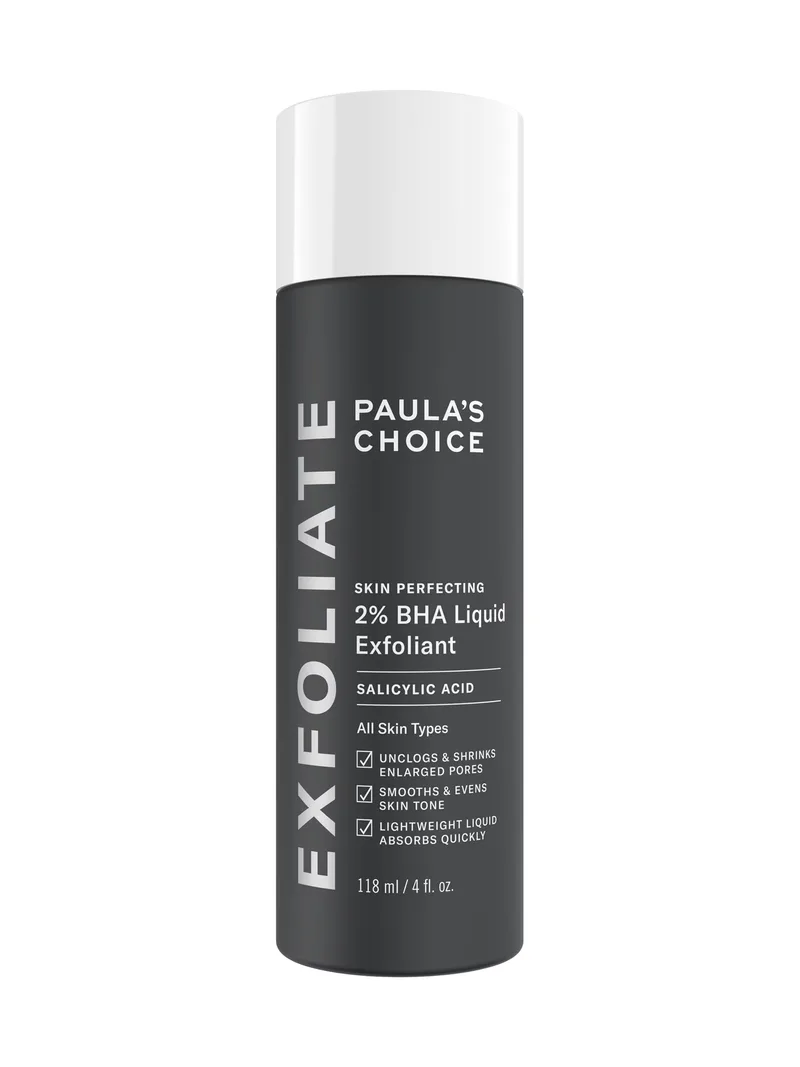
Skin Perfecting 2% BHA Liquid Exfoliant
Paula's Choice
$35
★★★★½
It’s a solid, well-tested formula. It isn’t cheap for what it is, and it can sting on skin that’s already raw from rubbing. Skip it on days the skin looks irritated. We covered how it works in salicylic acid: how BHA works and who needs it.
You don’t need both on the same day. If you’re not breaking out much, you probably need neither.
Moisturize, because the barrier is the point
This is the step people drop when they have acne, and it’s the one that helps most. Friction acne is partly a barrier problem. A damaged barrier gets irritated faster, inflames faster and heals slower.
Use a plain, fragrance-free cream. Light enough not to feel greasy, rich enough that skin doesn’t feel tight.
Moisturizing Cream
Vanicream
$17
★★★★½
Vanicream is bland in the best way: no fragrance, no dyes, few ingredients to react to. It’s a little thick for very oily skin in hot weather, so use a thin layer. Ingredient ratings often get overblown, and comedogenic ratings are a good example. Texture and how much you apply tend to matter more.
We’d skip heavy oils and rich balms on the areas that sit under a mask or helmet. Adding more occlusion to an occluded area rarely helps, and it’s the opposite of what this routine is trying to do.
Add a friction shield only where skin is rubbed raw
For spots with visible chafing, such as the nose bridge, behind the ears or under a chin strap, a soothing barrier balm can reduce the rubbing.
Cicaplast Baume B5
La Roche-Posay
$20
★★★★½
Apply a thin layer to the pressure point only, not the whole cheek. It contains panthenol and is easy on irritated skin. It’s a little rich, so keep it away from acne-prone zones where there’s no actual chafing. There’s more on repair in our damaged skin barrier guide.
For each situation
The routine is the same. The emphasis changes.
Commuters
Masks on transit are usually short exposure, so the main risks are a damp mask and a tight fit. Carry a spare, swap it if it gets damp, and cleanse when you get home. Don’t double up on actives. Most commuters need only the gear fixes and a moisturizer.
Athletes
Sweat is the issue. Rinse off quickly after training, wash helmet pads and liners often, and use a wicking layer under straps. A benzoyl peroxide wash after training is the most useful active here. For body spots under straps and pads, body acne treatment covers the same approach for the back and chest.
Healthcare workers
This is the hardest case: long hours, tight-fitting respirators, little control over when you can take a break. A few specifics:
- Prep before the shift. Apply a thin layer of moisturizer and let it dry fully, ideally 10 to 15 minutes, before the mask goes on. Wet cream under a seal slides and rubs.
- Never compromise the seal. Fit-testing comes first. Don’t adjust or add anything that interferes with your respirator’s fit. Ask your occupational health team before using protective dressings on the nose bridge or cheeks. Some facilities support them, and some don’t.
- Cleanse and moisturize after the shift, even when you’re exhausted. That step does more than any treatment.
- Treat only at night. If you use benzoyl peroxide or salicylic acid, do it after the mask is off, not before the shift.
When it might not be acne mechanica
Some things look similar and need a different approach.
- Itchy, uniform small bumps that don’t respond to acne treatments may be fungal acne. Sweat and occlusion feed that too, and the treatment is different.
- Burning, redness or a rash around the mouth may be something else entirely. Heavy products and mask friction can aggravate it.
- Itching, dry, scaly patches at the contact points suggest contact dermatitis, from elastic, adhesives, metal clips or laundry products.
- Deep, painful cysts or scarring need a dermatologist. Don’t wait on those.
If nothing improves after 6 to 8 weeks of fixing the gear and keeping the routine simple, see a professional. Prescription options exist, and a short consult can save months of guessing.
Putting it all together
Acne mechanica is a friction, moisture and heat problem. Treat it that way.
- Fix the gear: fit, hygiene, a wicking layer.
- Cleanse gently and rinse sweat off soon after.
- Moisturize, because the barrier is the whole story.
- Add one active, not three, and only where the breakouts are.
Most of this is subtraction. Fewer products, less scrubbing, cleaner gear. The skin usually settles once it’s no longer being rubbed and sealed all day.