
Body Care
Scalp Skincare: What the 'Skinification' Trend Gets Right
Scalp exfoliants, niacinamide serums, peptides, and SPF — what the scalp skincare trend actually delivers and where it oversells.
Disclosure — This article may contain affiliate links. We earn a small commission at no extra cost to you when you purchase through our links. This supports our ability to create independent, evidence-based skincare content.
My dermatologist told me something a few years ago that I think about constantly: “Your scalp is just facial skin with hair follicles. It ages the same way.” I’d been obsessing over my vitamin C serum and SPF routine every morning, then completely ignoring the skin on the top of my head. That felt like a gap I couldn’t un-see.
Enter scalp skincare — the fastest-growing corner of the beauty industry heading into 2026, and genuinely one of the few trends I think is more right than wrong. The “skinification” of scalp care, meaning the application of facial skincare principles to the scalp, has brought us exfoliating treatments, niacinamide-spiked serums, peptide drops, and even SPF formulas designed for your part line. Some of it is legitimately useful. Some of it is marketing dressed up in lab coats.
Here’s where each category lands.
Why the Scalp Actually Deserves Skincare Attention
The scalp has a higher density of sebaceous glands than almost anywhere else on your face or body. It sweats, accumulates dead skin cells, reacts to hormonal shifts, and — this part surprises people — it gets UV damage. Significant UV damage, especially along the part line and at the crown.
Ignoring it leads to a predictable cycle: buildup clogs follicles, irritated follicles produce more sebum, and over time you get either chronic flakiness, scalp inflammation, or compromised hair density. None of that is what anyone wants.
The logic behind treating your scalp more like your face is genuinely sound. Exfoliation, active ingredients, barrier support — these ideas translate. What doesn’t always translate is the product formulation, and that’s where things get messy. More on that in a minute.
Scalp Exfoliants: The Category That Actually Works
This is the strongest part of the trend. Scalp exfoliation has real evidence behind it, and the products have genuinely gotten better.
Chemical Exfoliants: What to Use
Salicylic acid is the workhorse here. It’s oil-soluble, so it penetrates the follicle and breaks down the sebum and dead-cell buildup that causes flakiness and congestion. A 1–2% salicylic acid scalp treatment used once or twice a week does what a clarifying shampoo promises but usually can’t deliver, because shampoo rinses off too fast to do much.
The INKEY List Salicylic Acid Exfoliating Scalp Treatment is the obvious entry point. Thirteen dollars, easy dropper application, and it genuinely cuts through buildup without stripping. Apply it to sections of dry or damp hair, massage it in, leave it for 10–15 minutes, then shampoo out. That’s the whole move.
The INKEY List Salicylic Acid Exfoliating Scalp Treatment
The INKEY List
$13
★★★★☆
If your scalp is more sensitive and salicylic acid feels like too much, glycolic acid at lower concentrations (5% or under) is gentler and still effective at breaking down surface buildup. Our guide to chemical vs. physical exfoliation covers the mechanism in more detail — the same principles that apply to your face apply here, though you want lower concentrations given the proximity to hair strands.
Physical Exfoliants: Proceed With Some Skepticism
Scalp scrubs have exploded in popularity and they’re genuinely satisfying to use. The Dae Cactus Fruit 3-in-1 Scalp Scrub is a good one — fine sugar crystals, works well on the scalp without snagging hair, and has a clean ingredient list.
Dae Cactus Fruit 3-in-1 Scalp Scrub
Dae
$26
★★★★☆
The honest caveat: physical exfoliation on the scalp is mainly useful for people with significant product buildup. If you don’t use a lot of dry shampoo or styling products, you probably don’t need it. And if you have any active scalp irritation — redness, flaking from seborrheic dermatitis, itchiness — skip the scrub entirely and go chemical instead. Scrubbing an already-irritated scalp is not the move.
Speaking of which: if your scalp issues look more like seborrheic dermatitis than simple buildup, our guide on seborrheic dermatitis on the face explains how that condition works. The scalp version responds to similar treatments — zinc pyrithione, ketoconazole, selenium sulfide — not fancy scrubs.
Niacinamide and Peptide Scalp Serums: Mostly Good, With Caveats
This is where I get more skeptical — not of the ingredients, but of the delivery.
Niacinamide on the Scalp
Niacinamide is genuinely useful for scalp health. It regulates sebum production, soothes inflammation, and supports barrier function. If you’ve got an oily scalp that resets to greasy within 24 hours of washing, a niacinamide scalp serum applied to the scalp (not the strands) is worth trying. It’s not a myth.
What is slightly overstated is the idea that a niacinamide scalp serum will meaningfully address hair density or promote growth on its own. Niacinamide supports scalp health, and a healthier scalp environment is better for hair follicles — that’s real. But the marketing sometimes jumps from “improved scalp environment” to “clinically thicker hair” in a way that isn’t exactly supported. Read the actual claims carefully.
If you want to understand what niacinamide actually does at a cellular level, I’d recommend our complete niacinamide guide — it’s written for facial skin, but the biology is the same.
Peptides for the Scalp
The peptide scalp serum category is newer and more interesting. The logic: peptides that signal collagen production or stimulate cell turnover could, in theory, support follicle health. Some formulas include copper peptides (GHK-Cu), which has actual published research behind it — our copper peptides guide goes into the evidence in depth.
Act+Acre’s Stem Cell Scalp Serum is one of the better options in this space. It combines peptides with a solid base of soothing ingredients, applies cleanly without leaving residue, and doesn’t smell like a science lab. It’s not going to reverse significant hair loss — nothing topical will, if the loss is hormonal or genetic — but as a maintenance product for someone wanting to keep their scalp environment optimized, it’s legitimate.
Act+Acre Stem Cell Scalp Serum
Act+Acre
$58
★★★★☆
The honest limitation: scalp serums are a relatively new category and long-term clinical data on most of these products is thin. They’re not useless — a well-formulated serum that keeps your scalp balanced and non-irritated is doing real work. Just go in with calibrated expectations.
Scalp SPF: The Most Underused Product You Should Own
I’ll say it plainly: scalp SPF is the most legitimate and most neglected part of this trend.
The crown, the part line, and the temples are genuinely high UV-exposure zones. Skin cancer on the scalp is more common than most people realize, and harder to detect because it’s hidden under hair. People with thinning hair or a wider part are at higher risk. And sun damage to the scalp contributes to follicle degradation over time — so this isn’t just a skin cancer conversation, it’s also a hair health conversation.
The problem has always been application. Traditional sunscreen on your hair is a nightmare — greasy, visible, makes your hair look unwashed immediately. The formulas specifically designed for the scalp have gotten much better.
The Colorescience Sunforgettable Total Protection Sport Stick SPF 50 is the one I reach for. It’s a solid stick format, which means precision application along your part line and at the crown without touching your hair much at all. The finish is dry and invisible. You can use it on already-styled hair, which is the real win — you’re not locking yourself into applying it pre-styling.
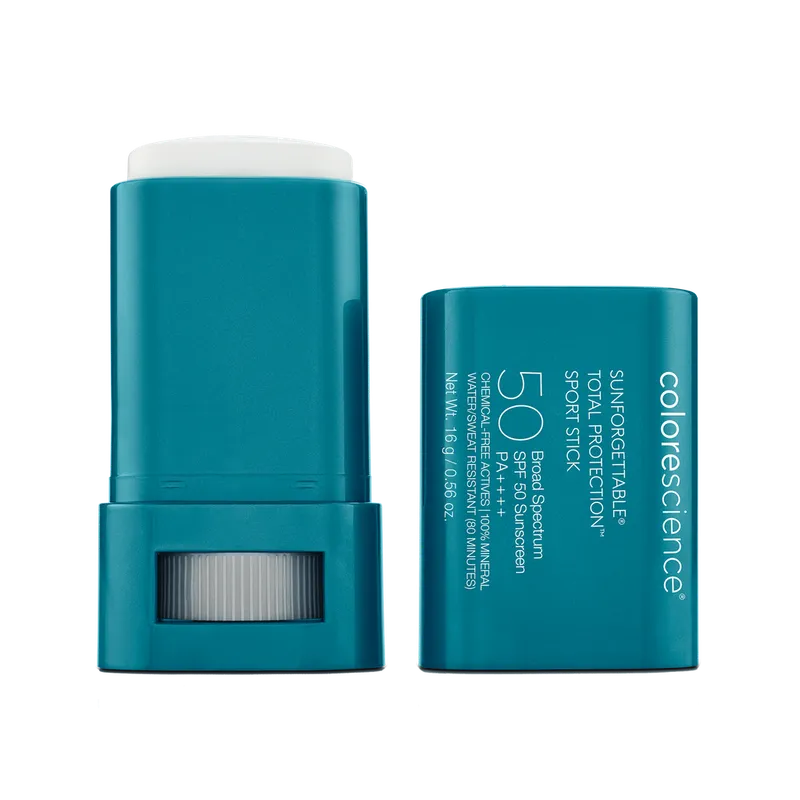
Colorescience Sunforgettable Total Protection Sport Stick SPF 50
Colorescience
$45
★★★★☆
Powder SPF formulas are another option, though as our powder sunscreen guide explains, the protection you get depends heavily on how much product you actually apply. With a powder, it’s easy to under-apply without realizing it. The stick format gives me more confidence in actual coverage.
If you’re spending any meaningful time outdoors with your head uncovered, this should be in your routine. It’s a smaller category habit change for a genuinely significant protective benefit.
Where the Trend Oversells
Time to be honest about the gaps.
The “hair growth” claims. A scalp serum that improves scalp health can create a better environment for existing follicles to function. What it cannot do is wake up follicles that have been dormant for years due to androgenetic alopecia, or replace hair loss driven by thyroid issues, nutritional deficiencies, or postpartum hormonal shifts. If you’re experiencing meaningful hair loss, start with a dermatologist, not a $70 serum.
Ingredient overlap with haircare. A lot of scalp products that market themselves as skincare innovations are, when you flip to the ingredient list, just better-formulated shampoos or conditioners. There’s nothing wrong with that. But you’re sometimes paying a premium for the word “serum” on the packaging rather than for meaningfully different ingredients.
The microbiome angle. Scalp microbiome products are starting to appear, borrowing the language from the skin microbiome trend. The scalp does have its own microbial environment — Malassezia yeast is a key player in dandruff and seborrheic dermatitis. But “microbiome-friendly” is not a regulated claim, and as our piece on microbiome-friendly claims explains, the language means very little without specifics. Approach these products the same way you’d approach any microbiome skincare — look at the actual ingredients, not the marketing concept.
Over-exfoliation. Yes, it applies here too. Weekly exfoliation is plenty for most scalps. Daily use of a salicylic acid treatment will strip the scalp barrier and make things worse — more flaking, more irritation, more oil production as the scalp tries to compensate. The signs of over-exfoliation on the scalp look almost identical to what happens on your face.
Building a Simple Scalp Skincare Routine
You don’t need five products. Here’s what actually makes sense.
Weekly (or twice weekly for oily scalps): A chemical exfoliant — salicylic acid if you’re dealing with buildup or flakiness, a gentler option if your scalp is sensitive. Leave it on for 10–15 minutes before shampooing.
As needed: A scalp serum with niacinamide or peptides, applied post-wash to a clean, damp scalp. Focus on the areas that feel oily or irritated.
Daily when outdoors: Scalp SPF. Apply it to your part line and crown before you go outside, or touch it up with a stick formula over styled hair.
That’s it. Three categories, one or two products total if you’re keeping it simple. The scalp skincare market will happily sell you more, but this covers the meaningful bases.
Putting It All Together
The skinification of scalp care is more than a marketing gimmick. The science is real: your scalp is skin, it responds to the same kinds of actives your face does, and it’s been undercared for in most people’s routines for a long time.
The strongest parts of the trend are exfoliation (genuinely effective, affordable, well-formulated options available) and scalp SPF (legitimately important and historically ignored). Serums with niacinamide and peptides are worth exploring if you have specific concerns, as long as your expectations are calibrated to scalp health rather than miracle hair growth.
Where the trend loses me is in the overclaiming — the “clinically proven regrowth” language on products that haven’t earned it, and the premium pricing for formulas that aren’t substantially different from what’s already in your shower. Read ingredient lists, not marketing copy. Start with exfoliation and SPF. Add actives once you know what your scalp actually needs.
Your scalp has been doing its best without any help for years. Give it a little attention and it’ll probably give you a lot back.