
Anti-Aging
Topical Senolytics: Can a Cream Clear Aged Skin Cells?
The science behind senolytic skincare is real — but most products are ahead of the evidence. Here's what we actually know.
Disclosure — This article may contain affiliate links. We earn a small commission at no extra cost to you when you purchase through our links. This supports our ability to create independent, evidence-based skincare content.
The premise is straightforward: as skin ages, certain cells stop dividing but refuse to die. They sit there, secreting inflammatory signals, degrading collagen, and generally making a mess of the tissue around them. Clear those cells, and the theory goes, you slow visible aging at its source.
That’s what senolytics do — in mice, in cell cultures, and increasingly in early human trials. The question worth asking before you buy any cream claiming to do the same is whether the delivery problem has actually been solved. Spoiler: mostly, no. But the science underneath is real, and it’s moving faster than cosmetics marketing would suggest.
What Senescent Cells Actually Are
Every cell has a finite number of times it can divide. When it hits that limit — or when it’s damaged by UV, oxidative stress, or inflammation — it can enter senescence. It stops replicating, but it doesn’t clear out. Instead it enters what researchers call the senescence-associated secretory phenotype, or SASP.
SASP is the problem. Senescent cells pump out a cocktail of pro-inflammatory cytokines, matrix metalloproteinases (enzymes that break down collagen and elastin), and growth factors that can push neighboring cells into senescence too. In skin, this plays out as thinning, loss of firmness, slower wound healing, and chronic low-grade inflammation. The connection between cellular senescence and visible skin aging is well-established at this point — this isn’t fringe biology.
What makes it relevant to skincare is accumulation. Young skin clears senescent cells efficiently through immune surveillance. That process slows with age, and senescent cells build up. By middle age, the burden is significant enough to drive measurable tissue dysfunction.
Worth reading alongside this: Inflammaging: How Chronic Low-Grade Inflammation Ages Your Skin covers the inflammatory side of aging in more depth.
The New Science: GPX4 and Ferroptosis
Most of the early senolytic research focused on drugs — dasatinib, quercetin, navitoclax — compounds that selectively trigger apoptosis (programmed cell death) in senescent cells. They work systemically. The jump to topical application is a different problem entirely.
An April 2026 paper in Nature Cell Biology opened a new angle: GPX4-dependent ferroptosis as a senolytic mechanism. GPX4 is an enzyme that protects cells from lipid peroxidation — essentially, it keeps fats in cell membranes from oxidizing and destroying the cell. Senescent cells, the paper found, show elevated GPX4 dependency. Inhibit GPX4 selectively in those cells, and they die via ferroptosis, a form of iron-dependent oxidative cell death that’s distinct from apoptosis.
This matters because ferroptosis is a fundamentally different lever than the apoptosis pathways most senolytics target. It potentially opens new routes to selectively clear senescent cells while leaving healthy tissue intact. The caveat is significant: this is early mechanistic research. It establishes a pathway; it doesn’t establish a cream. Translating GPX4 inhibition into a cosmetically applied product that reaches dermal fibroblasts without systemic exposure is a challenge the paper doesn’t address — and one that’s genuinely hard.
What the Marketing Gets Wrong
The gap between “senolytics are promising” and “this serum clears your aged cells” is enormous, and most brands crossing it are working with borrowed credibility.
A few things to watch for:
- Quercetin as a topical senolytic. Quercetin is a real senolytic in oral supplementation research. Topically, it has antioxidant activity, but there’s no published human evidence showing it clears senescent dermal cells when applied to skin. Calling it a topical senolytic is a category error.
- “Cellular renewal” language. This is marketing for almost anything that exfoliates or increases cell turnover. Retinoids accelerate turnover; they are not senolytics. The mechanisms are different.
- Peptide complexes described as senolytic. Peptides do a lot of things. Triggering selective senescent cell death isn’t one they’ve been shown to do in human skin tissue.
The honest version: no over-the-counter product has clinical evidence showing it meaningfully reduces the senescent cell burden in human dermis. That may change. Right now, it hasn’t.
What Topical Products Can Actually Do
This doesn’t mean do nothing. There are things we can apply to skin that genuinely interact with senescence-adjacent biology.
Retinoids
Retinoids remain the most evidence-backed anti-aging topical. They don’t clear senescent cells directly, but they reduce some SASP output, support collagen synthesis, and increase epidermal turnover. If there’s one topical that meaningfully interferes with the downstream effects of senescence, it’s tretinoin. Retinol vs Retinaldehyde vs Tretinoin: Which Should You Use? breaks down the options.
Antioxidants
Oxidative stress is a major driver of senescence induction. Vitamin C, niacinamide, and other antioxidants reduce the rate at which cells enter senescence in the first place. That’s prevention rather than clearance, but it’s a meaningful distinction. A well-formulated vitamin C serum is genuinely doing something relevant here.
One option worth considering if you prefer an oil-based format: Kerala Botanics’ Ayurvedic Vitamin C Face Oil uses an advanced, stabilized form of vitamin C alongside bakuchiol. Bakuchiol is a retinol alternative with some early anti-inflammatory data, which makes the combination relevant to anyone thinking about both oxidative stress and SASP-adjacent inflammation. It replaces serum, moisturizer, and facial oil in one step. The oil format won’t suit everyone — those with acne-prone or very oily skin may want to stick with a water-based serum — and it hasn’t been clinically tested as a senolytic. But as a simplified antioxidant-plus-retinol-alternative approach, it’s a coherent choice.
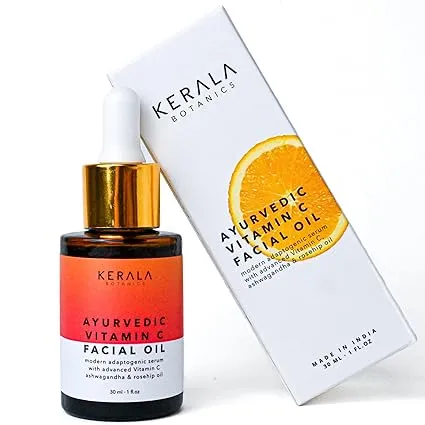
Ayurvedic Vitamin C Face Oil
Kerala Botanics
$49
★★★★☆
Spermidine and NAD+ Precursors
These are closer to the longevity-biology side of the conversation. Spermidine supports autophagy — the cellular cleanup process that overlaps with some aspects of senescent cell clearance. NAD+ precursors like niacinamide and NMN support DNA repair mechanisms that reduce senescence induction. None of this is senolysis. But it’s working in the same neighborhood. Spermidine, NAD+, and ‘Longevity Actives’: The Next Frontier After Peptides has more on this category.
The Delivery Problem
Even if a molecule has genuine senolytic activity in a test tube, getting it into the dermis at effective concentrations through an intact skin barrier is a separate scientific challenge.
The stratum corneum is good at its job. Most topically applied actives don’t reach dermal fibroblasts at meaningful concentrations. The molecules that do tend to be small, lipophilic, and applied in vehicles designed to maximize penetration. Most cosmetic formulations aren’t built this way, partly for safety reasons, partly for regulatory ones. A truly effective topical senolytic would likely require pharmaceutical-grade formulation and delivery technology — which takes it out of the cosmetic category and into the drug category in most regulatory frameworks.
This is the honest ceiling of current topical senolytics: not that the biology is wrong, but that the delivery hasn’t caught up. Watch this space — liposomal encapsulation, microneedle patches, and other delivery systems are active research areas. But right now, most of what’s being sold is working from the outside of a closed door.
See also: Synthetic Growth Factors: The New Peptides? for another category navigating the same delivery constraints.
How to Think About Your Routine
If you’re interested in longevity-informed skincare without the marketing noise, the practical approach is less exciting than “senolytic serum” sounds, but it’s actually supported by evidence.
Three things matter most:
- Sun protection. UV is the primary driver of senescence induction in skin. An SPF 30 or higher applied consistently does more to reduce your senescent cell burden over time than any serum currently on the market. This isn’t a caveat — it’s the main point.
- A retinoid. Tretinoin or a well-formulated retinol. Use it consistently, give it six months, manage the barrier. The downstream effects on SASP and collagen are real.
- Antioxidant support. Vitamin C, niacinamide, or both. They work on the induction side — slowing the rate at which cells are pushed into senescence by oxidative stress.
Exosomes, peptide complexes, and anything marketed as a “topical senolytic” can sit on the waitlist until the delivery science catches up. Exosomes in Skincare: Cell Communication Hype or Anti-Aging Frontier? covers how that category is navigating the same gap between mechanism and product.
The Skin Longevity: From Anti-Aging to Long-Term Skin Health guide is a good companion piece if you want to think about the full picture rather than individual ingredients.
Putting It Together
Senescent cells are a real driver of skin aging. The science investigating how to clear them is legitimate and accelerating — the April 2026 Nature Cell Biology findings on GPX4-dependent ferroptosis are a genuine step forward in understanding the mechanisms involved.
What we don’t have yet is a topical product that demonstrably clears senescent cells in living human skin. The molecules being studied work. Getting them through the skin barrier at therapeutic concentrations is where the gap sits. Until that delivery problem is solved at a clinical level, “senolytic skincare” is largely a framing device applied to ingredients that have other, real benefits — antioxidation, inflammation reduction, barrier support.
That’s not nothing. Use those ingredients. But use them for what they actually do, not for what the label implies.