
Ingredients
Vitamin E in Skincare: More Than a Vitamin C Sidekick
Vitamin E does more than stabilize your vitamin C serum. Here's what tocopherol actually does, and what it can't do.
Disclosure — This article may contain affiliate links. We earn a small commission at no extra cost to you when you purchase through our links. This supports our ability to create independent, evidence-based skincare content.
Vitamin E is probably sitting in your routine right now, and you have no idea it’s there.
It shows up on ingredient labels as tocopherol, tocopheryl acetate, or one of several other variations. It’s in your moisturizer, possibly your serum, almost certainly your facial oil. For decades, it was the quiet background player — listed somewhere after the actives, before the preservatives. And for a long time, that’s exactly how people thought about it: useful, but not the point.
That’s changed. Researchers have gotten more interested in how antioxidants work together in the skin, and vitamin E keeps coming up. Not as a standalone hero, but as something more interesting — a key piece in a network of antioxidants that your skin runs on whether you’re feeding it or not.
Here’s what vitamin E actually does, where it earns its reputation, and where it absolutely doesn’t.
What Vitamin E Actually Is
Tocopherol is a fat-soluble antioxidant. Your body doesn’t make it — you get it from food (think almonds, sunflower oil, spinach) and your skin stores it in the sebaceous glands and the outer layer of the skin. That’s worth noting: your skin has a dedicated reservoir for this stuff. It’s not a random additive. It belongs there.
The form you see most in skincare is alpha-tocopherol, which is the most bioavailable type. Tocopheryl acetate is a more stable ester form that converts to tocopherol in the skin, though there’s some debate about how efficiently that conversion happens. For most purposes, alpha-tocopherol is the gold standard.
As an antioxidant, vitamin E works by donating an electron to free radicals — those unstable molecules that damage skin cells, break down collagen, and accelerate aging. UV exposure, pollution, and even normal metabolic processes generate free radicals constantly. Vitamin E intercepts them.
The Network Antioxidant Story
Here’s the part that doesn’t get enough attention.
Vitamin E doesn’t work alone. It’s part of what researchers call the antioxidant network — a system where antioxidants recycle and regenerate each other after doing their jobs. When vitamin E neutralizes a free radical, it becomes oxidized itself. Spent. And here’s where vitamin C comes in: ascorbic acid can donate an electron to regenerate vitamin E, effectively recharging it so it can keep working.
This is why the pairing is so powerful. It’s not just two antioxidants doing the same job. It’s a system — vitamin C in the water-based environment of the skin, vitamin E in the lipid-rich layers, each backing the other up.
The SkinCeuticals CE Ferulic formula is built around this exact science. Ferulic acid gets added because it stabilizes both vitamins C and E and appears to roughly double their photoprotective effect when combined. That’s why the formula has held up for decades — it’s not marketing, it’s basic chemistry.
C E Ferulic
SkinCeuticals
$185
★★★★½
If you’re working with a vitamin C serum that also contains vitamin E and ferulic acid, that’s not filler. Those ingredients are earning their place. On the flip side, a lone vitamin C serum with no stabilizing antioxidants is much more likely to oxidize before you finish the bottle.
What Vitamin E Can Actually Do for Your Skin
Beyond the stabilization work it does in formulas, vitamin E has a few direct benefits worth knowing.
Photoprotection — with an asterisk. Vitamin E does provide some defense against UV-induced oxidative damage. But it is not sunscreen. It doesn’t absorb UV rays, and it should never replace SPF. What it does is help mop up the free radical damage that sunscreen doesn’t catch. Think of it as the cleanup crew after your SPF has done the blocking.
Skin barrier support. Tocopherol is lipid-soluble, meaning it integrates naturally into the fatty layers of your skin barrier. Some research suggests it can help maintain barrier function and reduce transepidermal water loss, which is why you see it in a lot of moisturizers and facial oils.
Anti-inflammatory effects. There’s decent evidence that vitamin E has mild anti-inflammatory properties, which is probably part of why it’s used in so many formulas marketed for sensitive or reactive skin. It won’t fix a damaged barrier on its own — for that, you want ceramides and barrier-focused ingredients — but it’s not doing nothing either.
The Scar Cream Myth
Let’s talk about the thing vitamin E is most famous for outside of skincare circles: scars.
Ask anyone’s mom, and she’ll tell you to break open a vitamin E capsule and rub it on a fresh scar. This has been the folk wisdom forever. And the research has not backed it up.
A well-cited study published in Dermatologic Surgery found that topical vitamin E either had no effect on scar appearance or actually made it worse in some patients. A third of participants in that study developed contact dermatitis from the vitamin E application — which brings us to the next issue.
The scar myth probably persists because vitamin E is occlusive and moisturizing. Keeping a healing wound hydrated does improve scar outcomes. But that’s the moisture doing the work, not the tocopherol specifically. Any good ointment or moisturizer would likely do the same thing without the irritation risk.
If you’re managing post-inflammatory hyperpigmentation or acne scars, there are much better evidence-backed options — niacinamide, azelaic acid, and targeted brighteners that address PIH directly.
The Contact Dermatitis Problem
This is the piece of the vitamin E story that gets glossed over the most.
Tocopherol is one of the more common causes of contact dermatitis in skincare. Reaction rates in studies have ranged from a few percent up to about one-third of test subjects depending on concentration and form, with tocopheryl linoleate often cited as the more reactive version. Anhydrous (oil-based) formulas and pure vitamin E capsules applied directly to skin appear to carry higher risk than properly diluted formulas.
If you’ve ever used a vitamin E-heavy product and noticed redness, itching, or small bumps that you couldn’t explain, it’s worth considering whether tocopherol was the culprit. Patch testing before applying anything concentrated to your face is genuinely useful here — not just a formality.
This doesn’t mean you need to avoid vitamin E entirely. In the concentrations used in most properly formulated products, it’s well-tolerated by most people. But the “put vitamin E on everything” advice that circulates on wellness accounts ignores a real risk — especially with pure capsule oil applied directly to skin.
Oil-Based Formats and Vitamin E
Because tocopherol is fat-soluble, it shows up most naturally in facial oils. This is also where it tends to be most stable — vitamin E can actually oxidize in water-based formulas if not carefully formulated, which is a neat bit of irony for an ingredient that protects against oxidation.
If you’re drawn to oil-based vitamin C and E delivery, the Kerala Botanics Ayurvedic Vitamin C Face Oil is worth knowing about. It uses an advanced, more stable form of vitamin C alongside tocopherol — the oil format means both ingredients are in a compatible, stable environment — and it also includes bakuchiol as a plant-based alternative to retinol. The $49 price point gets you a multi-step replacement: it functions as serum, moisturizer, and treatment oil in one.
Honest caveats: the oil format isn’t ideal if you have oily or acne-prone skin, and it lacks the clinical trial depth of something like CE Ferulic. If you’re wearing a lot of makeup, it can feel heavier than a traditional serum underneath. But for people who want a simplified, Ayurvedic-leaning routine and find standard vitamin C serums irritating, it’s a genuinely good option rather than a compromise.
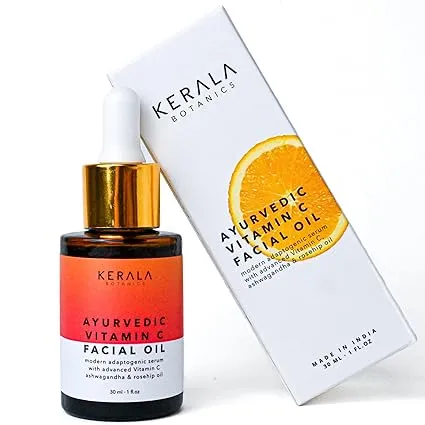
Ayurvedic Vitamin C Face Oil
Kerala Botanics
$49
★★★★☆
For a broader look at how oil-based vitamin C stacks up against traditional serums, this breakdown covers the key differences.
How to Use Vitamin E in Your Routine
A few practical notes.
As a standalone product. Pure vitamin E oils (like The Ordinary’s $5 version) are best used as a nighttime treatment, mixed with your moisturizer, or applied as a final occlusive layer. Don’t layer it under active serums — it can interfere with absorption and increase the chance of pilling. Patch test first.
100% Organic Virgin Chia Seed Oil
The Ordinary
$5
★★★★☆
In combination formulas. This is where vitamin E really earns its keep. Look for it alongside vitamin C (and ideally ferulic acid) in serums and oils. In these formulas, the concentration is calibrated, the stability is managed, and you’re getting the network antioxidant effect rather than just a single ingredient in isolation.
What to skip. Breaking open supplement capsules and applying them to fresh wounds or scars. The evidence doesn’t support it, and the irritation risk is real.
If you want to understand how to layer antioxidant products correctly or explore what else belongs in an antioxidant-forward routine, those are good next stops.
Putting It All Together
Vitamin E has been in skincare forever, but it’s usually framed as supporting cast. That framing isn’t entirely wrong — it does work best in combination — but it undersells what tocopherol actually does.
It’s a fat-soluble antioxidant that your skin already runs on. It integrates into your lipid barrier, it provides real (if limited) defense against oxidative stress from UV and pollution, and it forms a genuine partnership with vitamin C that makes both ingredients more effective. The network antioxidant story is real science, not marketing.
What it can’t do: heal scars (that’s a myth), replace sunscreen, or fix a compromised barrier on its own.
The scar cream thing is probably the most important takeaway for most people. If you’ve been applying pure vitamin E to healing skin because your aunt told you to, stop. Moisturize the area with something barrier-supportive, protect it from the sun, and let it heal. The vitamin E is not helping and might be making things worse.
In a well-formulated product — especially one that pairs it with vitamin C — it’s one of the best-supported ingredients in skincare. Alone, in high concentrations, applied to sensitive or damaged skin? A lot more complicated.
Use it smart, not just because the bottle says it’s in there.