
Routines
Chrono-Cosmetics: Does Timing Your Skincare to Your Body Clock Work?
Circadian biology is real. But do 'chrono-cosmetic' products actually use it? We break down the science behind timing your skincare routine.
Disclosure — This article may contain affiliate links. We earn a small commission at no extra cost to you when you purchase through our links. This supports our ability to create independent, evidence-based skincare content.
The premise sounds almost too tidy: your skin behaves differently at night than it does during the day, so your products should too. Morning antioxidants, evening retinoids. Day cream, night cream. It’s a framework most of us already follow without thinking about it.
But chrono-cosmetics — the formal field that tries to align skincare ingredients with your circadian rhythm — goes further. It claims that not just what you apply matters, but when, down to the hour. A growing category of “circadian-targeting” actives and sleep serums has built a business on that idea. Some of it is real biology. Some of it is sleep-trend marketing in a nice bottle.
Here’s what the evidence actually says.
The Biology Is Real. The Products Are a Mixed Bag.
Your skin follows a 24-hour clock. That’s not marketing — it’s well-documented cell biology. Skin cells contain clock genes (the CLOCK/BMAL1 complex, if you want the technical name) that regulate everything from sebum production to DNA repair to barrier permeability. These cycles aren’t minor background noise. They meaningfully change what your skin is doing at any given time.
A few key patterns hold up across multiple studies:
- Cell turnover peaks at night. Epidermal proliferation (the process that generates new skin cells) has a documented nocturnal peak, generally between 11 PM and 4 AM. This is the basis for recommending retinoids and actives at night — not just because they’re photosensitive, but because new cells are being made during that window.
- Transepidermal water loss (TEWL) increases in the evening. Your barrier is measurably more permeable around 8–11 PM than it is in the morning. Moisturizing before bed isn’t just habit — it addresses a real physiological dip in barrier function. Our complete evening skincare routine covers this in more depth.
- Antioxidant defense is higher in the morning. Your skin’s endogenous antioxidant activity (glutathione, superoxide dismutase) tends to be more active during daytime hours, in part because UV exposure has pushed the evolutionary need for daytime defense. That said, those defenses are not infinite — supplementing with topical antioxidants in the morning still makes practical sense.
- DNA repair enzymes (photolyase activity, nucleotide excision repair) are more active at night. This is one of the stronger findings in the chrono-biology literature and gives some credibility to the idea that nighttime is when skin is genuinely rebuilding.
So the circadian framework has a legitimate biological foundation. The gap between that foundation and most “chrono-cosmetic” product claims, however, is substantial.
What “Circadian-Targeting” Ingredients Actually Are
This is where it gets murkier. Most products invoking circadian biology fall into a few loose categories.
Melatonin Topicals
Melatonin isn’t just a sleep hormone — it’s also a direct free radical scavenger and antioxidant. Topically, it’s been studied for UV protection, anti-inflammatory effects, and (less conclusively) as support for nocturnal skin repair. The research is early. Human in vivo trials are thin. A few German cosmetic labs have led most of the published work, which creates an obvious conflict of interest problem. The signal is interesting but not definitive.
If you see melatonin in a night serum, it’s probably not hurting anything. But “circadian-activating” is a creative interpretation of what the data actually shows.
NAD+ and Sirtuin Activators
Sirtuins are proteins involved in cellular repair and stress response. They’re regulated, in part, by the circadian clock. NAD+ is a cofactor sirtuins need to function. Resveratrol activates SIRT1. This chain of logic has fueled a category of “longevity actives” that overlap with chrono-cosmetic marketing. We covered the broader topic of these compounds in our spermidine, NAD+, and longevity actives guide.
The honest assessment: resveratrol applied topically has real antioxidant activity. Whether it meaningfully modulates sirtuin function in the skin via a cream is a different — and much harder — question to answer.
Resveratrol B E
SkinCeuticals
$116
★★★★½
”Sleep Serums” and Overnight Repair Formulas
The fastest-growing segment. Most of these aren’t doing anything particularly circadian — they’re rich, occlusive, or contain retinoids and peptides that are simply better suited to nighttime use for conventional reasons (photosensitivity, increased absorption during higher-TEWL windows, no need to layer under SPF). That’s not nothing. These are legitimately good reasons to use these products at night. But it’s conventional skincare logic wearing circadian clothing.
The more interesting products in this space are those combining a retinol alternative with a vitamin C derivative or antioxidant system in an oil-based formula — designed to work during the nocturnal cell turnover window without the barrier disruption some retinoids cause.
Kerala Botanics’ Ayurvedic Vitamin C Face Oil is worth mentioning here. It uses a stabilized form of vitamin C claimed to remain active in cells significantly longer than standard L-ascorbic acid, combined with bakuchiol (a plant-derived compound with retinol-like effects on cell turnover). The oil format means it’s genuinely suited to evening use — it supports the barrier during that higher-TEWL window while delivering actives during the nocturnal repair phase. Oily skin types may find it too heavy overnight, and the clinical backing specific to its circadian-timing claims doesn’t exist in the peer-reviewed literature. But as a formulation rationale, it’s at least coherent. More on bakuchiol’s evidence base in our bakuchiol vs retinol comparison.
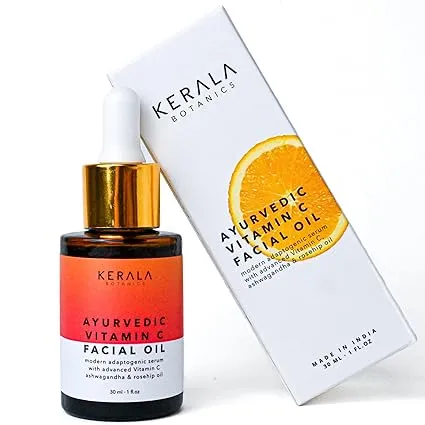
Ayurvedic Vitamin C Face Oil
Kerala Botanics
$49
★★★★☆
Morning Routine: What Circadian Logic Actually Supports
If you take the biology seriously, a few morning priorities hold up.
Antioxidants first. UV exposure generates free radicals that your skin’s daytime defense systems are primed to fight, but not at infinite capacity. Vitamin C (L-ascorbic acid or a stabilized derivative), vitamin E, and ferulic acid meaningfully extend that capacity. Apply them before SPF, not after. See our antioxidant skincare guide for the full breakdown.
SPF is non-negotiable, but you knew that. Nothing in circadian biology changes sunscreen logic. Morning UV protection isn’t circadian-targeted — it’s just physics.
Keep actives light. Morning skin, generally speaking, is tighter, has lower permeability, and has a relatively intact barrier. Heavy occlusive products or high-concentration acids in the morning can interfere with barrier function when you actually need it working. Save the glycolics and retinoids for night.
Evening Routine: Where Circadian Timing Has the Most Traction
This is where the science is strongest. The nocturnal cell proliferation peak and the elevated TEWL window together give you a real rationale for front-loading your active ingredients here.
Retinoids at night. This recommendation predates chrono-cosmetics by decades, but the circadian framing adds biological depth. Retinoids (tretinoin, retinol, retinaldehyde) support cell turnover. The nocturnal peak in epidermal proliferation means you’re working with the skin’s own schedule, not against it. Our retinol vs retinaldehyde vs tretinoin guide covers which form makes sense for different situations.
Barrier support after actives. Given the evening permeability increase, applying ceramides or occlusive moisturizers as your final step is more than habit — it’s addressing a real physiological vulnerability. Our guide to barrier-adaptive moisturizers has options worth considering.
Peptides in the evening. There’s a reasonable argument that signaling peptides (matrikines, neuropeptides targeting skin repair) are better positioned at night when cellular activity is elevated. The evidence is thin at the peptide-level, but the logic isn’t unreasonable.
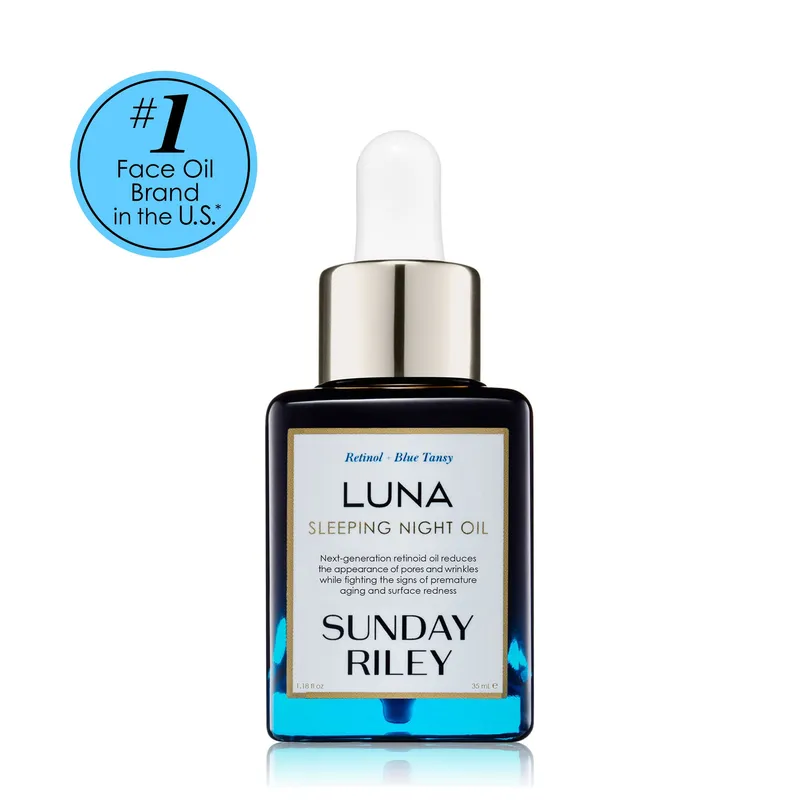
Luna Sleeping Night Oil
Sunday Riley
$55
★★★★☆
The Claims Worth Ignoring
A few chrono-cosmetic tropes don’t survive scrutiny.
“Activates your skin’s circadian clock.” Skin clock genes are regulated by light, temperature, and cortisol. A topical cream doesn’t reset them. This phrasing is marketing.
Exact timing windows (“apply between 10 PM and midnight”). Individual circadian phase varies by about two hours in either direction based on chronotype, sleep schedule, and light exposure. Anyone selling you a specific application window is oversimplifying to the point of fiction.
“Your skin can’t repair without our formula.” It repaired itself for the previous decades of your life. This is fear-mongering with a circadian gloss.
Proprietary “chrono-complexes.” Usually undisclosed, often proprietary blends at concentrations that don’t appear in any published study. Treat them like any other mystery blend — with appropriate skepticism.
What Actually Moves the Needle
The honest conclusion from chrono-cosmetics research is that the category of morning vs. evening skincare is broadly validated by biology, but the precision the industry claims — specific timing windows, branded clock-activating complexes — is not.
The practical framework that holds up:
- Morning: Antioxidants (vitamin C, vitamin E, ferulic acid) + SPF. Light layers. Nothing that compromises barrier during the day.
- Evening: Retinoids or retinoid alternatives + barrier support. This is when skin tolerates actives better and is actively rebuilding.
- Consistency over optimization. The person who uses retinol every night at 11:30 PM is getting the same results as the person who uses it at 9 PM. Don’t let perfect timing become a reason to skip a step.
Sleep quality, by the way, affects skin repair more than any topical in the circadian-targeting category. Cortisol spikes from sleep deprivation disrupt clock gene expression in skin cells. If you’re choosing between a $120 sleep serum and seven hours of sleep, take the sleep. Our piece on cortisol and the stress-skin axis covers why that matters at the cellular level.
Putting It Together
Chrono-cosmetics isn’t pseudoscience. The underlying biology — circadian regulation of cell turnover, barrier function, and DNA repair — is well-established. The issue is the distance between that biology and most product claims. “Night cream” is genuinely a different proposition than “circadian-resetting complex,” even if brands prefer the latter language.
Apply your antioxidants in the morning. Apply your retinoids at night. Moisturize your barrier when it’s most permeable. These are defensible recommendations with biological logic behind them. Whether you need a product explicitly branded as “chrono-cosmetic” to do any of this is a separate question. Usually, the answer is no.
The science gives you a framework. It doesn’t give you a clock you need a subscription to read.