
Body Care
Your Hands Age First: A Real Hand Care Routine
Hands show UV damage faster than your face. Here's how SPF, retinoids, and in-clinic treatments actually slow hand aging.
Disclosure — This article may contain affiliate links. We earn a small commission at no extra cost to you when you purchase through our links. This supports our ability to create independent, evidence-based skincare content.
People obsess over their faces. Serums, SPF, monthly peels — then they head outside and grip a steering wheel for an hour with completely unprotected hands. Those same hands are doing the driving, the gardening, the constant washing. And they have thinner skin than your face, less subcutaneous fat, and a lifetime of cumulative UV exposure that rarely gets interrupted by sunscreen.
The result is predictable. Hands often look a decade older than the face next to them.
This isn’t vanity trivia. The dorsal skin — the back of your hands — has a thinner dermis than facial skin, minimal sebaceous glands to maintain barrier function, and almost no fat layer to buffer volume loss over time. Collagen degrades, veins become more prominent, and melanocytes produce uneven pigment in response to decades of accumulated UV damage. Once you know what’s driving it, the fix isn’t complicated. But it does require consistency.
Here’s what actually works.
Why Hands Age the Way They Do
The UV Problem Is Cumulative
The hands get more UV exposure than almost any other body part, and almost none of it feels like “sun exposure.” You’re not lying on a beach — you’re driving, walking, holding your phone out to get a signal. That incidental UV adds up over years. UVA in particular penetrates car glass and clouds, and it’s the main driver of photoaging: collagen degradation, elastin breakdown, and melanin irregularities that show up as sunspots.
The term for what happens is photoaging, and on the hands it tends to arrive earlier and look more pronounced than on the face precisely because the face usually gets at least some SPF. The hands almost never do.
The Structural Reality
Hand skin is structurally compromised for aging. The dermis is thinner to begin with, which means collagen loss (which accelerates after about age 35, and faster still post-menopause) becomes visible sooner. There’s also almost no subcutaneous fat on the dorsum to maintain volume. As fat and collagen decline, the tendons and veins underneath become more prominent. No topical can fully reverse volume loss — that’s a clinic conversation — but you can meaningfully slow the progression.
For context on what UV memory does to skin over time, our piece on the UV memory effect covers the mechanism in detail.
Step One: SPF, Every Single Day
This is the most high-leverage thing you can do. And the most commonly skipped.
The issue isn’t that people don’t own sunscreen. It’s that hand SPF has to be reapplied every time you wash your hands, which might be ten times a day. That friction is why most people give up. The practical fix is to keep a dedicated SPF product at the sink, not in your bathroom cabinet with your face routine.
A broad-spectrum SPF 30 minimum is the standard. SPF 50 if you’re outdoors a lot or in a high-UV environment. Chemical formulas tend to absorb faster and feel less greasy — which matters here because you’re using your hands. Mineral formulas (zinc oxide, titanium dioxide) leave more residue, which makes them less practical for this application even if you prefer them on your face.
EltaMD’s UV Hand and Body Lotion SPF 30 is a solid everyday option. It’s broad-spectrum, absorbs quickly, and doesn’t leave a chalky film. The moisturizing base is useful here because hands are frequently dried out by washing.
EltaMD UV Hand and Body Lotion SPF 30
EltaMD
$28
★★★★½
Apply after every wash when you’re outside or near windows. At minimum, apply in the morning before you leave the house and after any extended outdoor exposure.
Step Two: Retinoids at Night
Retinoids are the most evidence-backed topical intervention for photoaged skin. They increase cell turnover, stimulate fibroblasts to produce more collagen, and reduce the appearance of fine lines and pigmentation. The mechanism is the same whether you’re applying them to your face or your hands.
Tretinoin (the prescription-strength retinoid) has decades of data behind it. For the hands, a low-concentration formula — 0.025% or 0.05% — applied nightly to the dorsum is a reasonable starting point. You’ll likely see dryness and some peeling in the first few weeks, which is normal. The skin on the hands can actually handle retinoids well because you’re not applying near eyes or the mouth where irritation is more likely.
If tretinoin feels like too much of a commitment, OTC retinol at 0.5%–1% will work more slowly but still meaningfully over months. Paula’s Choice Clinical 1% Retinol Treatment is one of the cleaner formulations at this concentration — stable packaging, a sensible base, no added fragrance.
Paula's Choice Clinical 1% Retinol Treatment
Paula's Choice
$62
★★★★½
Apply a small amount to the backs of your hands after washing at night. Follow with a rich moisturizer or an occlusive to offset the drying effects.
Our full breakdown of retinol vs. retinaldehyde vs. tretinoin covers the conversion pathway if you want to understand why concentration labels can be misleading.
If You Want to Avoid Retinoids
Bakuchiol is the plant-derived retinoid alternative with the most credible evidence behind it. It doesn’t work the same way mechanistically — it doesn’t bind retinoid receptors — but studies suggest it produces comparable results on fine lines and pigmentation with significantly less irritation.
The Kerala Botanics Ayurvedic Vitamin C Face Oil combines a stabilized vitamin C derivative (formulated for extended cellular retention) with bakuchiol and a base of cold-pressed oils. It’s designed as a face product, but the format — lightweight oil that absorbs without leaving greasy residue — works well on hands too. The vitamin C addresses pigmentation while the bakuchiol covers the collagen-support angle. Worth considering if you want to simplify rather than add more steps.
The main caveat: this is an oil, so if you’re applying it and then immediately handling papers or fabric, give it a few minutes. And at $49, the math works better if you’re using it as a combined treatment rather than running it alongside a separate retinol.
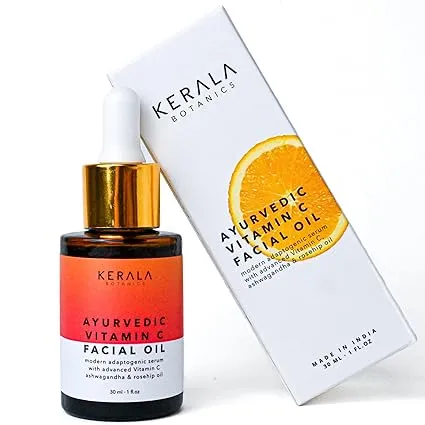
Ayurvedic Vitamin C Face Oil
Kerala Botanics
$49
★★★★☆
Step Three: Hydration Is Non-Negotiable
Hand skin has very few oil glands. Combine that with frequent washing and — depending on your climate — low ambient humidity, and you get a compromised barrier that makes every other active work less efficiently. Dry, cracked hand skin isn’t just uncomfortable. It accelerates the look of aging because fine lines and texture become more prominent when the skin isn’t properly hydrated.
Urea and glycerin are the most effective humectants for hands. Urea in particular at 5%–10% concentration has keratolytic properties that help with roughness and flaking. For anyone dealing with very dry or cracked hands, a urea-based formula before bed under cotton gloves is one of the most reliably effective treatments there is. We’ve covered urea in skincare in depth if you want the mechanism.
For a no-nonsense everyday option, Neutrogena Norwegian Formula is concentrated glycerin, absorbs without excessive greasiness, and costs $8. It’s not interesting. It works.
Neutrogena Norwegian Formula Hand Cream
Neutrogena
$8
★★★★½
Apply morning and night, minimum. Every wash when your hands feel tight.
Step Four: Addressing Dark Spots
Sunspots on the hands are melanocyte-driven hyperpigmentation caused by cumulative UV. The same treatments that work on the face work here — with some caveats around potency and irritation tolerance.
Vitamin C (specifically L-ascorbic acid or its more stable derivatives) inhibits tyrosinase, the enzyme responsible for melanin production. Applied consistently over 8–12 weeks, it produces visible lightening. The hands tolerate higher concentrations than periorbital skin, so if you have a vitamin C serum you’re already using on your face, applying it to your hands too is a reasonable extension of your routine.
Alpha arbutin inhibits tyrosinase without the irritation potential of some other brighteners. It’s gentle enough to use daily and pairs well with vitamin C. Our alpha arbutin guide covers dosing and what to realistically expect.
Niacinamide at 4%–10% reduces melanosome transfer — the process by which melanin moves from melanocytes into surrounding skin cells. It’s the most broadly tolerated brightening active and a good option if your skin reacts to ascorbic acid.
The retinoids mentioned above also address pigmentation directly, so if you’re consistent with nightly retinol or tretinoin, you may not need a separate brightening step.
In-Clinic Options Worth Knowing
Topicals do a lot, but they won’t recover volume, and they work slowly on established sunspots. Clinic options close the gap.
Chemical Peels
Medium-depth peels (glycolic at high concentration, TCA) applied to the dorsal hands accelerate cell turnover and significantly improve pigmentation uniformity. These are generally done in a dermatologist’s office over a series of 3–6 treatments. Results are visible within a few weeks of a peel. Maintenance is required.
Laser and IPL
Intense pulsed light (IPL) and fractional lasers are the gold standard for sun-induced hand pigmentation. A single IPL session can fade spots that would take months of topical treatment to address. Multiple sessions are usually recommended. Cost ranges from $200–$600 per session depending on the device and the practice.
Fractional ablative lasers (like Fraxel) go deeper and address texture and collagen loss as well as pigmentation, but recovery time is longer.
Filler for Volume Restoration
Hyaluronic acid filler injected into the dorsal hands restores volume, reduces the prominence of veins and tendons, and immediately improves the overall appearance. Results last 6–12 months. This is the one intervention topicals simply can’t replicate — there’s no cream that adds back lost fat.
If you want to understand the full picture of structural aging and what in-clinic treatments actually target, our skin longevity guide is a useful starting point.
The Routine, Put Together
Hands don’t need a 10-step routine. They need consistent execution of a few things that actually work.
Morning: Apply SPF to the backs of your hands before you leave the house. Use a hand cream or SPF-containing lotion at the sink. Reapply after washing or any outdoor exposure.
Evening: Apply a retinoid (tretinoin, retinol, or bakuchiol-vitamin C combination) to the dorsal hands. Follow with a rich moisturizer. If dryness is a significant problem, apply a thick cream and sleep in cotton gloves once or twice a week.
Weekly: Consider a gentle exfoliating treatment — a glycolic acid lotion or light AHA applied for a few minutes before rinsing — to help turnover and improve the penetration of your actives. Our chemical vs. physical exfoliation guide covers why chemical exfoliation is preferable for this application.
Clinic: If you have established sunspots or visible volume loss, book a derm consultation. IPL or filler will do more in one visit than six months of topicals alone.
The hands-first aging pattern is predictable and mostly preventable. Most people just start too late — or never start at all. The upside of starting now is that the skin responds to retinoids and SPF the same way it does on the face. It takes consistency, not complexity.