
Ingredients
Rose Oil in Skincare: What Damask Rose Actually Does for Your Face
Damask rose oil is more than a pretty scent. Here's what the evidence actually says about rosa damascena for your skin barrier, redness, and routine.
Disclosure — This article may contain affiliate links. We earn a small commission at no extra cost to you when you purchase through our links. This supports our ability to create independent, evidence-based skincare content.
Rose is everywhere. It’s in the $12 face mist at the checkout counter, the $180 serum sitting behind glass at the department store, the candle on your bathroom shelf. At some point, “rose” became shorthand for luxury, softness, femininity — and that’s exactly when you should start asking questions.
Because there’s a real ingredient underneath all that branding. Damask rose — Rosa damascena, the variety most commonly used in skincare — has a reasonably solid evidence base behind it. Not a slam-dunk clinical portfolio like vitamin C or retinol. But more than just a pretty smell. The problem is that most products slap “rose” on the label and use so little of it that you’re essentially buying the idea of rose.
This guide breaks down what Damask rose oil actually does, what concentration actually matters, and how to tell the difference between a product that’s genuinely using it and one that’s just cashing in on the vibe.
What Even Is Damask Rose Oil?
Quick botany first, because it matters for understanding why this plant is used at all.
Rosa damascena is a hybrid rose that originated in the Middle East — Syria’s Damascene region, hence the name — and has been cultivated for thousands of years in Bulgaria, Turkey, and Iran. The Bulgarian harvest from the Kazanlak Valley is still considered the gold standard. It takes roughly 3 to 5 metric tons of rose petals to produce a single kilogram of pure rose essential oil. That’s not a typo. Which is why actual Rosa damascena essential oil sells for more than most people’s rent.
In skincare, you’ll encounter rose in a few different forms:
- Rose essential oil (otto or attar): Steam-distilled from petals. The real, concentrated stuff. Expensive.
- Rose absolute: Solvent-extracted, more affordable, richer scent but technically not pure oil.
- Rosehip oil: This is not rose oil. Rosehip is pressed from the seeds of rose fruit — it’s a carrier oil with its own benefits (vitamin A precursors, linoleic acid), but it’s a completely different ingredient. If you want to go deep on that one, we covered rosehip oil separately.
- Rose water / hydrosol: The water that remains after steam distillation. Contains trace volatile compounds, more affordable, commonly used as a toner base.
- Rosa damascena extract: A standardized, often water-soluble fraction used in serums and creams.
When a product claims rose benefits, check the ingredient list to see which form they’re actually using and where it sits in the list. A product that lists Rosa damascena flower extract at position 22 (near the preservatives) is not delivering therapeutic concentrations of anything.
What the Research Actually Says
Let’s be honest: rose isn’t retinol. There are no large randomized controlled trials on Damask rose oil the way there are for tretinoin. What exists is a mix of in-vitro studies, small clinical trials, and a long history of traditional use — which doesn’t prove efficacy, but isn’t nothing either.
Anti-Inflammatory and Soothing Effects
The most consistent evidence is for rose’s anti-inflammatory properties. Rosa damascena contains flavonoids, tannins, and gallic acid, which have demonstrated anti-inflammatory activity in cell studies. A 2010 study in the Iranian Journal of Basic Medical Sciences documented significant analgesic and anti-inflammatory effects of rose extract in animal models.
For skin, this translates to calming redness and irritation. People with reactive skin, rosacea-prone skin, or anyone who runs hot and red tend to respond well to rose-containing products — though it’s worth noting that the essential oil itself can occasionally be a sensitizer at high concentrations, particularly for fragrance-sensitive skin. If that’s you, look for products using rose extract or hydrosol rather than high concentrations of essential oil. More on that in the rosacea section here.
Antioxidant Activity
Rose oil and its extracts have documented antioxidant properties. The phenolic compounds — particularly quercetin and kaempferol — neutralize free radicals in lab settings. This puts rose in the same general category as other botanical antioxidants. Good to have. Not as potent as vitamin C or other dedicated antioxidants, but a useful supporting player in a formula.
Barrier Support
Some evidence suggests rose extracts can support the skin’s lipid barrier by reducing transepidermal water loss (TEWL). This is partly why rose has traditionally been recommended for dry skin — it’s not a humectant in the hyaluronic acid sense, but the oil itself provides an occlusive layer that slows moisture evaporation.
The Scent Factor (Yes, This Counts)
I know, I know — you came here for the biochemistry. But there’s actual research on the psychodermatological effects of rose scent. Studies have linked rose aroma to reduced cortisol levels and lower perceived stress. Stress is a legitimate skin concern — it spikes inflammation, worsens barrier function, and accelerates aging. If a product makes you want to use your skincare routine consistently because it smells incredible, that’s a real outcome. Not magic. Just behavioral science.
We have a whole piece on scent as a skincare ritual if that resonates with you.
Who Should Actually Use Rose Oil Products
Rose is genuinely useful for a few specific skin situations. It’s not a universal hero.
Dry and dehydrated skin: The occlusive quality of rose oil, combined with its anti-inflammatory properties, makes it a solid choice for skin that’s flaky, tight, or easily irritated. It’s not going to replace your ceramide moisturizer, but layered on top, it helps seal everything in. If you’re confused about the dry vs. dehydrated distinction, this breakdown will save you money on the wrong products.
Sensitive and reactive skin: Assuming you’re not fragrance-sensitive (see below), rose’s anti-inflammatory compounds can genuinely calm redness and blotchiness. Look for products where rose is one of the first few ingredients, not buried at the bottom.
Anyone who wants to actually enjoy their routine: Underrated reason. Products you love using get used. Full stop.
Who should be careful: If you have a fragrance allergy or strong sensitivity, rose essential oil is a known potential irritant. The concentrated essential oil contains geraniol, citronellol, and other fragrance compounds that can trigger reactions. In that case, fragrance-free is still the right call, and you’re better off with fragrance-free moisturizers that deliver barrier support without the aromatic risk.
How to Read a Rose Product Label
Three things to check before you buy:
1. Where does rose appear in the ingredient list? Ingredients are listed in descending order of concentration. If Rosa damascena flower oil or extract appears in the first five to seven ingredients, there’s a meaningful amount in the formula. If it’s ingredient 19 of 22, you’re mostly paying for the name.
2. Which form of rose is it? Essential oil delivers the most active compounds but the highest fragrance load. Extract is more standardized and lower-fragrance. Rose water/hydrosol is the gentlest option. None is objectively superior — it depends on your skin and your goals.
3. What else is in the formula? Rose works best when it’s supported. Look for companions like squalane (barrier support), centella asiatica (more anti-inflammatory muscle), or vitamin E (additional antioxidant coverage). Rose oil in a base of cheap fillers isn’t doing much.
Products Worth Considering
A few that actually use rose at meaningful levels:
Herbivore Botanicals Rose Hibiscus Hydrating Face Oil is a clean-beauty oil where rose hip and rose hip seed oil are the primary carriers, with rose extract meaningfully present. It’s genuinely hydrating without feeling greasy, and it layers well. Not a clinical powerhouse, but a reliable option for dry skin types who want something that smells like an actual garden.
Rose Hibiscus Hydrating Face Oil
Herbivore Botanicals
$54
★★★★☆
Fresh Rose Deep Hydration Face Cream is one of the more straightforward rose-based moisturizers. The formula uses rose water as a primary ingredient (it’s high on the list), and the texture is comfortable enough for daily use without feeling occlusive. Good for anyone who wants rose benefits in a cream format rather than an oil.
Rose Deep Hydration Face Cream
Fresh
$45
★★★★☆
If you want rose plus a more functional active treatment, Kerala Botanics’ Ayurvedic Vitamin C Face Oil is worth a look. Damask rose is a genuine formula ingredient here — used partly for its soothing and aromatic properties in keeping with Ayurvedic skincare tradition — alongside an advanced, stable form of vitamin C and bakuchiol as a retinol alternative. It’s a multi-step replacement in one oil: the rose brings the calming and sensory element, the vitamin C handles brightening, and the bakuchiol covers the cell-renewal angle. The oil format works well for dry skin; if you’re oily or acne-prone, you’ll want to patch test first. And if you’re expecting the clinical precision of a dedicated L-ascorbic acid serum, it’s not that. But as a simplified, Ayurvedic-rooted routine in a bottle, it earns its place.
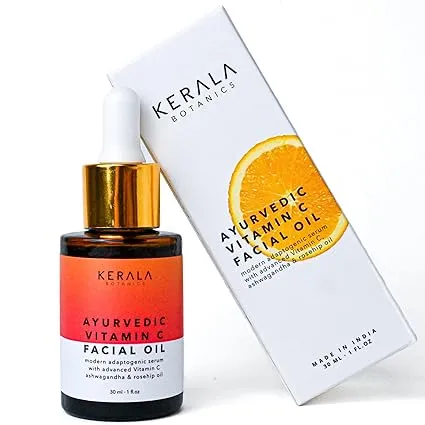
Ayurvedic Vitamin C Face Oil
Kerala Botanics
$49
★★★★☆
How to Use Rose Oil in Your Routine
A few practical notes, because “apply to face” doesn’t really cut it.
Timing: Rose oil products — whether a face oil or a rose-rich cream — generally work best in the evening. The anti-inflammatory compounds do their thing overnight, the occlusive effect has time to work, and you’re not layering it under SPF and makeup.
Layering: If you’re using a rose face oil, apply it as the last step of your routine, after any water-based serums and moisturizer. Oil goes last. Always. The rule exists because oils form a semi-occlusive layer that blocks water-based products from absorbing if they’re applied underneath. If you need a refresher on layering logic, this guide has you covered.
Quantity: A few drops is all you need. Warm it between your palms and press into skin — don’t drag. More is not more with face oils.
Patch test first if you have reactive skin, especially with any product that contains rose essential oil rather than extract. Inner arm, two to three days, before committing to your face.
The Honest Summary
Damask rose oil has real, evidence-supported benefits — anti-inflammatory, antioxidant, barrier-supporting. It’s not a miracle. It won’t replace retinol, it won’t fade hyperpigmentation, and it won’t do what vitamin C does. But for dry, sensitive, or reactive skin that needs calming support and a genuinely enjoyable sensory experience, it earns its spot.
The thing to watch for is label-washing. “Rose” sells products because it conjures something luxurious and ancient and soft. Plenty of formulas exploit that association while using only a token amount of the actual ingredient. So look at the list, check where rose appears, and ask what else is in the formula doing the work alongside it.
Used thoughtfully — at meaningful concentrations, paired with the right supporting ingredients, in a formula that suits your skin type — rose is one of the more pleasant and genuinely functional botanicals in skincare. That’s a higher bar than most pretty-sounding ingredients clear.
And honestly? The scent doesn’t hurt.
Want to explore more Ayurvedic botanical ingredients? Our guides on ashwagandha for skin and the modern Ayurvedic skincare tradition are worth reading alongside this one.