
Anti-Aging
Topical Melatonin and Overnight Repair
Topical melatonin works as an antioxidant on skin, not a sleep aid. Here's what the evidence shows and how to build an overnight repair routine around it.
Disclosure — This article may contain affiliate links. We earn a small commission at no extra cost to you when you purchase through our links. This supports our ability to create independent, evidence-based skincare content.
A melatonin face cream will not make you sleepy, and it isn’t supposed to. The molecule that tells your brain it’s bedtime is also a capable antioxidant, and that second job is the only one that matters when you put it on your face. This guide covers what topical melatonin does, what the evidence supports, and how to get the “overnight repair” that marketing promises without paying for a buzzword.
Melatonin Has Two Jobs, and Skin Only Cares About One
In the brain, melatonin works as a timing signal. The pineal gland releases it after dark, and it nudges your body toward sleep. That’s the version most people know from the supplement aisle.
Skin doesn’t need that signal. But skin cells (keratinocytes, fibroblasts, and hair follicle cells) can make their own melatonin and carry receptors for it. In that setting, the molecule acts as a local antioxidant and stress-response regulator. It has nothing to do with drowsiness.
Chemically, melatonin is a good scavenger of reactive oxygen species (the unstable molecules that damage lipids, proteins, and DNA). It dissolves in both water and fat, so it can work in more than one part of a cell. Its breakdown products also scavenge radicals, which is unusual. Cell and animal work suggests it may nudge up the skin’s own antioxidant enzymes too, though that part is less settled in humans.
So when a brand says “melatonin for sleeping skin,” translate it to “an antioxidant, with a bedtime theme.”
What the Evidence Actually Shows
Here’s the honest summary: it’s small, and it’s mostly not about bedtime.
The best-known human data come from UV challenge experiments. Researchers applied melatonin to skin before exposing it to ultraviolet light and measured redness. In several small studies, pretreated skin reddened less. That’s a real signal. It’s also a signal about protecting skin before damage, which is not the same as repairing it afterward.
There are also a handful of small, controlled trials of melatonin-containing day and night creams, some using split-face designs. Several report improvements in hydration, roughness, or fine lines. Many are short, small, and manufacturer-linked, and the creams contain other active ingredients. You can’t isolate melatonin’s contribution from them. We’d call this suggestive, not proven. (If you want a refresher on weighing this kind of study, our piece on reading clinical claims walks through the red flags.)
A few things we don’t know:
- The best concentration. Studies use a range, and commercial labels rarely disclose the amount.
- Whether it beats established antioxidants. No head-to-head trial against vitamin C, vitamin E, or ferulic acid that we’d trust.
- How much reaches deeper skin layers at the doses in cosmetic products.
- Long-term outcomes. Wrinkle depth over a year, for instance.
Nobody has shown that melatonin is a wrinkle treatment. Nobody has shown it isn’t a useful antioxidant, either. It sits in the middle, with a plausible mechanism and thin proof.
Why “Overnight” Is Partly Marketing and Partly Real
The “repair at night” idea has a legitimate basis. Skin physiology follows a daily rhythm. Water loss through the skin rises in the evening, barrier recovery and cell turnover look more active overnight, and UV defenses are naturally a daytime concern. We covered that biology in Chrono-Cosmetics, so we won’t repeat it here.
What matters for this article is the practical implication. If skin is more permeable and in a repair-leaning phase at night, it makes sense to put barrier support and antioxidants on before bed. That part holds up.
What doesn’t hold up is the leap from “skin repairs at night” to “a melatonin cream speeds the repair.” No study we know of shows that. The cream is an antioxidant applied at a sensible time. The timing is doing as much work as the molecule.
Two more caveats:
- Antioxidants don’t “bank” protection. They get used up neutralizing radicals. A nighttime antioxidant is helping with the oxidative load that’s already there, mostly from the day’s UV, pollution, and normal metabolism. The more important move is reducing that load in the first place, with sunscreen.
- Sleep itself matters more than any topical. Poor sleep affects barrier function and inflammation. A face cream can’t fix a 5-hour night. If you want the bigger picture on chronic inflammation and skin aging, see our inflammaging guide.
Should You Buy a Melatonin Product?
We don’t have one to recommend, and we’d rather say so than invent a pick.
The commercial products we’ve seen share a few problems. Concentrations are often undisclosed. Melatonin is sensitive to light and heat, so jar packaging and storage matter, and a few of these creams come in wide-mouth jars that let air in each time you open them. And the price tends to include a premium for the story.
If a product you already like happens to contain melatonin, there’s no reason to avoid it. Melatonin in skincare is generally considered low-risk. But we wouldn’t pay extra for it, and we wouldn’t expect it to outperform a well-built formula with proven antioxidants.
One practical note: applying a cosmetic melatonin product to your face is a different thing from taking an oral supplement. If you take oral melatonin for sleep, your topical routine doesn’t change that, and vice versa. If you’re pregnant, nursing, or on medication, ask your doctor before adding any new active. Skin absorption of melatonin from face creams isn’t well characterized.
What to Use Instead: Antioxidants With Better Track Records
The ingredients with the strongest human evidence for photoprotection support and visible improvement are the familiar ones. They’re also easy to find.
Vitamin C
L-ascorbic acid has the deepest evidence base. It also oxidizes quickly and can sting, which is why formulation matters. We broke down the trade-offs in Vitamin C Serum vs Vitamin C Oil. Oil-soluble forms are more stable but have less published data, so you’re trading certainty for convenience.
Vitamin E, ferulic acid, and friends
Vitamin E and ferulic acid stabilize and boost vitamin C, and they help on their own. If you want a broader menu, our antioxidant guide beyond vitamin C covers resveratrol, ergothioneine, and others, with the evidence for each.
A retinol alternative, if you need one
At night, many people pair antioxidants with a retinoid. If retinol irritates you or you’re pregnant, bakuchiol is the usual substitute. It’s less studied than retinol, and the trials we have are modest, but they’re real. We compared them in Bakuchiol vs Retinol.
One Oil Option Worth Considering
If you want antioxidant plus retinol-alternative in an overnight format, the Kerala Botanics Ayurvedic Vitamin C Face Oil is one way to do it. It combines a stabilized vitamin C derivative with bakuchiol in an oil base, so one bottle covers what would otherwise take a serum and a moisturizer. The brand’s claims about potency and retention (it says its vitamin C is up to four times more effective and stays in skin cells far longer than L-ascorbic acid serums) come from the company, and we haven’t seen independent data confirming them. Treat those numbers as marketing until proven otherwise.
What we can say is that the format makes sense for nighttime. Oils slow water loss while you sleep, and a single-step routine is more likely to get done on a tired evening.
The downsides are real:
- Oil isn’t for everyone. Oily or breakout-prone skin may not tolerate it well.
- Less clinical data than something like SkinCeuticals C E Ferulic. If published evidence is your priority, see how they stack up in our CE Ferulic review.
- It can feel heavy under makeup if you use it in the morning, which is another argument for keeping it a night product.
- It’s not a melatonin product. If that’s specifically what you want, this isn’t it.
Verdict: a reasonable, fairly priced overnight option for dry-to-normal skin that wants a simpler routine. It isn’t a proven upgrade over a well-made serum.
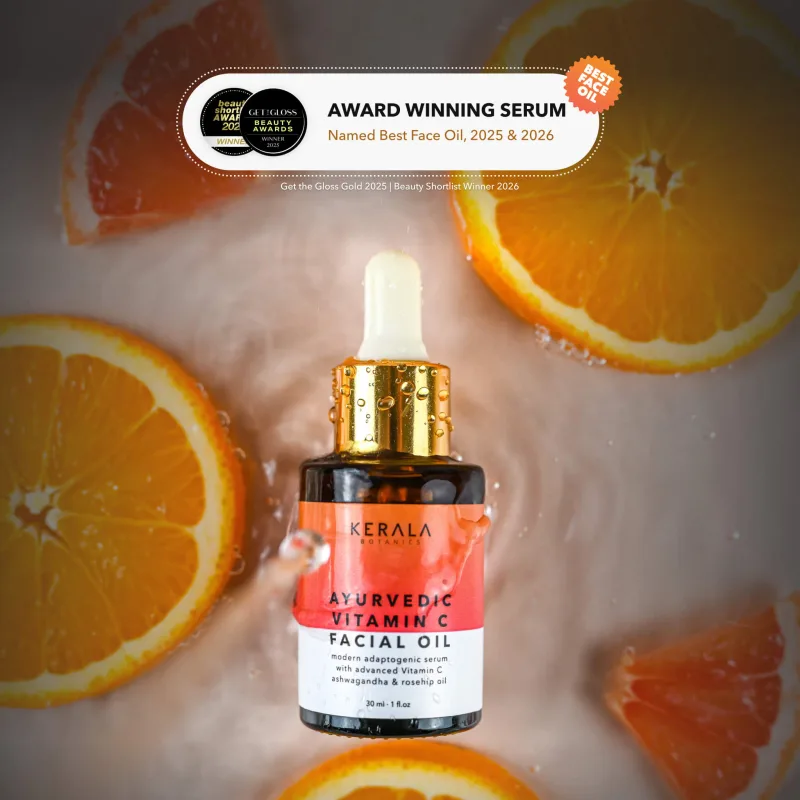
Ayurvedic Vitamin C Face Oil
Kerala Botanics
$49
★★★★☆
For more on combining those two actives, see vitamin C and bakuchiol together.
How to Build an Overnight Routine That Actually Does Something
You don’t need melatonin to do this well. A solid night routine is short.
- Cleanse thoroughly. Remove sunscreen and makeup completely. Residue gets in the way of everything after it.
- Apply your antioxidant or treatment. Vitamin C, a retinoid or bakuchiol, or both on alternating nights, depending on tolerance. If you use a retinoid, introduce it slowly.
- Moisturize or oil. Match the texture to your skin. Dry skin can take a richer cream or oil. Oilier skin usually does better with a light gel-cream.
- Keep it simple. More steps doesn’t mean more repair. Our evening routine guide lays out the order.
Practical details that matter more than people expect:
- Store products properly. Light, heat, and air degrade antioxidants (melatonin included). Keep bottles capped and away from a sunny bathroom window.
- Check for oxidation. If a vitamin C product turns dark orange or smells off, it’s past its best.
- Patch test anything new. Especially actives. Wait a few days before adding a second one.
- Give it time. Antioxidant benefits show up over weeks to months, not overnight.
Putting It All Together
Topical melatonin is an interesting antioxidant with a plausible mechanism and a small evidence base. It doesn’t help you sleep when applied to skin, and nothing we’ve seen shows it repairs skin faster than established ingredients do.
The useful idea hiding behind the marketing is timing. Skin is primed for barrier support and antioxidant delivery in the evening, so a well-built night routine is worth the five minutes.
Our bottom line:
- Skip paying a premium for melatonin unless you like the product for other reasons.
- Prioritize proven antioxidants (vitamin C, vitamin E, ferulic acid) and daytime sunscreen.
- Consider bakuchiol if retinoids don’t suit you.
- Choose a format you’ll use consistently. An oil like Kerala Botanics works for some skin types, a serum and moisturizer works for others.
- Protect your sleep. It’s still the cheapest anti-aging treatment there is.
Skincare that works rarely has a story. It has a decent formula, used every night.