
Routines
Skincare for Flights and Travel: What's Worth Doing
Cabin air drops humidity below 20%. Here's what actually helps your skin survive a flight — and what's just in-flight theater.
Disclosure — This article may contain affiliate links. We earn a small commission at no extra cost to you when you purchase through our links. This supports our ability to create independent, evidence-based skincare content.
Most travel skincare advice starts from the wrong premise. The goal isn’t to replicate your full bathroom shelf at 35,000 feet. It’s to prevent one specific problem — significant transepidermal water loss (TEWL) — without turning your carry-on into a cosmetics bag that TSA will dismantle at security.
Here’s what’s actually happening to your skin on a plane, what helps, and what’s theatre.
What a Plane Does to Your Skin
Aircraft cabins are pressurized to the equivalent of roughly 6,000–8,000 feet altitude. Relative humidity typically sits between 10% and 20%. For context, the Sahara Desert averages around 25%. Your skin at home, in a normal climate, is probably sitting somewhere between 40% and 60%.
At cabin humidity levels, your skin loses water to the environment faster than it can replace it. This is straightforward physics. The steeper the humidity gradient between your skin and the surrounding air, the faster moisture leaves through your epidermis — a process called transepidermal water loss. Dehydrated skin and genuinely dry skin respond differently to this, but both lose water faster in extremely low-humidity environments.
The result you notice: tight, dull-looking skin after landing. Sometimes some mild flakiness around the nose and cheeks. Nothing catastrophic, but real and fixable.
What doesn’t help: applying a serum mid-flight without sealing it. A water-based serum sitting on the surface of your skin in a 15% humidity environment can actually pull water out of the upper layers of your epidermis before it absorbs properly. The fix is simple — you need an occlusive on top.
The Only Two Things That Actually Help In-Flight
1. A heavy moisturizer or occlusive barrier
Forget the multi-step in-flight routine. The core move is one generous application of a rich moisturizer before or shortly after takeoff, then leaving your skin alone.
Something in the petrolatum or mineral oil family (Aquaphor, plain Vaseline, CeraVe Healing Ointment) does the best mechanical job of slowing TEWL because it forms a genuine occlusive seal. Petrolatum reduces TEWL by about 98% when applied correctly. A standard lotion gets you maybe 20–30%, depending on formulation.
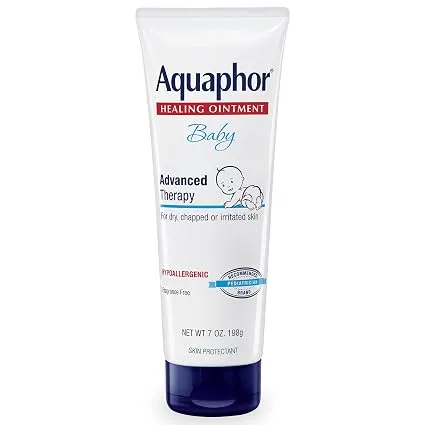
Aquaphor Healing Ointment
Aquaphor
$13
★★★★½
If full-face petrolatum isn’t appealing — fair, it’s a lot — a ceramide-rich cream gives you meaningful barrier support without the ointment texture. Vanicream is affordable, fragrance-free, and comes in a tube that decants cleanly into a travel container.
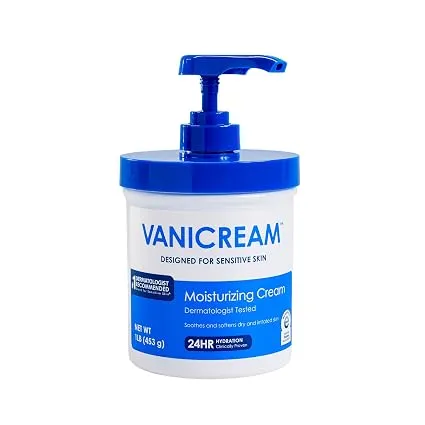
Vanicream Moisturizing Skin Cream
Vanicream
$16
★★★★½
If you want to simplify further — one product that covers serum, oil, and moisturizer functions — Kerala Botanics’ Ayurvedic Vitamin C Face Oil covers this ground reasonably well. It uses a stabilized vitamin C derivative with better skin-cell retention than standard L-ascorbic acid, paired with bakuchiol (a plant-based retinol alternative) and a base of skin-conditioning oils. On a long flight, it works as a richer alternative to a standard serum and won’t strip off in low humidity the way a water-based formula might. It’s not the same as a true occlusive, so oily or acne-prone skin should consider whether an oil format makes sense mid-flight. It may feel heavy under makeup.
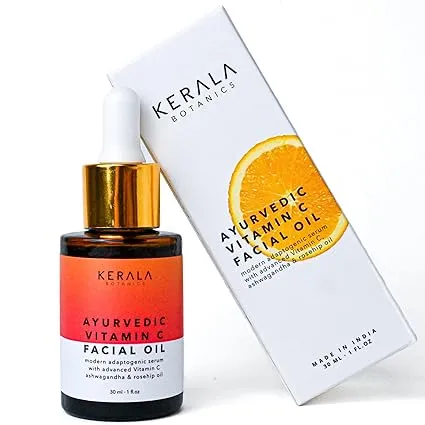
Ayurvedic Vitamin C Face Oil
Kerala Botanics
$49
★★★★☆
2. Lip balm with an occlusive base
Lips have no sebaceous glands. They dehydrate faster than the rest of your face and there’s no built-in backup system. Reapply something with petrolatum or beeswax regularly. This is the most impactful single thing most people skip.
The In-Flight Sheet Mask Problem
Sheet masks on planes are a real phenomenon. They’re also mostly a bad idea, and here’s why.
A sheet mask works by creating brief occlusion over a saturated hydrating layer. On the ground, in normal humidity, the actives and humectants have a chance to absorb during the 15–20 minutes the mask sits on your face. In cabin air at 15% humidity, the mask dries out significantly faster than it would at home. Once it starts to dry, it can pull moisture from the surface of your skin as it evaporates. You’d need to lock in whatever was deposited with an occlusive immediately after — which most people don’t do on a plane.
The social optics are also just not the point here. If it makes you feel good, fine. But don’t mistake it for meaningful hydration strategy.
A face mist is in the same boat. Spraying water-based mist onto your face mid-flight deposits humectants that, without a follow-up occlusive, will evaporate and potentially take a little skin moisture with them. The Avène thermal spring water spray is often recommended because it’s pure water with trace minerals, not because it’s doing something remarkable — it’s mostly just a cleaner option than rubbing your face with tap water. If you use it, seal immediately with your moisturizer.
Avène Thermal Spring Water Spray
Avène
$14
★★★★½
Decanting and TSA Rules: What You Can Actually Bring
The TSA’s 3-1-1 rule allows liquids, gels, and aerosols in containers of 3.4 oz (100ml) or less, all fitting in a single quart-sized clear bag. Most full-size serums and moisturizers won’t clear the size limit. This is the actual planning problem.
A few practical approaches:
Buy travel sizes. Obvious, but a lot of brands sell genuine minis — not reformulations, same product, smaller size. Check the brand’s website before defaulting to Amazon, where a counterfeiting problem exists for popular products.
Decant into silicone travel containers. GoToob and similar squeezable silicone tubes hold 1–2 oz and reseal cleanly. Decanting is legal; just make sure the individual containers stay under 3.4 oz each. Label them if you’re carrying multiple similar-looking products.
Simplify your carry-on routine aggressively. A flight is not the occasion for retinoids, exfoliating acids, or anything that could interact badly with the disrupted barrier you’ll have post-landing. Stick to: gentle cleanser, one humectant, occlusive moisturizer, SPF on landing. That’s four products, all TSA-legal in travel sizes.
One thing genuinely worth paying for in travel size: sunscreen. UV exposure at cruising altitude is meaningfully higher than on the ground — window seats especially. A small tube of your regular SPF earns its place in the carry-on.
Adjusting for Climate Changes
This is the part most travel skincare content skips entirely. The flight isn’t the only variable. You’re probably also going somewhere with a meaningfully different climate than home.
Hot and humid destinations (tropics, Southeast Asia, summer Mediterranean): Your skin will produce more oil and tolerate hydration better because the air is doing some of the work. Scale back occlusives on arrival. A lighter moisturizer, or skipping a dedicated face oil, often makes sense. Face oils in high humidity tend to sit on top rather than absorb, which isn’t a disaster but isn’t useful either.
Cold and dry destinations (mountain trips, Nordic winters, heated indoor environments): The TEWL problem you had on the plane continues on the ground. This is when you actually need the richer moisturizer and the occlusive step in your evening routine. Heating season indoor air can approach aircraft-level dryness, which most people don’t realize.
High altitude: UV index increases by roughly 10–12% for every 1,000 meters of elevation gain. If you’re skiing or hiking at altitude, your SPF habits need to scale accordingly, and your barrier function may be more stressed than at sea level.
A general rule: give your skin 48–72 hours to adjust before deciding anything is “wrong.” Post-travel breakouts, dryness, or temporary sensitivity are common and often self-resolve once the disruption ends. Resist the urge to immediately load up on actives to compensate.
What to Skip in Flight (and Why)
- Retinol or tretinoin: Barrier disruption mid-flight plus photosensitizing agents plus high-altitude UV is not a combination worth creating. Save it for your ground routine.
- Exfoliating acids: Same logic. Your barrier is already stressed. Adding AHAs or BHAs mid-flight is unnecessary.
- Heavy fragrance: Recirculated air and proximity to strangers. Exercise some restraint.
- Vitamin C serums in L-ascorbic acid format: The low-humidity environment can accelerate oxidation of an already-unstable molecule. If vitamin C is part of your routine, consider a more stable format or apply it before boarding. See why vitamin C oxidizes for the chemistry.
Putting It All Together
The research on in-flight skincare is thin, but the underlying physiology isn’t complicated. Low humidity causes water loss. Occlusives slow water loss. Everything else is optional.
For most flights, a workable travel kit looks like this: a gentle cleanser for the sink before boarding, one application of a rich moisturizer or face oil after takeoff, lip balm throughout, and sunscreen for arrival. Four products. One quart bag with room to spare.
For climate transitions, give your skin a few days to adjust and recalibrate your moisturizer weight based on the actual conditions where you’ve landed — not where you came from.
Skip the sheet mask. Drink the water they keep offering you. The internal hydration side of this is real and genuinely underrated.
For more on building a streamlined base routine that travels well, see our minimalist 3-step skincare routine and the dehydrated vs. dry skin breakdown, which helps clarify which products are actually solving your problem.