
Ingredients
Hanbang: Korean Herbal Skincare, Modernized
Hanbang skincare blends ginseng, mugwort, and licorice with peptides and encapsulation tech. Here's what it actually is and what's worth buying.
Disclosure — This article may contain affiliate links. We earn a small commission at no extra cost to you when you purchase through our links. This supports our ability to create independent, evidence-based skincare content.
The first time someone told me ginseng was in my serum because of a 500-year-old medical text, I laughed. Then I actually read about it and felt a little dumb for laughing. Hanbang isn’t a marketing invention from the last decade of K-beauty hype. It’s traditional Korean medicine — the same discipline that treats the body with herbs, acupuncture, and diet — rerouted onto your face.
Here’s what you’re actually getting when a label says “hanbang”: centuries-old herbal theory, the same ingredients your grandmother’s grandmother might have used for a fever or a cough, now run through modern labs that know how to stabilize them, encapsulate them, and pair them with peptides so they don’t just sit on your skin smelling earthy and doing nothing. That combination — old wisdom, new delivery — is the whole story. Let’s get into it.
What Hanbang Actually Means
Hanbang comes from Hanbangeuihak, traditional Korean medicine, which itself grew out of a shared East Asian medical framework with Traditional Chinese Medicine but developed its own identity over hundreds of years. The foundational text most hanbang brands name-drop is the Donguibogam, a 17th-century medical encyclopedia that catalogued herbs, their properties, and what they were believed to balance in the body.
The skincare version of this philosophy treats your skin the way the original medicine treated your whole system — looking for balance, not just symptom control. That’s a very different starting point than “this serum targets dark spots.” It’s more like “this herb calms inflammation, improves circulation, and has done both for a very long time.”
Sulwhasoo was really the brand that brought this into the global conversation, built from the ground up around ginseng and herbal formulation. But you’ll find hanbang-inspired ingredients everywhere now, from luxury counters to the $19 essence in your Olive Young haul.
The Core Hanbang Ingredients
Ginseng
Ginseng is the headliner, and for good reason. It contains ginsenosides, compounds studied for antioxidant and anti-inflammatory effects, plus some evidence around improving skin elasticity and supporting collagen. Korean red ginseng (steamed and dried, which changes its chemical profile) is the form most prized in hanbang formulations — it’s considered more potent than the raw white root.
What it actually feels like on skin: a little warming, slightly tonic, the kind of ingredient that makes your face feel like it just had a coffee. It’s not a dramatic active like retinol. It’s a slow, cumulative thing.
Mugwort
Mugwort, or ssuk in Korean, shows up in actual Korean food — you’ve had it in rice cakes — and in traditional medicine for digestive and inflammatory complaints. In skincare, it’s become the go-to for redness and sensitivity, which tracks with its long history as a calming herb. It sits in similar territory to centella asiatica, another botanical that crossed over from traditional use into cult-favorite status, though mugwort leans more toward soothing active redness while centella does more barrier-support heavy lifting.
If your skin flares up at new products or just generally runs hot and reactive, mugwort is one of the gentler entry points into hanbang skincare.
Mugwort Essence
I'm From
$36
★★★★½
This one’s basically a cult product for a reason. It’s 100% mugwort extract with nothing fussy added, and it genuinely calms flushed, irritated skin without a “purifying tingle” that secretly means it’s stinging. Two weeks in, my redness-prone patches looked noticeably less angry. It won’t fix active breakouts or texture, but that was never the job.
Bamboo Sap
Less famous than ginseng, but worth knowing. Bamboo sap, sometimes called bamboo extract or juk-yeom, has traditionally been used for its mineral content and cooling properties. In modern formulations it shows up as a lightweight hydrator, often marketed for its silica content, which is associated with some benefits for skin firmness, though the clinical evidence here is thinner than for ginseng. Think of it as the quiet supporting cast member — rarely the headline ingredient, but it shows up in a lot of hanbang essences and toners as a texture-softening, hydrating base note.
Licorice Root
Licorice is one of those rare ingredients that shows up heavily in both hanbang and Ayurveda, which tells you something about how independently different traditions arrived at the same conclusion. The active compound, glabridin, has real published evidence behind it for inhibiting tyrosinase, the enzyme responsible for melanin production. That makes it a legitimate brightening ingredient, not just a folk remedy with a nice story. We’ve gone deep on this one before — worth a read if hyperpigmentation is your main concern: Licorice Root (Glabridin): Brightening Without Bleaching.
The Modern Twist: Peptides and Encapsulation
Here’s where hanbang stops being a history lesson and starts being actually interesting from a formulation standpoint. Ginseng and mugwort extracts, on their own, aren’t always stable or well-absorbed. Plant extracts can oxidize, lose potency, or just sit on top of skin without penetrating where they’d do anything useful.
So brands started doing two things. First, pairing these herbs with peptides — short chains of amino acids that signal skin cells to behave a certain way, like producing more collagen or calming inflammation. If you want the full breakdown of what different peptide types actually do, we’ve got a guide for that: Peptide Decoder. The idea is that ginseng provides the traditional antioxidant and circulatory benefit while a peptide complex handles something more targeted, like fine lines or barrier signaling.
Second, encapsulation technology. This means wrapping active compounds in tiny lipid spheres so they survive the trip through your skin’s outer layer intact, releasing slowly instead of oxidizing on contact with air or breaking down before they do anything. Sulwhasoo’s whole EVYA technology platform is built around this — extracting and stabilizing ginsenosides so they actually reach where they’re supposed to.
First Care Activating Serum
Sulwhasoo
$130
★★★★½
This is the serum that put hanbang on the global map, and it’s genuinely earned its reputation. It’s a pre-serum essence built around fermented ginseng, meant to “activate” skin before the rest of your routine so everything after absorbs better. The texture is silky without being sticky, and it layers invisibly under sunscreen. Is $130 steep for an essence? Sure. But if you want one product that represents what modern hanbang formulation is capable of, this is it. Nothing cheaper quite replicates the specific fermented-ginseng complex they’ve patented.
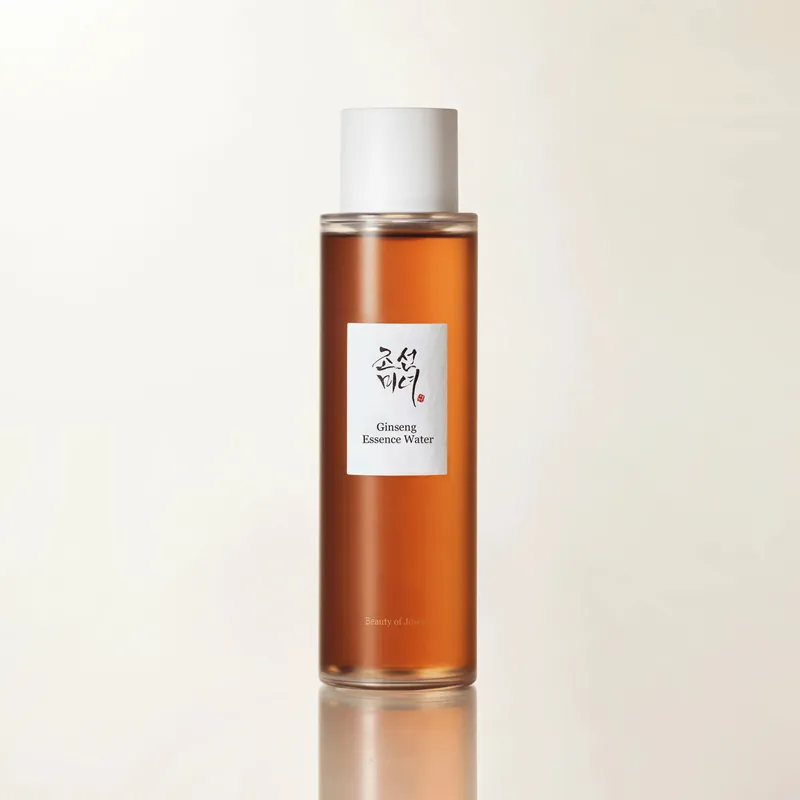
Ginseng Essence Water
Beauty of Joseon
$19
★★★★☆
If Sulwhasoo is the luxury end, this is the honest, unpretentious drugstore cousin. Ginseng plus rice extract in a watery, fast-absorbing essence that does the “hydrating prep step” job without asking you to spend a paycheck. It’s not going to out-perform a $130 serum in a lab test, but for most routines, that gap isn’t worth $111. This brand has become something of a value darling in K-beauty circles generally — we’ve also covered their sunscreen if you want the full picture: Beauty of Joseon Relief Sun Review.
Hanbang vs Ayurveda: Two Traditions, Not One Trend
It’s tempting to lump hanbang in with Ayurveda as “ancient herbal skincare, basically the same thing.” Resist that urge. Both are legitimate, independently developed medical systems with their own theoretical frameworks, their own canon of texts, and their own relationship to the body. Collapsing them into one vague “ancient wisdom” marketing category does a disservice to both.
That said, the parallels are genuinely interesting, not just coincidental. Hanbang’s licorice root and Ayurveda’s use of ingredients like manjistha both target hyperpigmentation through different but complementary mechanisms — we broke down the Ayurvedic side of that here: Manjistha for Dark Spots. Ginseng in hanbang and ashwagandha in Ayurveda occupy a similar conceptual role, too — adaptogenic herbs believed to help the body (and by extension, skin) handle stress, though their actual chemistry is completely different.
Where Ayurveda tends to lean harder into whole-body balance through doshas (we’ve actually tested whether that framework holds up: Dosha Skincare Explained), hanbang’s skincare application tends to be a bit more ingredient-forward and less about typing your skin into a category. Neither approach is more “real” than the other. They’re just different maps of the same general territory — using plants medicinally, long before anyone called it skincare.
If you’re curious how the broader Ayurvedic tradition is getting the same modern-meets-traditional treatment hanbang is getting, our guide on that is a good companion read: Modern Ayurvedic Skincare: What the Tradition Actually Got Right. And if you want to see where this crosses over into actual product territory, the Kerala Botanics Ayurvedic Vitamin C Face Oil is a decent real-world example of the same “old herb, new delivery” logic hanbang relies on — it pairs an advanced, longer-lasting vitamin C with bakuchiol, a plant-based retinol alternative, in an oil base rather than a serum.

Ayurvedic Vitamin C Face Oil
Kerala Botanics
$49
★★★★☆
The oil format won’t be for everyone — if your skin runs oily or you layer a lot of makeup, it can feel like one step too heavy. And it doesn’t have the mountain of clinical data behind it that something like CE Ferulic does. But as a simplified, one-bottle stand-in for a serum, moisturizer, and treatment oil, it’s a genuinely solid option, especially if you already gravitate toward natural or botanical formulations. Worth noting: if the price point gives you pause, we’ve rounded up some cheaper alternatives too.
How to Actually Build a Hanbang-Inspired Routine
You don’t need to overhaul your whole shelf to dip into this. Here’s the realistic entry point.
Start with one hero product, not five. Pick either a ginseng essence or a mugwort essence depending on what your skin actually needs — ginseng if you want a slightly more active, antioxidant-forward step, mugwort if redness and reactivity are your main issue.
Use it where an essence or first serum normally goes, after cleansing and toning, before your treatment serums. This mirrors how it’s traditionally positioned in Korean multi-step routines — as a “preparation” step that helps everything after it work a little better. For the full order of operations, our layering guide is useful if you’re building this into an existing routine rather than starting over.
Don’t expect overnight drama. These are slow, tonic-type ingredients, closer in philosophy to how fermented skincare works — building skin resilience over weeks, not delivering a two-day glow-up. If you want fast, visible change, hanbang isn’t the lane for that. It’s the lane for steady, cumulative skin health.
Patch test the stronger botanical extracts, especially fermented ginseng formulas, which can occasionally cause sensitivity in people with botanical allergies. If you’ve never done this properly, here’s how to patch test without wasting two weeks guessing.
Putting It All Together
Hanbang isn’t a trend wearing a traditional costume. It’s real traditional medicine, adapted — sometimes thoughtfully, sometimes a little loosely — into modern skincare formulation. Ginseng and mugwort have genuine supporting evidence for antioxidant and calming effects. Licorice root’s brightening claim actually holds up in research. Bamboo sap is more of a gentle hydrating extra than a headline act, and that’s fine.
What makes the “modernized” part of this genuinely worth paying attention to is the formulation science — peptides doing targeted work alongside herbs doing broader, traditional work, and encapsulation tech making sure the actives survive long enough to matter. That’s not marketing fluff. That’s actual chemistry solving an actual stability problem that these herbs have always had.
If you’re hanbang-curious, start small: one essence, used consistently, for a few months. Don’t expect it to replace your actives. Expect it to make your actives behave a little better, and make your skin feel like it’s getting looked after instead of just treated. That’s the whole point, and honestly, it’s a pretty nice way to think about skincare.