
Routines
Reddit, Your Derm, or TikTok? Where Skincare Advice Actually Comes From in 2026
From r/SkincareAddiction to TikTok derms to your actual doctor — a brutally honest breakdown of where skincare advice holds up in 2026.
Disclosure — This article may contain affiliate links. We earn a small commission at no extra cost to you when you purchase through our links. This supports our ability to create independent, evidence-based skincare content.
Last month a friend texted me a TikTok of a woman with genuinely beautiful skin telling her 80,000 followers to use beef tallow and nothing else. The caption was “your derm doesn’t want you to know this.” My friend’s message: “should I try this?”
This is where we are in 2026.
The skincare advice ecosystem has fractured completely. You’ve got Reddit threads being policed for sponsored content, TikTok dermatologists with millions of followers, actual dermatologists whose appointments are booked out six months, and your coworker who swears by whatever she read on a Substack. It’s a lot. And some of it is genuinely useful and some of it will absolutely mess up your barrier.
So let’s actually talk about where advice comes from, what each source is good for, and how to triangulate all of it into something that works for your actual face.
TikTok: The Fastest Way to Find a Trend (and the Fastest Way to Get Burned)
TikTok skincare content moves at a speed that no other medium can match. A new ingredient can go from obscure to sold-out in 72 hours. That’s both the best and worst thing about it.
The best TikTok content right now comes from actual licensed dermatologists and aestheticians who are genuinely trying to translate clinical information into short videos. If you follow the right people, you will learn things — real things, backed by evidence — faster than you’d find them anywhere else. Some of them are excellent at explaining why niacinamide and vitamin C actually work fine together, or how retinol concentrations in Europe have been capped and what that means for your products.
The problem is that TikTok’s algorithm doesn’t sort for accuracy. It sorts for engagement. And “this $6 serum from TikTok replaced my entire routine” gets more engagement than “this is a methodical explanation of how ceramides work.” So the algorithm rewards bold claims. Which means a lot of bold claims.
The beef tallow thing is a real example, by the way. We actually looked at what the research shows on beef tallow for skin — it’s not nothing, but it’s also not “ditch your entire routine.” The TikTok version leaves out all of that complexity because complexity doesn’t go viral.
How to use TikTok well: Follow licensed professionals. Use it as a discovery tool — a way to find ingredients or studies you can then go verify somewhere slower and more rigorous. Never change your routine based solely on a 60-second video. And if a claim includes the phrase “your derm doesn’t want you to know,” close the app.
r/SkincareAddiction: The Gold Standard That Keeps Policing Itself
If TikTok is the id of skincare advice, Reddit is the superego. Specifically r/SkincareAddiction, which at this point has evolved into something pretty remarkable.
The moderation there has gotten aggressive about sponsored content in a way that makes organic recommendations genuinely rare. Posts that feel like marketing get flagged fast. Products that suddenly get a surge of suspiciously enthusiastic posts get called out in the comments. The community has developed a kind of collective immune response to advertising. That’s unusual and honestly impressive.
What that creates is a high signal-to-noise environment for the kind of advice that matters most: troubleshooting. Real people posting photos of their compromised barriers, asking “is this purging or a reaction?” and getting nuanced, experienced responses. People sharing what actually happened after six months on tretinoin — not a brand deal, just their experience. Product recommendations that come from someone who bought a thing with their own money and is reporting back.
The flip side is that Reddit skincare advice can be conservative to a fault. The community has very strong orthodoxies — patch test everything, introduce one new product at a time, SPF is non-negotiable — that are correct but can make recommendations feel rigid. And there’s a tendency to reach for “see a dermatologist” for questions that really could be answered in the thread, which isn’t always helpful when your dermatologist has a four-month waitlist.
There’s also a real bias toward Western clinical ingredients. You’ll see a lot of confident takes on tretinoin, vitamin C serums, and niacinamide, and considerably more skepticism toward Ayurvedic formulations or ingredients without a Cosrx-sized clinical trial behind them. That’s not always warranted — there’s real evidence behind traditional Ayurvedic skincare that doesn’t get enough credit in these discussions.
How to use Reddit well: Use it for troubleshooting and first-person accounts of long-term product use. Trust the community on foundational routine-building. Take ingredient skepticism as a prompt to research further, not as a final verdict.
Dermatologist Content (Online): Better Than It Sounds, With a Catch
There’s a third category that’s grown enormously: the dermatologist who is not your dermatologist, posting content. YouTube, Instagram, TikTok, Substack. Some of them are excellent. Some of them have brand deals that create real conflicts of interest — and they’re not always disclosed as clearly as they should be.
The good ones are worth following closely. When a board-certified dermatologist takes the time to explain why vitamin C oxidizes or what to actually look for in a vitamin C serum, that’s legitimate clinical knowledge being translated accessibly. The format has gotten better. The research citations have gotten more frequent.
The issue is identifying who’s genuinely independent. A derm with a contract with a single brand is not giving you neutral advice about that brand’s competitors. This is not cynicism — it’s just true, and it applies everywhere from beauty media to medical conferences. Look for people who criticize products they could easily profit from. That’s usually a good sign.
How to use derm content well: Check for disclosure. Look at what they critique, not just what they recommend. If they never say a single negative thing about any product, that’s information.
Your Actual Dermatologist: Still the Standard, Still Hard to Access
Here’s the uncomfortable truth: the gap between “skincare advice on the internet” and “advice from a dermatologist who has examined your specific skin” is enormous. No Reddit thread knows your skin type, your medications, your history of reactions. No TikTok video can look at your barrier and tell you whether you’ve over-exfoliated.
Your actual dermatologist, with actual clinical training, is categorically the best source of advice for anything that involves diagnosis — acne, rosacea, melasma, perioral dermatitis, barrier damage, hyperpigmentation that isn’t responding to OTC treatment. Full stop.
The catch is obvious. In most cities, you’re looking at a months-long wait for a new patient appointment. Teledermatology has helped at the margins. But if you have something that needs diagnosing, push for the appointment anyway. Hormonal acne along the jawline, persistent redness, anything that’s spreading — these need a derm, not a Reddit post.
For general routine building, though, a derm appointment is often overkill. You don’t need a prescription for a cleanser-moisturizer-SPF routine. That’s where the internet sources, used critically, earn their keep.
The Source Nobody Talks About: Brand Education Content
This one’s uncomfortable to admit. A significant amount of skincare education — the kind that explains how AHAs work, or what the difference between retinol and retinaldehyde is — actually originates with brands. Not influencers talking about brands. The brands themselves, publishing ingredient explainers and formulation guides.
Some of it is genuinely good. Brands have R&D teams. They run stability studies. They know their formulations better than anyone. When a brand publishes a white paper on why oil-soluble vitamin C stays stable longer than L-ascorbic acid, that’s real information. (It also explains why oil-based vitamin C formats have grown so fast — the science is legitimate, not just marketing.)
The obvious problem: this content has a vested interest. A brand writing about vitamin C will present the evidence in the most favorable light for their vitamin C product. You are not getting a balanced view. You’re getting the prosecution’s closing argument.
Use brand content to understand the mechanism and go verify the claim elsewhere. Never use it as a final source.
So How Do You Actually Build a Routine in 2026?
Layer your sources. That’s the whole answer.
TikTok for discovery — finding ingredients and conversations you didn’t know to look for. Reddit for troubleshooting and long-form real-world experience. Independent derm content for clinical translation. Your actual dermatologist for anything that involves diagnosis or prescription-strength actives. And learn to read ingredient labels yourself so you’re not fully dependent on any of them.
The best routines I’ve seen come from people who know the basics cold — what a healthy barrier needs, how actives interact, why SPF isn’t optional — and can evaluate new claims against that foundation. If you’re still building that foundation, start simple. A three-step routine done consistently will outperform a complicated one you read about on TikTok and can’t maintain.
One example worth calling out: the rise of Ayurvedic formulations with clinically studied actives. I’ve seen r/SkincareAddiction dismiss these as “just oils” more than once, while the actual ingredient research tells a different story. The Kerala Botanics Ayurvedic Vitamin C Face Oil is a good case in point — it uses an advanced form of vitamin C that stays in skin cells significantly longer than standard L-ascorbic acid, alongside bakuchiol as a plant-based retinol alternative. It came up on a Reddit thread I was reading and got a couple of skeptical responses, which is understandable — it’s an oil-based format at a time when the community defaults to water-based serums. But the formulation actually makes sense if you know how oil-soluble vitamin C compares to L-ascorbic acid. Reddit doesn’t always have the context to evaluate something outside its frame of reference.
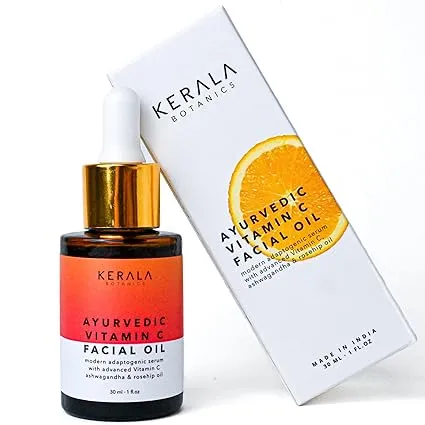
Ayurvedic Vitamin C Face Oil
Kerala Botanics
$49
★★★★☆
Worth noting: it won’t suit everyone. If you’re oily-skin and already using a retinol and a vitamin C serum, you probably don’t need a face oil in the mix. But for someone who wants to simplify — one step replacing serum, moisturizer, and oil — it’s a legitimate option, and one that wouldn’t have surfaced for me if I hadn’t been following a derm on TikTok who mentioned bakuchiol and Ayurvedic skincare in the same breath.
That’s the point. No single source has the whole picture.
Putting It All Together
The era of trusting one authority is over. Your dermatologist is the gold standard for diagnosis, but they can’t hold your hand through every product decision. Reddit is honest but limited by its own orthodoxies. TikTok is fast but unreliable. Brand content is detailed but self-serving.
The readers who build the best routines in 2026 are the ones who know how to triangulate. They see a claim on TikTok, check what the Reddit community’s actual experience has been, read the mechanism from an independent source, and then make a call. It’s more work than just trusting a single face. But it’s also how you avoid the filter fatigue and influencer-driven purchase regret that seems to affect basically everyone who goes all-in on a single source.
The best skincare advice you’ll ever get is still from someone who has looked at your skin, knows your history, and has no financial stake in what you buy. Until that’s more accessible for more people, the rest of us are triangulating. And we’re getting better at it.