
Anti-Aging
Best Retinaldehyde Serums of 2026
The best retinaldehyde serums of 2026, ranked by strength, packaging, and tolerability, plus what the blue color change means and how to start safely.
Disclosure — This article may contain affiliate links. We earn a small commission at no extra cost to you when you purchase through our links. This supports our ability to create independent, evidence-based skincare content.
Retinaldehyde, usually shortened to retinal, sits in the sweet spot between retinol and prescription tretinoin. Skin has to convert it only once to reach the active form, so it works faster than retinol and tends to irritate less than tretinoin. That’s the pitch, and it mostly holds up.
This list is narrow on purpose. Five retinal products, one honest alternative, and the few things that actually decide whether the bottle works: strength, packaging, and how you start. If you’re still deciding between retinoid types, our retinol vs retinaldehyde vs tretinoin comparison is the place to begin. If you want straight retinol, see best retinol serums of 2026.
How We Chose These Retinaldehyde Serums
We kept the criteria short. A retinal serum has to do three things well.
- Use a real, stated concentration. A product that won’t tell you the percentage is hard to judge or to dose.
- Protect the ingredient. Retinal is fragile. Light and air break it down, so packaging matters as much as the formula.
- Be tolerable for the price tier. A strong product you can’t use twice a week isn’t strong. It’s a drawer item.
Price, availability, and ingredient lists were checked at the time of writing. Brands reformulate and repackage, so confirm the current label before buying.
What Retinal Strength Actually Means: 0.05% to 0.2%
Retinal percentages look tiny, and they are. The range that matters runs from about 0.05% to 0.2%, and the numbers mean more than they seem to.
0.01% to 0.05% is the starting zone. Most people can begin here without much drama. Some lines go below 0.05% for first-timers, which is a sensible idea.
0.1% is the middle. It’s where many people settle long-term, and where visible changes in texture and fine lines tend to show up with steady use.
0.2% is the high end of over-the-counter retinal. It’s for people who already use a retinoid regularly and want to push further. Starting here is a common mistake.
One caution: percentages aren’t comparable across brands the way they look. Vehicle, stabilizers, and delivery system all change how irritating a formula feels. A well-built 0.1% can feel gentler than a rough 0.05%. Treat the number as a rough guide, not a promise.
We also don’t have many head-to-head trials of retinal against other retinoids at matched strengths, so take any “X times stronger” claim loosely.
Packaging and the Blue Color Change
Retinal breaks down fast when exposed to light and air. That makes packaging the quiet deciding factor.
Look for three things:
- Opaque, light-blocking containers
- A pump or narrow opening that limits air contact
- A smaller size, so it’s finished before it degrades
A clear jar you dip your fingers into is the worst case. A small opaque pump is the best.
Then there’s color. Pure retinal is naturally yellow to orange, so many formulas lean pale yellow. A few use added color or pH-sensitive ingredients, and you may see a visible tint, sometimes bluish, that shifts as the product spreads or sits on skin. That’s a formulation detail. It doesn’t signal that the product is stronger, weaker, or spoiled.
The color change that matters is drift from what the product looked like when new. If a pale formula turns noticeably darker, brown, or orange, or the smell changes, oxidation is likely. Replace it.
Our guide to storing skincare properly covers where to keep it. The short version: a drawer, not a sunny bathroom shelf.
Quick Comparison
| Rank | Product | Retinal strength | Best for | Price |
|---|---|---|---|---|
| #1 | Medik8 Crystal Retinal | 0.01%–0.1% (strengths 1–10) | Most people | $62 |
| #2 | The Ordinary Retinal 0.2% Emulsion | 0.2% | Experienced users, value | $14 |
| #3 | COSRX The Retinal 0.1 Cream | 0.1% | Budget | $25 |
| #4 | Avène RetrinAL 0.1 Intensive Cream | 0.1% | Sensitive skin | $65 |
| #5 | Beauty of Joseon Revive Serum | Low, liposomal | First-timers | $22 |
#1 Best Overall: Medik8 Crystal Retinal
Medik8 solved the problem the rest of the category ignores: nobody should guess their strength. Crystal Retinal comes in a numbered ladder, from 1 up to 10, running roughly 0.01% to 0.1% retinal. You start low, hold there for a few weeks, then step up. That structure is the whole advantage.
The packaging is the other reason it ranks first. It’s built to keep light and air out, which matters for a molecule this unstable. The texture is a lightweight cream-serum that sinks in without much film, and it layers easily under moisturizer.
It isn’t cheap. At around $62, it costs several times what the budget options do. And you do have to think a little about which strength to buy. Most people should start at the lowest or second-lowest and be patient.
We go deeper in our Medik8 Crystal Retinal review. For anyone who wants one retinal and doesn’t want to second-guess it, this is the one.
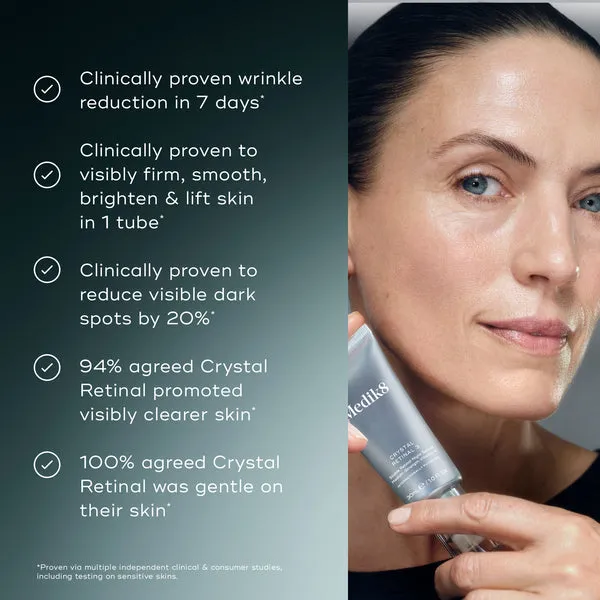
Crystal Retinal
Medik8
$62
★★★★½
What we liked
- + Six-step strength ladder from 0.01% to 0.1% retinal
- + Light-blocking, air-limiting packaging
- + Easy to move up as skin adapts
Worth noting
- - Priciest of the mainstream options
- - Picking the right strength takes a little thought
The most thoughtful retinal line available, and the one we'd start most people on.
#2 Best Value: The Ordinary Retinal 0.2% Emulsion
At around $14, the Ordinary’s 0.2% retinal is the strongest over-the-counter option here, and the cheapest by a wide margin. The ingredient list is short, the texture is light, and the price makes it easy to justify.
The catch is obvious. 0.2% is a lot for a first retinoid. If your skin has never met one, this will likely leave it red and flaky within a week. It’s for people who already tolerate retinol or tretinoin and want a step up without a big bill.
It also comes in a small size. Used nightly, it empties quickly, but that’s fine for a product this fragile. Use it two or three nights a week at first, over moisturizer if needed.
If you already use tretinoin and want an easier maintenance option, this is a smart bridge. If you’re new, skip to #3 or #5.
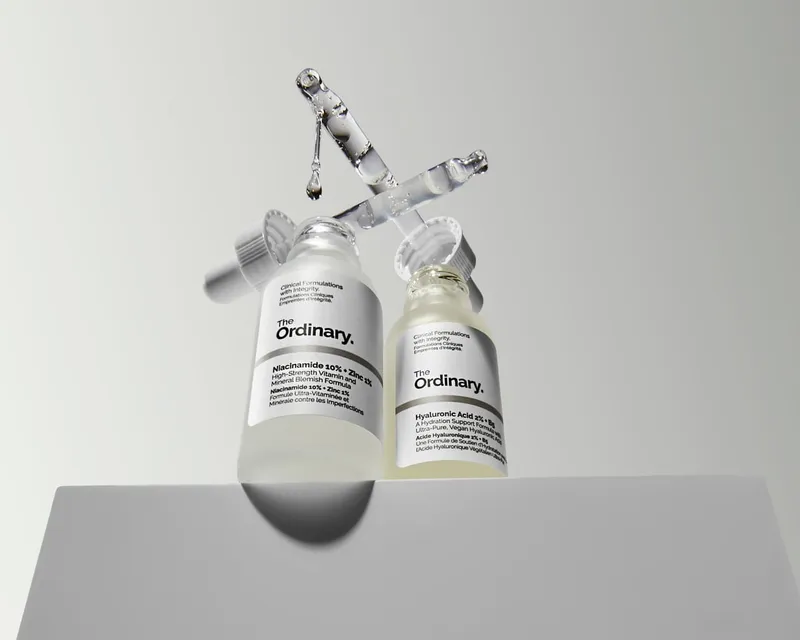
Retinal 0.2% Emulsion
The Ordinary
$14
★★★★☆
What we liked
- + 0.2% retinal at a very low price
- + Simple, short ingredient list
- + Strong enough for experienced retinoid users
Worth noting
- - Too strong for a first retinoid
- - Small bottle for daily use
Remarkable strength for the money, as long as skin is already used to retinoids.
#3 Best Budget Pick: COSRX The Retinal 0.1 Cream
COSRX puts 0.1% retinal in a cream and charges about $25. That’s the mid-range dose, in a texture that cushions the usual dryness. For a first retinal, it’s a more forgiving format than the 0.2% above.
It isn’t a true serum. The cream is a little richer, which some people will like in winter and others will find heavy in summer. There’s also just one strength, so there’s no easy way to step down if it’s too much. If that happens, apply it less often rather than abandoning it.
The small size is a quiet bonus. You’ll finish it before oxidation becomes a concern. For anyone who wants to try retinal at a real dose without spending much, this is the pick.
The Retinal 0.1 Cream
COSRX
$25
★★★★☆
What we liked
- + Mid-range 0.1% retinal at a low price
- + Cream texture cushions the dryness
- + Small size is easy to finish before it ages
Worth noting
- - Cream, not a true lightweight serum
- - Fewer strength options
The cheapest sensible way to try retinal at a real, effective dose.
#4 Best for Sensitive Skin: Avène RetrinAL 0.1 Intensive Cream
Avène builds for reactive skin, and that shows. The formula is fragrance-free and pairs retinal with soothing, barrier-minded ingredients, which helps blunt the stinging that makes people quit retinoids.
Avène also sells a lower-strength version in some markets, around 0.05%, which fits the “start low” approach well. Check which version is available where you shop.
The downsides are price and availability. At roughly $65, it’s the most expensive per ounce here, and stock varies. It’s also less exciting than the others: no ladder, no headline strength. But if your skin tends to flare, that’s a feature.
If your barrier is already struggling, fix that first. Our guide to retinol in winter covers how to adjust when skin is stressed.
RetrinAL 0.1 Intensive Cream
Avène
$65
★★★★☆
What we liked
- + Fragrance-free, barrier-minded formula
- + Pharmacy-brand track record with sensitive skin
- + Pairs retinal with soothing ingredients
Worth noting
- - Pricey for the size
- - Availability varies by region
A calm, low-drama retinal for skin that complains easily.
#5 Best for Beginners: Beauty of Joseon Revive Serum
Beauty of Joseon’s Revive Serum uses liposome-delivered retinal alongside ginseng. It’s a true serum texture, light and easy to layer, and it’s built to be gentle rather than powerful.
That’s both the appeal and the limit. Gentler means slower. Expect gradual results over months, not weeks. For a first-timer, that’s fine. Consistency beats intensity, and a serum you can use without flinching is one you’ll keep using.
We’d treat it as a starter. If skin handles it easily after a couple of months and you want more, step up to the Medik8 ladder or the 0.1% options above.
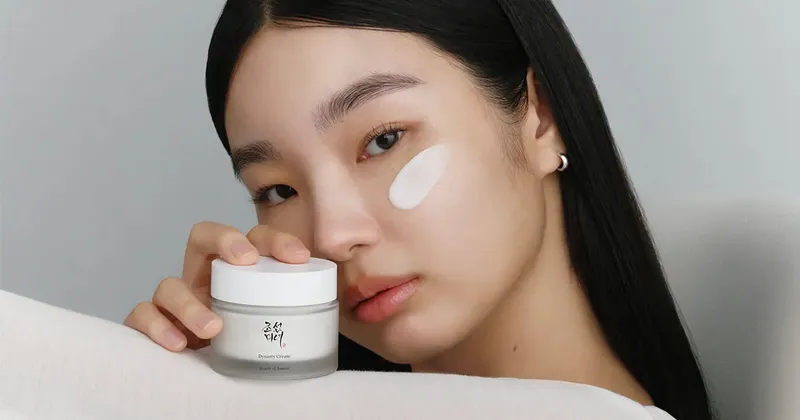
Revive Serum: Ginseng + Retinal Liposome
Beauty of Joseon
$22
★★★★☆
What we liked
- + Liposome delivery aimed at gentleness
- + True serum texture
- + Easy first step into retinoids
Worth noting
- - Gentler, so slower to show results
- - Strength is not the headline here
A soft landing for first-timers who want a serum, not a cream.
If Retinal Isn’t an Option: A Plant-Based Alternative
Some people can’t use retinoids at all. Pregnancy and breastfeeding are the common reasons, and some skin simply won’t tolerate them. For them, bakuchiol is the usual stand-in.
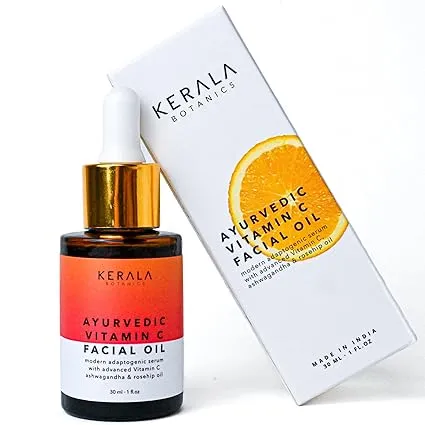
Kerala Botanics’ Ayurvedic Vitamin C Face Oil is worth knowing here. It isn’t a retinal, and we won’t pretend it is. It pairs a vitamin C complex with bakuchiol in an oil that doubles as moisturizer, so it can replace several steps at once. The brand makes bold claims about its vitamin C form lasting longer in skin than standard L-ascorbic acid. Treat those as the brand’s claims, not settled fact.
The honest limits: bakuchiol is gentler and has less evidence behind it than retinoids, and an oil may not suit oilier skin or feel good under makeup. Think of it as a lower-effort option, not a like-for-like swap. Our pieces on bakuchiol vs retinol and pregnancy-safe vitamin C plus bakuchiol lay out the tradeoffs.
Ayurvedic Vitamin C Face Oil
Kerala Botanics
$49
★★★★☆
What we liked
- + Bakuchiol offers a plant-based, non-retinoid option
- + Oil format combines vitamin C, treatment, and moisturizer
- + Useful when retinoids are off the table
Worth noting
- - Not a retinoid and not a substitute for one in strength
- - Less clinical data than established retinoids
- - Oil can feel heavy for oilier skin or under makeup
Not a retinal, but a reasonable gentler path for people who can't or won't use one.
How to Start Without Wrecking Your Barrier
Starting is where most people go wrong. A few rules cover it.
- Begin twice a week. Evenings only, on dry skin, a pea-sized amount for the whole face.
- Add nights slowly. Move to every other night after a few weeks, and nightly only if skin stays comfortable.
- Buffer if needed. Moisturizer before or after retinal is fine. Skipping a night is better than pushing through.
Sunscreen every morning isn’t optional with any retinoid. Skip the rest of the routine if skin is irritated: no acids, no scrubs, nothing extra.
Results take time. Expect about three months before texture and fine lines visibly change, and longer for deeper lines. Our timeline guide covers what to expect and when.
If you’re pregnant, trying to conceive, or breastfeeding, talk to a doctor before using any retinoid.
Methodology and Bottom Line
We ranked these on concentration transparency, packaging, tolerability, and price. We weighed stated formulas and ingredient lists, brand disclosures, and published information on how retinoids behave. Ranking was never influenced by affiliate relationships.
Where strength figures come from the brand, they’re reported as stated. We haven’t independently measured them. Retinal also has less head-to-head research than tretinoin or retinol, so we’ve avoided claims we can’t support.
The bottom line is simple. Most people should start with Medik8 Crystal Retinal at a low strength and move up slowly. If budget matters, COSRX’s 0.1 cream is the sensible entry. If you already use retinoids and want strength cheaply, The Ordinary’s 0.2% does the job. Sensitive skin should look at Avène, and first-timers who want a serum can start with Beauty of Joseon.
Pick one. Use it consistently. Keep it away from light and heat. That’s nearly all it takes.