
Anti-Aging
Jawline Sagging: What Topicals Can and Cannot Do
Jawline sagging is structural. Here's what topicals like retinoids and vitamin C can improve, what they can't, and where devices and procedures come in.
Disclosure — This article may contain affiliate links. We earn a small commission at no extra cost to you when you purchase through our links. This supports our ability to create independent, evidence-based skincare content.
No cream lifts a jawline. That’s the blunt version, and it’s accurate. Jowls form when tissue underneath your skin changes shape and position, and a topical product never reaches that tissue.
But “can’t lift” isn’t the same as “does nothing.” Skin quality still matters, and it’s the one layer you can improve at home. This guide separates three categories that marketing loves to blur: what topicals can do, what devices can do, and what only a procedure can do.
What’s Actually Sagging
The jawline isn’t one thing. It’s a stack of layers, and several of them age on their own schedules.
Bone. The lower jaw loses volume over time, and the angle of the jaw can recede. That removes the scaffolding the soft tissue drapes over.
Fat compartments. Facial fat sits in distinct pockets. With age, some shrink while others shift downward. The fat near the cheek slides toward the jaw and pools beside the chin, which is the classic jowl.
Ligaments. Retaining ligaments anchor skin and fat to bone. They loosen with time, so the tissue they used to hold slips lower.
Muscle. The platysma, a thin muscle running from jaw to collarbone, can form vertical neck bands and pull on the lower face.
Skin. Collagen and elastin decline, and sun damage speeds that up. Skin gets thinner and less springy.
Only that last layer is within reach of a topical. The first four are structural. If your jawline softened over a few years and your skin still looks fairly smooth, the cause is almost certainly structural, and no serum changes that.
Weight changes complicate things. Fast loss, including on GLP-1 medications, can leave skin without the volume it was draped over. We cover that in our guide to GLP-1 facial changes.
What Topicals Can Do
Topicals work on skin: its thickness, texture, fine lines, and firmness at the surface. Better skin quality can make a jawline look crisper because crepey, lax skin exaggerates every contour. It doesn’t change the contour itself.
Retinoids Have the Best Evidence
Retinoids (vitamin A derivatives, from OTC retinol up to prescription tretinoin) are the most studied topical for aging skin. In trials, tretinoin increases collagen in the dermis, thickens the epidermis, and improves fine wrinkles and rough texture over months. Those results are real and well replicated.
The limits matter, though. Those studies measure skin: wrinkles, roughness, histology. None of them show that a retinoid repositions fat or tightens a ligament. Expect smoother, slightly firmer skin along the jaw and neck after six to twelve months of consistent use. Don’t expect a new jawline.
Strength and tolerance decide how much benefit you actually get. Our comparison of retinol, retinaldehyde, and tretinoin walks through where to start. If a retinal product appeals to you, our Medik8 Crystal Retinal review covers one well-regarded option.
Sunscreen Is the Boring Winner
Chronic UV exposure breaks down collagen and elastin. In a well-known Australian randomized trial, adults who used sunscreen daily showed less skin aging over four and a half years than those who applied it at their own discretion. Prevention is slower and less satisfying than correction, but it’s the highest-confidence thing on this list.
Apply it to your jaw, neck, and the area under your chin too. Those spots get skipped constantly.
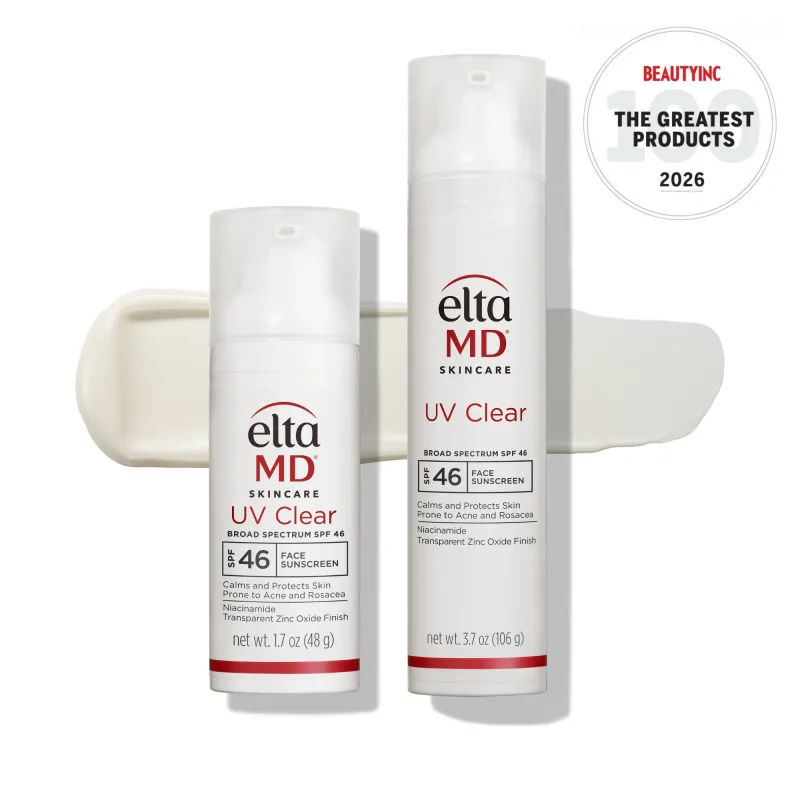
UV Clear Broad-Spectrum SPF 46
EltaMD
$44
★★★★½
Verdict: A reliable daily facial sunscreen that wears well on most skin types. It prevents further damage but does nothing for laxity you already have.
Vitamin C: Supportive, Not Transformative
Vitamin C is required for collagen synthesis, and it’s an antioxidant that helps blunt UV-driven oxidative damage. Lab data are strong. Human data on visible firmness exist but are smaller and often industry-funded. It’s a reasonable addition. It isn’t a lifting agent.
If you want the best-studied formulation, SkinCeuticals C E Ferulic has the most published data behind it, though the price is steep. Our full review covers whether it’s worth $185.
C E Ferulic
SkinCeuticals
$185
★★★★½
Verdict: The most clinical data of any vitamin C serum, and it shows. Expensive, and it still won’t touch a jowl.
Some people prefer an oil format over a water-based serum, particularly if their skin runs dry. Kerala Botanics’ Ayurvedic Vitamin C Face Oil pairs a vitamin C derivative with bakuchiol, a plant-derived retinol alternative, in one step. The brand claims its vitamin C form is more potent and stays in skin cells longer than L-ascorbic acid. We haven’t seen independent head-to-head data confirming that, so treat it as a brand claim.
Bakuchiol has one small, 12-week trial (44 people) showing results comparable to 0.5% retinol on wrinkles and pigmentation, with less irritation. That’s encouraging, but it’s one study, and it’s about surface lines. Neither ingredient is a lifting ingredient.
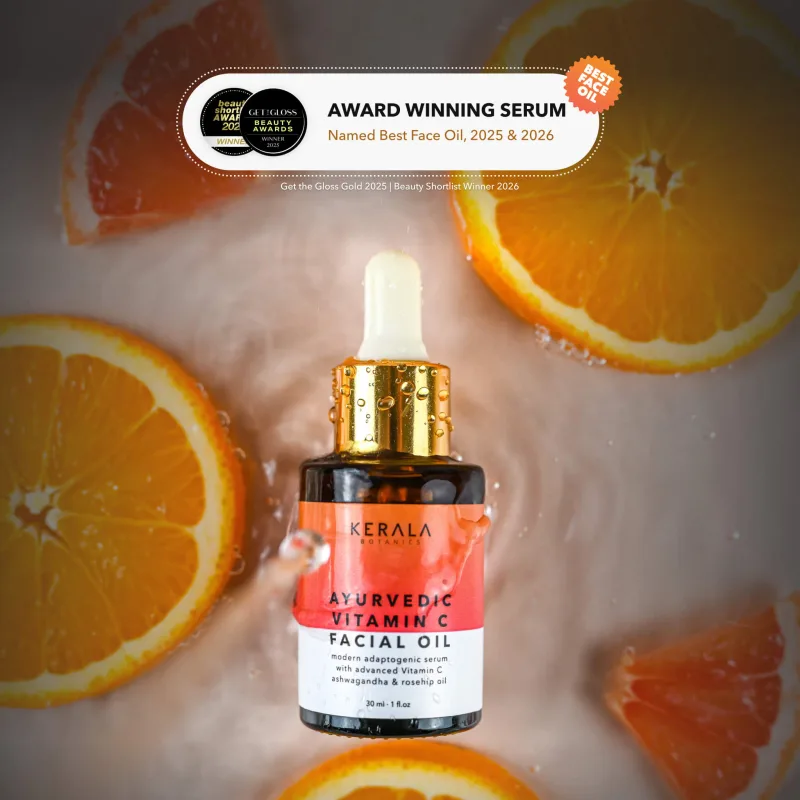
Ayurvedic Vitamin C Face Oil
Kerala Botanics
$49
★★★★☆
Pros: Combines treatment and moisture in one step, so it simplifies a routine. A fair option if retinoids irritate you. Priced well below most clinical vitamin C serums.
Cons: Oily skin may find the format heavy, and it can feel rich under makeup. It has less clinical data behind it than C E Ferulic. And for jawline laxity specifically, it does the same modest surface work as any other antioxidant-plus-retinoid-alternative product.
Verdict: Worth a look if you want a simpler routine or a gentler retinol alternative. Skip it if you expect firmness you can see in a profile photo.
Peptides and “Firming” Creams
Signal peptides are meant to tell skin cells to make more collagen. The evidence is mixed: mostly short studies, often sponsored, usually measuring wrinkle depth or skin elasticity on instruments. Elasticity measured on a forearm or cheek with a suction device is not jawline lift. Be skeptical of any cream promising to “sculpt” or “tighten the jawline.” Our guide to reading clinical claims explains how to spot the gap between what was measured and what was implied.
What Topicals Cannot Do
Here’s the short list.
- Move descended fat back up. Nothing absorbed through skin does this.
- Tighten a loosened ligament. Ligaments sit deep, and no topical reaches them in meaningful amounts.
- Replace lost bone or volume. Not even close.
- Dissolve submental fat. “Fat-burning” chin creams are marketing. Caffeine may temporarily reduce puffiness. It doesn’t remove fat cells.
- Replace the platysma’s pull. Neck bands are muscular, not skin-deep.
For a broader list of limits, our piece on what skincare cannot fix is worth a read.
Devices: A Different Category With Its Own Caveats
Devices are not topicals, and they shouldn’t be graded on the same scale. Some deliver energy that skin ingredients can’t. But at-home versions are deliberately low-powered, and the evidence is thinner than the ads suggest.
Microcurrent. Low-level electrical current meant to stimulate facial muscles. Studies are small, and the effects are mostly short-lived. Results fade without ongoing use. See our microcurrent evidence review.
At-home radiofrequency and LED. Heat or light intended to nudge collagen production. The at-home versions are far weaker than clinic units, and visible lifting is modest at best. Our device face-off compares them head to head.
Gua sha and facial massage. These can reduce temporary puffiness and feel nice. They don’t shift fat pads or tighten ligaments. We looked at the long-term evidence in our gua sha guide, and the short answer is: relaxing, harmless, not structural.
Facial exercise. One small pilot study of 27 women found fuller cheeks after 20 weeks of facial exercises. It had no control group, and it measured the cheeks, not the jaw. Interesting, not conclusive.
Procedures: Where Structural Change Actually Happens
If the goal is real change in jawline position or shape, procedures are the honest answer. They vary a lot in invasiveness, cost, and durability.
| Approach | What it targets | Realistic outcome |
|---|---|---|
| Topicals (retinoids, vitamin C, sunscreen) | Skin texture, collagen, damage prevention | Smoother, slightly firmer skin. No structural lift. |
| At-home devices | Surface tone, temporary puffiness, mild heating | Subtle, often temporary. Evidence is limited. |
| In-office energy devices (ultrasound, radiofrequency, microneedling RF) | Dermal collagen, mild tightening | Modest tightening over months. Better for early laxity. |
| Fillers | Volume at the chin, jaw angle, and pre-jowl area | Can restore contour by adding structure. Needs maintenance. |
| Neuromodulators (botulinum toxin) | Platysmal bands, some lower-face muscle pull | Softens bands and downward pull. Temporary. |
| Submental fat treatments (deoxycholic acid, liposuction) | Fat under the chin | Reduces fat. Doesn’t tighten skin. |
| Surgical lifts | Repositions fat, muscle, and ligament | The only approach that durably moves tissue. |
A few honest notes on that table.
Energy-based treatments work best on mild laxity. Moderate-to-significant jowling usually needs more than heat can offer. Fillers don’t lift tissue so much as rebuild the support underneath it, and technique matters enormously. Thread lifts have a mixed track record, and results tend to be short-lived. Surgery has the strongest and longest-lasting results, with the risks and recovery that come with it.
None of this means you need a procedure. Plenty of people are happy with how they age. But if you’re choosing between a $185 serum and a consultation with a board-certified dermatologist or facial plastic surgeon, the consultation will tell you far more about what’s actually possible for your face.
A Realistic Routine for Skin Quality Along the Jaw
If you want to give the skin layer its best shot, keep it simple.
- Morning: A gentle cleanser, an antioxidant (vitamin C serum or oil), and a broad-spectrum SPF 30 or higher. Extend everything down your neck and along your jaw.
- Evening: A retinoid, or bakuchiol if retinoids don’t suit you, followed by a moisturizer. Start two or three nights a week and build up.
- Neck and jaw: Treat them as part of your face. Our neck and décolletage guide covers why this area ages so visibly.
- Timeline: Give a retinoid at least three months before judging it. Skin changes are gradual.
If you’re using a face oil as your antioxidant step, apply it on clean skin and let it settle before sunscreen goes on top. Oil-format products and sunscreen can pill if layered too quickly.
When to See a Professional
Consider a consultation if you notice any of these:
- Jowls or a blurred jaw contour that bother you
- Visible neck bands or a “turkey neck” appearance
- Sagging after significant weight loss
- A sudden change in one side of your face. That should get medical attention, not a skincare fix.
A good clinician will tell you what’s structural, what’s skin, and what’s realistic. Be wary of anyone who promises a nonsurgical result equal to a surgical one.
Putting It All Together
Jawline sagging is mostly a story about bone, fat, ligaments, and muscle. Topicals can’t rewrite that story.
What they can do is improve the skin draped over it. Retinoids have the best evidence for building collagen and smoothing texture. Sunscreen slows further damage. Vitamin C and antioxidants offer modest support, whether in a clinical serum like C E Ferulic or an oil like Kerala Botanics’ vitamin C and bakuchiol formula. Peptides and “firming” creams earn skepticism until they show data on the jawline itself.
Devices sit in the middle: some real effects, a lot of overpromising, especially at home. Procedures are where structural change lives, with trade-offs in cost, downtime, and risk.
Use topicals for what they do well, and be honest with yourself about what they can’t do. If the contour is what bothers you, skip the $90 jar and book the consultation.