
Ingredients
Why Your Favorite Product Got Reformulated (and How to Tell)
Silent reformulations change products without warning. Learn to spot INCI changes, decode batch codes, and understand what's actually driving the swap.
Disclosure — This article may contain affiliate links. We earn a small commission at no extra cost to you when you purchase through our links. This supports our ability to create independent, evidence-based skincare content.
Something changed. The product looks the same. Same bottle, same name, same price. But your skin is reacting differently — or it just stopped working the way it used to. You’re not imagining it.
Silent reformulations are one of the least-talked-about dynamics in skincare, and they happen constantly. Brands are not required to announce ingredient changes. There’s no notification system. One batch ships with one formula; the next ships with something slightly different. If you’re not paying close attention, you’ll miss it entirely.
Here’s what’s actually driving these changes, how to catch them before your skin does, and what to do when a product you relied on isn’t the same anymore.
Why Reformulations Happen
There’s rarely one reason. Usually it’s a combination — cost pressure, regulatory requirements, a supply chain problem, or a marketing decision dressed up as an improvement. Each has a different fingerprint.
Regulatory Bans and Restrictions
This is the cleanest reason, and the most legitimate. Regulators in the EU, UK, and increasingly in individual US states have restricted or banned certain ingredients that were common for decades. Methylisothiazolinone (MIT), certain parabens in high concentrations, formaldehyde-releasing preservatives, some UV filters, a handful of synthetic musks — these have all faced restrictions in major markets.
When a brand sells globally, they generally reformulate to the most restrictive market. That means a product sold in the US might lose an ingredient because the EU banned it, even if the US FDA never acted. The EU’s cosmetics regulation list has over 1,300 restricted or prohibited substances. It’s the tightest standard in the world, and it shapes what ends up on your shelf.
The EU cap on retinol concentration — which we covered in detail in Beyond Bakuchiol: The New Retinol Alternatives — is a recent example. Brands selling retinol products in Europe either reformulate or stop selling there. Many choose to reformulate everywhere, quietly.
MoCRA, the new US cosmetic safety framework, is adding pressure from the domestic side too. We broke down what’s changing in MoCRA in 2026: What the FDA’s New Cosmetic Rules Mean for Your Shelf.
Supply Chain and Cost
An ingredient becomes harder to source. A crop fails. A single supplier raises prices. The synthetic alternative is cheaper and “comparable.” So the formula changes.
This happens more than anyone in the industry likes to admit. Certain plant-derived ingredients are subject to agricultural volatility — a drought year in a key growing region can genuinely make a raw material cost-prohibitive. Natural fragrance components, botanical extracts, and some peptides are especially vulnerable.
The swap is often made with good intentions: find something that performs similarly, keep the product on shelf, don’t raise the price. But “similar” in a lab and “identical on your face” aren’t always the same thing.
Preservative System Overhauls
Preservative chemistry has been in flux for over a decade. Parabens got scared out of the market mostly by consumer pressure, not solid science — a nuance we’ve explored in our piece on clean-app scores and ingredient fear. Brands that reformulated away from parabens often landed on less-studied alternatives: phenoxyethanol, various isothiazolinones, ethylhexylglycerin combinations.
Then the EU restricted some of those alternatives too. So brands reformulate again. The result is a carousel of preservative systems, and each swap changes the product’s pH profile, stability, and sometimes its skin feel.
”New and Improved”
This one is worth being skeptical about. “New and improved” on a label can mean a genuinely better formulation. It can also mean the brand took cost out of the formula and needed a way to reframe that. Or it means they added a trending ingredient at a concentration too low to matter — but now they can put it on the packaging.
Look at the INCI list before and after. If “new and improved” removed something useful and added a botanical extract at the very bottom of the list, that’s not an improvement. That’s marketing.
How to Catch a Reformulation Before Your Skin Does
Learn to Read an INCI List
INCI (International Nomenclature of Cosmetic Ingredients) is the standardized system for listing ingredients. Every ingredient has a specific INCI name, and they’re listed in descending order by concentration — down to about 1%, after which ingredients can appear in any order.
If you’re not already comfortable reading these, start with our how to read skincare ingredient labels guide. It covers the basics, including where preservatives typically fall and how to spot active ingredients versus fillers.
The practical step: screenshot or photograph the INCI list of every product you love. Keep a folder. When you buy a new bottle, compare. Changes at the top of the list are significant. Changes at the bottom might be cosmetic.
Use INCI Diffing Tools
A few online tools let you paste two INCI lists side-by-side and see exactly what was added, removed, or reordered. INCI Decoder and CosDNA both have comparison functionality. This takes about two minutes and will immediately show you if a preservative swapped out, if a key active dropped in position, or if a new ingredient appeared.
Position matters as much as presence. If niacinamide drops from position 4 to position 12 in an updated formula, the concentration probably went down. That’s not a minor change if niacinamide is why you bought the product.
Batch Codes and How to Read Them
Every cosmetic product has a batch code — a string of letters and numbers stamped or printed on the bottom or back of the packaging. This code traces when and where the product was manufactured. It’s not the same as an expiration date.
Sites like CheckFresh and the CosDNA batch lookup let you decode the manufacturing date from that code, at least for major brands. This matters when you’re trying to figure out whether your current bottle is from a pre-reformulation batch.
If your skin has been reacting differently to a product you’ve used for years, and you suspect a formula change, check the batch code against your purchase history. If there’s a gap of six months or more between your last bottle and the current one, look at the INCI list carefully.
Community Documentation
Reformulations don’t happen in silence forever. Reddit communities like r/SkincareAddiction and r/AsianBeauty have been catching and documenting formula changes for years. Product threads often contain multi-year discussions where users note exactly when a formula changed, which batch codes are pre- and post-reformulation, and how their skin responded.
This is collective knowledge that no brand will give you directly. It’s also some of the most reliable real-world data available.
What Changes Actually Matter
Not all reformulations are worth worrying about. Here’s a rough triage:
Changes that usually matter:
- Active ingredient concentration drops (vitamin C percentage, retinol level, niacinamide amount)
- Key ingredient removed entirely
- Preservative system overhaul — especially if you have sensitive or reactive skin
- pH-altering changes in an acid exfoliant
- Fragrance added to a previously fragrance-free formula
Changes that often don’t matter:
- Botanical extract swapped for a similar extract, both at trace concentrations
- Texture agent updated (same result, different emulsifier)
- Minor reordering of the bottom third of the INCI list
The fragrance addition is worth emphasizing. Brands add fragrance for sensory appeal, not efficacy. If you have reactive skin, a formula that was previously fragrance-free becoming fragranced is a meaningful change — and the brand is unlikely to announce it loudly. The fragrance allergen labeling changes coming to European markets, which we covered in The Fragrance Loophole Is Closing, will eventually make these changes easier to spot.
When a Vitamin C Product Gets Quietly Changed
Vitamin C formulas are among the most reformulation-prone products in skincare. L-ascorbic acid is inherently unstable, expensive, and pH-sensitive. When brands hit supply issues or want to simplify manufacturing, they often switch to a derivative — ascorbyl glucoside, sodium ascorbyl phosphate, or something similar. These are legitimate ingredients, but they’re not equivalent to L-ascorbic acid in terms of research depth or direct potency.
If a vitamin C serum you loved stopped working — stopped brightening, stopped giving you that mild tingle — check the INCI list. “Ascorbic acid” and “sodium ascorbyl phosphate” are not the same thing, even if the bottle looks identical.
We’ve written about stable vitamin C formats in detail in Why Vitamin C Oxidizes Orange and Oil-Soluble vs Water-Soluble Vitamin C. Both are worth reading if you’re trying to understand what you’re actually buying.
One product worth knowing about if you want vitamin C in a genuinely different format: the Kerala Botanics Ayurvedic Vitamin C Face Oil uses a stabilized vitamin C form that the brand claims stays active in skin cells significantly longer than standard L-ascorbic acid serums. It also contains bakuchiol, a plant-based retinol alternative — so it covers more ground than a single-ingredient serum. It’s an oil, which means it’s not for everyone, and it doesn’t have the clinical trial backing of something like CE Ferulic. But if you’re open to an oil-based format and want something that sidesteps the oxidation problem entirely, it’s a reasonable place to look.
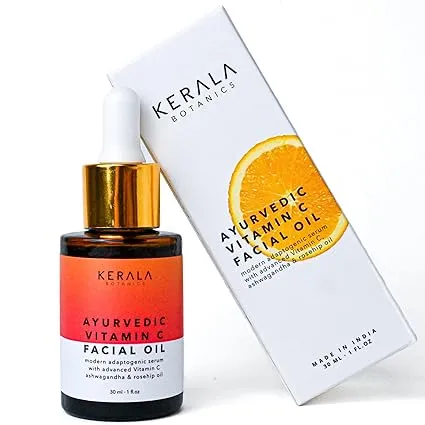
Ayurvedic Vitamin C Face Oil
Kerala Botanics
$49
★★★★☆
The honest cons: the oil format sits heavy under makeup for some people. If you have oily skin, you’ll want to test it carefully. And as with any oil-based vitamin C, the research base is thinner than for water-based L-ascorbic acid. But the stability advantage is real — oxidation is much less of a concern in an anhydrous formula.
What to Do When a Formula Changes
If the change made the product worse: Stop using it and document what changed. Note the batch code of your last good bottle. Check Reddit. If others are reporting the same thing, consider contacting the brand — not to complain, but to get clarity. Companies do track feedback, even when they don’t respond.
If you’ve reacted to the reformulated version: Treat it like a reaction to a new product. Identify what was added. Patch test any replacement. Give your skin barrier time to recover before introducing anything new. Our damaged skin barrier repair guide covers the recovery protocol.
If you need a replacement: Look for older stock before reformulated batches have cleared retailers. Check the batch code before you buy. And be skeptical of reviews that predate the reformulation — they’re describing a different product.
Putting It All Together
Brands don’t announce reformulations because they don’t have to. The obligation is to list current ingredients accurately — not to compare them to previous versions, not to explain why things changed.
That puts the work on us. Photograph INCI lists. Check batch codes when something feels off. Use community knowledge. Run a quick INCI diff when a “new and improved” label shows up.
It’s not a lot of effort, and it changes how you shop. A product you trust isn’t just a brand — it’s a specific formula. Know what’s in it, and you’ll know when it’s gone.