
Ingredients
Are Citrus Oils in Skincare Safe? The Photosensitivity Question
Citrus oils in skincare aren't all equally risky. We break down furocoumarins, FCF distillates, and which oils actually cause photosensitivity.
Disclosure — This article may contain affiliate links. We earn a small commission at no extra cost to you when you purchase through our links. This supports our ability to create independent, evidence-based skincare content.
The assumption is that anything “citrus” in skincare is a photosensitivity risk. You’ve probably seen it in online forums: someone posts a product with orange peel oil and a dozen replies tell them not to go outside. That instinct isn’t baseless — but it’s also not quite right.
The real question isn’t whether a product contains a citrus oil. It’s which citrus oil, how it was processed, and at what concentration. Those three variables make the difference between a genuinely risky ingredient and a benign scent component that happens to come from a fruit.
Here’s the actual chemistry behind that distinction, and what it means for your routine.
What Causes Photosensitivity in the First Place
Photosensitization from citrus oils comes down to a specific class of chemical compounds called furocoumarins. These are naturally occurring molecules found in the rinds and peels of many citrus fruits — and when they’re applied to skin and exposed to UVA radiation, they can trigger a phototoxic reaction.
The mechanism is well-documented. Furocoumarins absorb UVA energy and transfer it to skin cells in a way that damages DNA, leading to exaggerated sunburn, blistering in severe cases, and — with repeated low-level exposure — hyperpigmentation that can last months. The most studied furocoumarin in this context is bergapten (also called 5-methoxypsoralen or 5-MOP), which is the primary offender in bergamot oil and the compound responsible for the classic “Berlin disease” cases in the 1980s from bergamot-containing tanning oils.
But bergapten isn’t the only furocoumarin that matters. Expressed lime oil contains several, including psoralen and oxypeucedanin, at concentrations high enough to cause visible reactions at relatively low doses. Lemon oil (cold-pressed) has a moderate furocoumarin load. Bergamot, untreated, has the highest levels.
The critical variable: how the oil is extracted.
Cold-Pressed vs. Steam-Distilled: Why Process Determines Risk
Furocoumarins are relatively large, heat-sensitive molecules. Cold-pressed (also called “expressed”) citrus oils are mechanically squeezed from the peel, which means everything in the peel comes along for the ride — including the full furocoumarin content.
Steam distillation is different. The heat and steam process volatilizes the aromatic compounds but leaves behind heavier molecules like furocoumarins. The result is a citrus oil that smells like the fruit but has a dramatically reduced furocoumarin load — often low enough to pose no measurable photosensitivity risk.
This is why expressed lime oil is consistently flagged by dermatologists and cosmetic chemists as the highest-risk citrus ingredient. Lime rind has a high furocoumarin concentration to begin with, and cold-pressing preserves all of it. The EU’s Scientific Committee on Consumer Safety (SCCS) has set strict limits on expressed lime in leave-on products precisely for this reason.
Grapefruit and orange peel oils sit in a different category. Their furocoumarin content is lower than lime or bergamot even when cold-pressed, and most commercial formulations use either steam-distilled versions or concentrations well below any established risk threshold.
FCF Distillates: The Reformulated Standard
If you’ve seen “bergapten-free” or “FCF” on a product label, that’s relevant here. FCF stands for furocoumarin-free, and it refers to citrus oils that have been processed (typically by vacuum distillation or solvent extraction of the furocoumarins) to remove the problematic compounds.
Bergamot FCF oil, for example, is essentially standard for leave-on cosmetics at this point. The same principle applies across the citrus category. A well-formulated product using FCF or steam-distilled citrus oils isn’t hiding a photosensitivity risk — the risk was addressed in processing before the oil ever reached the formula.
This is a case where the label detail matters more than the ingredient name. “Sweet orange peel oil” tells you less than “steam-distilled sweet orange peel oil.” If a brand doesn’t specify, it’s worth asking or checking the full INCI declaration carefully.
For more context on how to read those declarations, our guide on how to read skincare ingredient labels covers the basics without the jargon spiral.
The Risk Hierarchy: Which Citrus Oils to Watch
Not all citrus oils carry the same risk. Here’s a rough ranking based on furocoumarin content and extraction method:
Higher Risk (leave-on products — check processing method)
- Expressed lime oil — highest risk, consistently flagged by regulators. Avoid in leave-on products unless explicitly listed as steam-distilled or FCF.
- Bergamot oil (non-FCF) — historically the biggest offender. Standard today is bergamot FCF; if a product just says “bergamot oil,” it’s worth verifying.
- Cold-pressed lemon oil — moderate furocoumarin load. Steam-distilled lemon is fine.
Lower Risk (well-processed versions are generally safe)
- Grapefruit oil — low baseline furocoumarin content. Steam-distilled or expressed in typical concentrations is generally considered safe in leave-on products.
- Sweet orange peel oil — similarly low risk. Widely used in cosmetics without incident.
- Mandarin and tangerine oils — very low furocoumarin content regardless of extraction.
The distinction between wash-off and leave-on products also matters. A citrus-heavy rinse-off cleanser that’s on your skin for thirty seconds is a different risk profile than a serum or oil you’re wearing all day under UV exposure. Most regulatory concern centers on leave-on products.
Where Kerala Botanics’ Vitamin C Face Oil Fits In
Since we’re covering citrus oils honestly, it’s worth addressing a product we’ve reviewed: the Kerala Botanics Ayurvedic Vitamin C Face Oil contains grapefruit and orange peel oils in its formula.
Based on the risk hierarchy above, those are lower-risk citrus ingredients even as expressed oils — both have substantially lower furocoumarin content than lime or bergamot. That said, the product page doesn’t specify the extraction method, which is a real transparency gap.
The formula’s main vitamin C component is a stabilized, oil-soluble form rather than standard L-ascorbic acid — a format distinction we’ve covered in detail in our vitamin C serum vs. vitamin C oil comparison. It also includes bakuchiol, a plant-based retinol alternative (our full breakdown here).
The honest caveat: if you’re using any citrus-containing leave-on oil during the day, apply SPF afterward. That’s not unique to this product — it’s just good practice with any product that includes citrus-derived ingredients, regardless of their furocoumarin status. Given that this formula replaces serum, moisturizer, and facial oil in one step, it’s well-suited to morning use — which makes the SPF reminder non-negotiable.
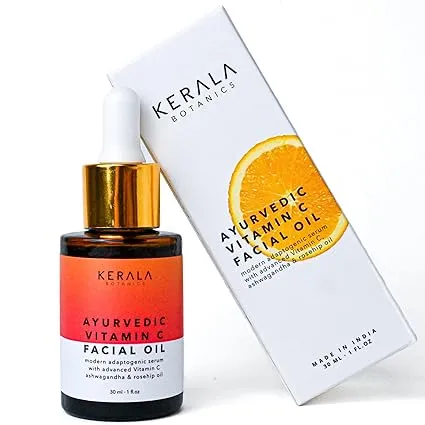
Ayurvedic Vitamin C Face Oil
Kerala Botanics
$49
★★★★☆
Practical Rules for Navigating Citrus Oils
The goal isn’t to avoid citrus-derived ingredients wholesale. That would eliminate a lot of effective, well-formulated products for no real benefit. The goal is to distinguish the actual risks from the category-level anxiety.
Check for expressed lime. It’s the one citrus ingredient that warrants consistent scrutiny in leave-on products. If you see “lime oil” without a “steam-distilled” qualifier, treat it as cold-pressed until proven otherwise.
Look for FCF or steam-distilled designations on bergamot. Most reputable brands use bergamot FCF as a matter of course, but the label should confirm it.
Don’t panic about grapefruit or sweet orange. The photosensitivity data on these two, at concentrations used in cosmetics, is not alarming. They’re in a genuinely different risk category from expressed lime.
Sunscreen remains the baseline. If a product contains any citrus oil — processed or not — and you’re wearing it during the day, SPF 30 or higher is non-negotiable. This isn’t a citrus-specific rule. It’s just the correct default for any leave-on product. Our guide on how much sunscreen to actually apply covers the application details most people get wrong.
Wash-off products are lower priority. The risk window for phototoxicity requires meaningful UV exposure after the product is on skin. A citrus-scented body wash is not a significant concern. A citrus face oil you apply and then go outside in — that’s where the calculation changes.
The “Natural = Safe” Assumption Is the Real Problem
Furocoumarins are natural. So is the phototoxic reaction they cause. The clean beauty framing that treats plant-derived ingredients as inherently safe and synthetic ones as inherently risky doesn’t hold up here — and it never really has. We’ve written about this at length in the chemical-free skincare myth, but citrus oils are one of the clearest illustrations.
A bergapten-free bergamot oil that went through additional processing to remove the problematic compound is, by definition, safer for leave-on use than an “all-natural” cold-pressed version. The processing is the feature, not the compromise.
This also comes up in our guide to reading Yuka and clean app scores — apps that flag bergamot FCF as a concern because it’s “synthetic-modified” while approving expressed lime because it’s “natural” are getting the safety question exactly backwards.
Putting It All Together
Citrus oils are not a monolith. The photosensitivity concern is real, well-documented, and mechanistically understood — but it applies most directly to expressed lime, untreated bergamot, and cold-pressed lemon in leave-on products. Steam-distilled and FCF versions of those same oils are genuinely safer. Grapefruit and sweet orange, at cosmetic concentrations, are not in the same risk category.
The actionable takeaways:
- Check extraction method, not just ingredient name
- Expressed lime in a leave-on product warrants scrutiny; grapefruit oil generally doesn’t
- FCF and steam-distilled designations are meaningful safety improvements, not marketing
- Sunscreen after any citrus-containing leave-on product is non-negotiable
- Wash-off products are a lower-priority concern
If a brand isn’t transparent about extraction method, ask. The answer tells you something about how carefully they’re thinking about formulation.
For more on vitamin C formats and how stability varies by ingredient, see our guide to why vitamin C serums oxidize and our comparison of oil-soluble vs. water-soluble vitamin C forms.