
Routines
Milia: What Those Tiny White Bumps Are and What Clears Them
Milia aren't clogged pores — they're keratin cysts. Here's what actually clears them and why squeezing never works.
Disclosure — This article may contain affiliate links. We earn a small commission at no extra cost to you when you purchase through our links. This supports our ability to create independent, evidence-based skincare content.
Milia are not acne. They’re not clogged pores. And they will not respond to the same things that clear a breakout — which is why so many people spend months squeezing something that simply cannot be squeezed out.
Here’s the short version: milia are tiny keratin cysts that form just beneath the surface of the skin. The keratin — a protein your skin produces naturally — gets trapped and hardens into a small, pearl-white dome. There’s no opening. No pore to extract from. No head to pop. The structure is completely closed, which is why they feel firm and why pressure does nothing except irritate the surrounding skin.
The longer version involves what actually gets rid of them. That’s what this guide covers.
What Milia Actually Are
Keratin is everywhere in skin. Your outer layer is made of it. When skin cells shed normally, keratin moves up and out with them. When that process gets disrupted — by sun damage, heavy products, or just genetics — keratin can get trapped in a small pocket beneath the surface and harden.
The result is a milium (singular), or milia (plural): a white or yellowish dome, usually 1–2mm wide, sitting just under the skin. They’re most common around the eyes, cheeks, and nose, but they can appear anywhere.
There are two main types worth knowing:
Primary milia form on their own. They’re common in newborns (those tiny white dots you see on babies’ noses) but also appear in adults, often around the eyes. No obvious trigger. Just skin doing an imperfect thing.
Secondary milia have a cause — usually a skin injury, a burn, or a reaction to a product. They can also form after dermabrasion, laser treatments, or prolonged use of occlusive creams that suffocate the skin’s natural turnover process. This is the type that heavy eye creams sometimes get blamed for. Correctly, in some cases.
Neither type is harmful. But they’re persistent, and they don’t budge without intervention.
Why Squeezing Doesn’t Work
A whitehead has a follicular opening. You apply pressure, the plug comes out. Milia have no such opening. The keratin is encapsulated — sealed inside a small cyst wall. Squeezing just compresses the skin around it and, if you push hard enough, you can rupture the cyst beneath the surface, which causes inflammation and sometimes scarring.
This is also why typical acne treatments don’t help. Benzoyl peroxide, salicylic acid, spot patches — none of these can access a sealed cyst. Salicylic acid is oil-soluble and excellent at dissolving debris inside a pore, but milia don’t have pores. There’s nowhere for it to go.
What actually works is either speeding up the cell turnover that’s keeping keratin trapped, or a derm physically opening the cyst with a sterile lancet. Both approaches require patience. Neither involves squeezing.
What Clears Milia
Retinoids
This is the first tool worth reaching for. Retinoids work by accelerating cell turnover — which is exactly what milia need. Faster turnover means the trapped keratin is more likely to work its way out before it hardens into a persistent cyst.
Tretinoin is the most studied. If you already have a prescription and tolerate it, applying it to milia-prone areas is a reasonable approach. Expect a slow process — weeks to months, not days. Tretinoin for beginners has a learning curve, and the eye area especially needs a light hand.
Over-the-counter adapalene (0.1%) is a gentler starting point and now available without a prescription. It’s slower than tretinoin but meaningfully effective for long-term turnover support.
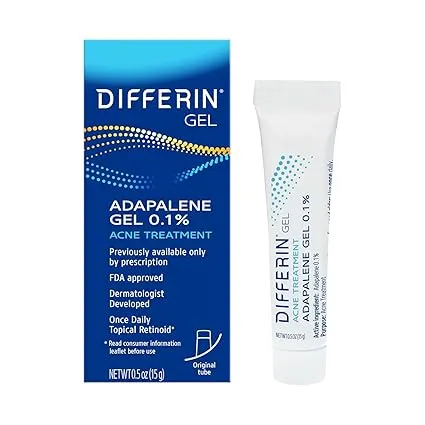
Differin Adapalene Gel 0.1%
Differin
$15
★★★★½
If you’re new to retinoids or the milia are near your eyes, adapalene is the more forgiving entry point. Apply every other night to start. Don’t layer it near the lash line — about a centimeter of clearance is sensible.
For the full comparison of retinoid strengths and how to choose, retinol vs retinaldehyde vs tretinoin breaks it down clearly.
Chemical Exfoliation
AHAs help by loosening the bonds between dead skin cells, which supports the same turnover process retinoids drive through a different mechanism. Lactic acid is the most forgiving option — less irritating than glycolic, better tolerated around the eye area, and still genuinely effective.
Sunday Riley Good Genes is a well-formulated lactic acid treatment. It’s not cheap, but it works across multiple concerns and the pH is right.
Good Genes All-In-One Lactic Acid Treatment
Sunday Riley
$85
★★★★½
If the price is a barrier, The Ordinary’s Lactic Acid 10% + HA does the job at a fraction of the cost. Use it two to three times a week at night. It’s not glamorous. It works.
Lactic Acid 10% + HA
The Ordinary
$9
★★★★☆
A useful reference if you’re deciding between AHA options: lactic acid vs other exfoliation approaches goes deeper on mechanism and who each one suits. And if you’re not sure whether you’re over-exfoliating already, signs of over-exfoliation are worth recognizing before adding anything new.
What to Avoid
Some products actively make milia more likely. Heavy, occlusive moisturizers — particularly thick eye creams with mineral oil, petrolatum, or lanolin high in the ingredient list — can interfere with normal cell shedding and set the stage for secondary milia.
This doesn’t mean occlusive ingredients are universally bad. Slugging, for instance, has legitimate uses. But if milia keep forming and you’re sleeping in a dense eye cream every night, that product is worth examining.
The Eye Cream Myth (Sort Of)
The claim circulating online is that eye creams cause milia. The truth is slightly more specific: certain eye creams, used in large amounts, close to the lash line, every night, can contribute to secondary milia in people who are already prone to them.
The eye area has thinner skin and fewer sebaceous glands, which means it doesn’t shed as efficiently. Add a film-forming, occlusive cream on top and you’re slowing things down further. For most people, this isn’t an issue. For milia-prone skin, it can be.
The fix isn’t necessarily to abandon eye cream entirely. It’s to use less, apply it no closer than the orbital bone, and lean toward lighter textures — a gel or serum format rather than a dense cream. If you’re actively working through milia in that area, give the eye cream a break for six to eight weeks and see if things improve.
When to See a Dermatologist
Some milia resolve on their own, especially primary milia in less stubborn areas. But if they’ve been sitting in the same spot for more than a few months, a derm visit is faster and more certain than any topical approach.
The in-office treatment is simple: a sterile lancet nicks the skin surface just above the cyst, and the keratin is extracted. It takes seconds per milia, there’s minimal downtime, and the result is immediate. This isn’t something to replicate at home — the sterility matters, and the angle of entry matters.
Consider a derm visit if:
- Milia are clustered or spreading
- They’re sitting directly on or very near the eyelid margin
- You’ve been using retinoids consistently for three months with no visible change
- You’re not sure the bumps are actually milia (milia can be confused with syringomas, xanthelasma, or closed comedones — a derm can tell you which you’re dealing with)
Product Choices to Reconsider
Beyond eye creams, a few other product habits are worth examining if milia keep appearing:
SPF formulas. Some older sunscreen formulations are heavily occlusive. This is rarely the culprit on its own, but combined with a rich moisturizer underneath and a dense eye cream on top, it adds up. Lightweight, non-comedogenic SPF formulas are worth prioritizing.
Layering without intention. More products means more film-forming agents, emollients, and occlusives stacking on the skin. How to layer skincare covers the logic of ordering, but the principle for milia-prone skin is simpler: fewer layers, lighter textures. A minimalist 3-step routine is sometimes genuinely the better approach.
Vitamin C serums. Some anhydrous or oil-based formats create a more occlusive environment than a water-based serum. If vitamin C is part of your routine, vitamin C serum vs oil breaks down the format differences and who benefits from each.
Putting It All Together
Milia are stubborn because they’re structural — not surface debris you can dissolve or squeeze out. The skin has to be encouraged to move the keratin along through accelerated turnover.
The practical path forward:
- Start with a retinoid. Adapalene if you’re new to it or working near the eye. Tretinoin if you already tolerate it and want faster results.
- Add a lactic acid exfoliant two to three nights a week on the same areas. Don’t layer both on the same night.
- Audit heavy eye creams. If milia cluster around your eyes, lighter formats are worth trying.
- Be patient. Eight to twelve weeks is a realistic timeline for visible improvement with topicals. Some stubborn milia won’t budge without extraction.
- See a derm if they’re not moving. A five-minute in-office procedure beats six months of hoping.
The mistake most people make is treating milia like acne. Once you understand the structure — a sealed cyst, not a clogged pore — the treatment logic becomes obvious. It’s not complicated. It just requires the right approach and enough time to let it work.