
Routines
Kerala Botanics Face Oil: What to Expect at 4, 8, and 12 Weeks
What to expect from Kerala Botanics face oil at 4, 8, and 12 weeks: early hydration, slower tone changes, and where vitamin C and bakuchiol fall short.
Disclosure — This article may contain affiliate links. We earn a small commission at no extra cost to you when you purchase through our links. This supports our ability to create independent, evidence-based skincare content.
A face oil with vitamin C and bakuchiol will do different things at different times. Hydration shows up first. Tone and texture take longer. Deep, stubborn pigment may barely move at all.
That’s the whole timeline. The rest of this guide is the detail, so you can judge your own skin at week 4, 8, and 12 without guessing or buying more things.
We’re using the Kerala Botanics Ayurvedic Vitamin C Face Oil as the example. The expectations come from the published research on vitamin C and bakuchiol, not from promises on a label.
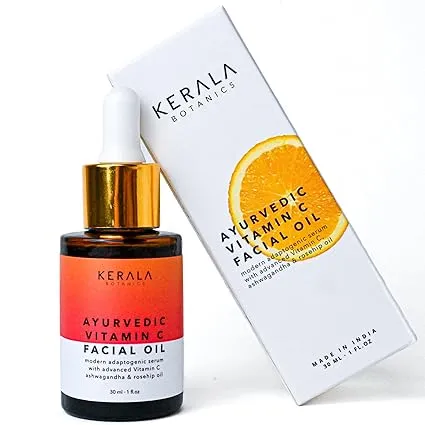
Ayurvedic Vitamin C Face Oil
Kerala Botanics
$49
★★★★☆
What the oil is actually doing
Two actives matter here, plus the oil base that carries them.
- Vitamin C: an antioxidant that also interferes with melanin production. The brand says its form is more effective and stays in skin longer than standard L-ascorbic acid. That’s a company claim, and we can’t confirm it independently.
- Bakuchiol: a plant compound often called a retinol alternative. It’s gentler for many people, though not identical to retinol.
- The oil base: this does the early work. Oils soften skin and slow water loss, which is why you’ll notice them before any active.
If you want the chemistry behind oil-format vitamin C, Vitamin C Serum vs Vitamin C Oil covers it. For the retinol comparison, see Bakuchiol vs Retinol.
Before week one
Two things are worth doing first, and both are quick.
- Patch test on the jawline for three days. The how-to is in how to patch test.
- If your skin is reactive, read the essential oils breakdown before committing.
Then keep everything else boring. Gentle cleanser, sunscreen in the morning, nothing new alongside the oil. If you change four things at once, you can’t tell which one worked. Or which one stung.
For application, how to use Kerala Botanics face oil has the details. In short, a few drops on slightly damp skin, once a day to start.
Weeks 1 to 4: hydration first
This is the oil base talking. Expect skin that feels softer and less tight within days, sometimes the first night.
What’s realistic at four weeks:
- Less tightness after cleansing
- A smoother, slightly more even surface (this is mostly moisture, not repair)
- Some glow, which is light reflecting off well-hydrated skin
What’s not realistic yet: fewer dark spots, visibly softer lines, or any real change in tone. Those need longer than a month, and anyone who says otherwise is describing hydration.
Hydration also plumps fine dehydration lines. They look better because they’re temporarily filled out. It’s real, and it’s not collagen. For more on that distinction, dehydrated vs dry skin is worth a few minutes.
What a rough first month can look like
A few things can show up early.
- Mild congestion. Oils can bother some skin types, especially oily or acne-prone ones. A few small bumps in week two or three is a signal to pause and reassess, not push through. Face oil for oily, acne-prone skin explains who tends to struggle.
- Tingling. Vitamin C can sting skin that’s already irritated. If it persists, cut back to every other night.
- Pilling under makeup. Oil-based products can feel heavy beneath foundation. Give it a few minutes to settle, or use it at night only.
If skin feels worse at week four than at week zero, that’s not a purge. Bakuchiol isn’t an exfoliating active, so there’s no reason for a purge. Stop and simplify.
Weeks 5 to 8: the first signs of tone
This is where vitamin C starts to matter, though modestly.
Studies of topical vitamin C, mostly L-ascorbic acid at around 10 to 20 percent, show gradual improvements in brightness and photodamage over about 12 weeks. At the halfway mark, the changes are early and subtle.
What to look for:
- Skin that looks a little less dull
- Slightly more even color across the cheeks
- Fresh, faint marks (like a recent pimple mark) starting to fade a bit faster
Don’t judge this in the bathroom mirror. Bathroom lighting lies. Take one photo, same window, same time of day, no filter, now and then again at week 8 and week 12. Our own eyes adjust to slow change, and photos don’t.
A caveat on the science. Most vitamin C trials use serums with disclosed concentrations. A face oil with a different vitamin C form isn’t directly comparable, and the brand’s data on this oil is thinner than what exists for something like SkinCeuticals C E Ferulic. That doesn’t mean it fails. It means the evidence is borrowed from the ingredient, not proven for this exact bottle. The comparison is covered in Kerala Botanics vs SkinCeuticals C E Ferulic.
Bakuchiol at this stage
Bakuchiol works slowly. The best-known trial, a 2019 study in the British Journal of Dermatology, ran 12 weeks and compared bakuchiol with retinol. Both reduced wrinkles and pigmentation in that window, and bakuchiol caused less irritation. But it was small, about 44 people, and the bakuchiol concentration was specified. We don’t get to assume a face oil delivers the same dose.
So at week eight, don’t expect smoothed wrinkles. At most, texture may feel a bit more refined.
Weeks 9 to 12: where the real verdict lives
Twelve weeks is the right point to judge. Both actives are being tested over a timeframe the research supports.
A good outcome at 12 weeks looks like this:
- Brighter, more even overall tone
- Skin that stays comfortable and hydrated through the day
- Fine lines looking a bit softer, mostly the shallow ones
- Surface-level marks, like old red or light brown acne spots, noticeably lighter
A middling outcome is also normal. Skin feels good, looks a bit better, and nothing dramatic happened. For a $49 oil that replaces a serum, a moisturizer, and sometimes a separate oil, that can still be a fair trade. The value is simplicity as much as results.
A poor outcome is worth naming too. If at 12 weeks you see no change in tone, no improvement in comfort, and maybe some congestion, the oil isn’t right for your skin. Stop. Don’t extend the test hoping it turns around.
If you want to see how this held up past the three-month mark, Kerala Botanics Face Oil: Six Months In picks up where this guide ends.
The limits: deep pigment
This is the part most product pages skip.
Vitamin C and bakuchiol can help with surface-level discoloration. They are not strong enough, on their own, to clear deep or hormonally driven pigment.
- Post-acne brown marks (PIH): they can fade with vitamin C, but slowly, often well beyond 12 weeks. Sunscreen matters as much as the active.
- Melasma: a topical oil won’t resolve it. It usually needs a dermatologist, and treatments like tranexamic acid, azelaic acid, or procedures.
- Sun spots and old dark patches: these sit deeper. Expect lightening at best, and sometimes nothing visible.
- Red marks (PIE): these are vascular, not pigment. Vitamin C helps less here.
The hyperpigmentation treatment guide breaks down which mark is which and what treats each. Knowing the type before spending money saves a lot of disappointment.
And one more thing. Vitamin C is not sunscreen. It adds antioxidant support, but it doesn’t replace SPF. Without daily sunscreen, any brightening you gain can be undone by the same UV that caused the marks.
Honest pros and cons
What works:
- Early hydration is reliable and comes from the oil itself
- One bottle can replace several steps, which suits a minimal routine
- Bakuchiol offers a gentler option for people who can’t tolerate retinol
- The Ayurvedic formulation appeals to readers who prefer plant-based skincare
What to weigh:
- Oil formats don’t suit everyone, and oily skin may find it too rich
- Less clinical data than the best-studied vitamin C serums
- Can feel heavy beneath makeup
- At $49, it makes sense only if it truly replaces other products
If that last point sounds familiar, is Kerala Botanics worth it goes through the math. And for a longer look at this kind of routine, the 3-in-1 routine lays out how one oil can stand in for three products.
What to track
Skip the diary. Three checkpoints are enough.
- Week 4: Does skin feel more comfortable? If not, reassess.
- Week 8: Compare photos. Look for faint brightness, not dramatic change.
- Week 12: Decide. Keep, adjust, or stop.
Don’t add a new active during this window. If you want to layer in something else, wait until the test is over.
Putting it all together
Hydration comes first, in the first weeks. Tone improves slowly, and 12 weeks is the earliest honest checkpoint. Deep pigment may not shift much, and no oil will change that.
If the oil suits your skin, it’s a quiet, simple way to do more with fewer products. If it doesn’t, you’ll know by week four or week twelve, and stopping is a perfectly good answer.
Patience is the cheapest ingredient in any routine. How long until skincare works covers the same pacing for every other product on your shelf.