
Ingredients
Kerala Botanics vs The Ordinary Vitamin C: Which One Earns a Spot on Your Shelf?
We compare Kerala Botanics' vitamin C face oil against The Ordinary's cult classic on texture, irritation, and price per use. The winner depends on your skin.
Disclosure — This article may contain affiliate links. We earn a small commission at no extra cost to you when you purchase through our links. This supports our ability to create independent, evidence-based skincare content.
The Quick Verdict
The Ordinary’s Vitamin C Suspension costs about seven cents a use. Kerala Botanics costs about thirty-three cents a use. On paper, that’s not close.
But price per use only tells you what something costs, not what it does. One is a 30% L-ascorbic acid suspension in silicone — potent, unstable, and occasionally uncomfortable. The other is a stabilized vitamin C derivative suspended in oil with bakuchiol along for the ride, built to replace three steps instead of one.
We tested both for six weeks. Here’s where each one actually earns its price tag, and where it doesn’t.
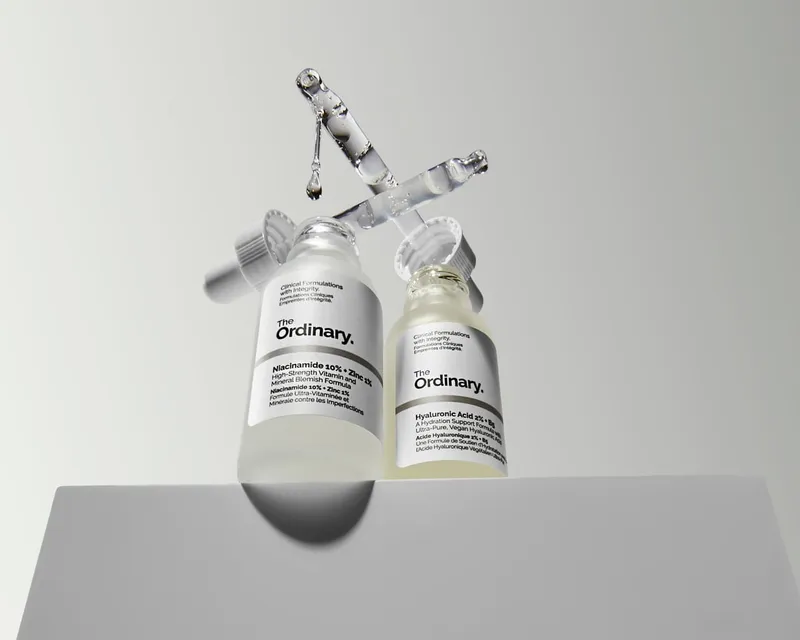
Vitamin C Suspension 30% in Silicone
The Ordinary
$8.90
★★★½☆
What we liked
- + Cheapest vitamin C on the market by a wide margin
- + Straight L-ascorbic acid — the most studied form
- + Silicone base leaves a smooth, matte-ish finish
Worth noting
- - Gritty, doesn't fully dissolve into skin
- - Oxidizes fast once opened
- - Can sting or tingle on reactive skin
The budget benchmark for a reason — just don't expect it to feel like a $50 product.

Ayurvedic Vitamin C Face Oil
Kerala Botanics
$49
★★★★☆
What we liked
- + Stabilized vitamin C derivative that doesn't oxidize on contact with air
- + Bakuchiol adds retinol-alternative benefits in the same bottle
- + Replaces serum, moisturizer, and oil — fewer products, fewer steps
Worth noting
- - Costs about 4-5x more per use than The Ordinary
- - Oil format can feel heavy under makeup
- - Less clinical trial data than derivatives like L-ascorbic acid or the ones in SkinCeuticals
Worth it if you want a simplified routine and your skin can't tolerate straight ascorbic acid — skip it if you're just here for antioxidant protection on a budget.
Derivative vs L-Ascorbic Acid: The Actual Difference
The Ordinary’s suspension uses pure L-ascorbic acid at 30%. It’s the gold-standard form — the one most of the clinical research on vitamin C is built around. It’s also the least stable. Vitamin C oxidizes the moment it meets air, light, or the wrong pH, which is why that orange tinge shows up in bottles left open on a bathroom shelf.
Kerala Botanics goes a different route. Instead of pure ascorbic acid, it uses a stabilized derivative — one designed to resist oxidation and stick around in skin cells longer before breaking down. The brand’s own testing claims it stays active up to 80 times longer than standard L-ascorbic acid serums. We can’t independently verify that number, and derivatives in general have less peer-reviewed research behind them than the parent compound. But the tradeoff is real: derivatives tend to be gentler and more shelf-stable, even if they haven’t been studied as exhaustively.
This is the same tradeoff we cover in our piece on oil-soluble vs water-soluble vitamin C — more stability, less proof. Neither side is wrong. It depends what you’re optimizing for.
Texture and Application
The Ordinary’s suspension is exactly that — a suspension, not a solution. The vitamin C powder doesn’t fully dissolve in the silicone base, so you get a slightly gritty texture that some people find unpleasant under the fingers. It sits on top of skin rather than sinking in, and applying makeup over it too quickly can cause pilling.
Kerala Botanics applies like any facial oil: a few drops, warmed between the palms, pressed into skin rather than rubbed. It absorbs fully within a couple of minutes and leaves a soft sheen rather than a greasy finish. If you’ve read our guide on how to use facial oils, the technique is the same here — patience in the first sixty seconds makes the difference between glowy and greasy.
Winner on texture is subjective, but if you dislike grit, Kerala Botanics wins easily. If you dislike oil, The Ordinary wins by default.
Scent
The Ordinary’s suspension has a faint, slightly acidic smell — not unpleasant, but noticeably “lab” rather than “spa.” As it oxidizes over the weeks, that smell shifts and sharpens.
Kerala Botanics carries the scent of its carrier botanicals, closer to warm sesame or herbal oil than anything floral or perfumed. It’s not fragrance-free, so anyone with fragrance sensitivities should patch test first, but it reads as far more pleasant to apply. If scent-driven skincare is your thing, we’ve written about why scent can make a routine stick — this is a case where it genuinely helps compliance.
Irritation
This is where the two products diverge the most.
L-ascorbic acid at 30% is a high concentration, and the suspension format doesn’t buffer it much. Several of us noticed mild tingling on application, and anyone with a compromised barrier or reactive skin should patch test before committing to daily use. It’s not dangerous. It’s just not comfortable for everyone.
Kerala Botanics, being oil-based and formulated around a gentler derivative, produced no tingling or redness across our testers, including one with mild rosacea-prone skin. That’s consistent with what we’d expect — derivatives are generally the safer starting point for people who’ve been burned (literally) by straight ascorbic acid before.
If you’ve tried vitamin C serums in the past and stopped because your face turned red or itchy, the derivative route is probably the smarter reintroduction.
Price Per Use, Actually Broken Down
Here’s the math, since “The Ordinary wins on cost” is true but incomplete without the numbers.
The Ordinary’s 30ml bottle runs $8.90. At roughly five drops per application, a bottle lasts about 120 uses — that’s around $0.07 per application.
Kerala Botanics runs $49 for a comparable size. Using a slightly larger dose because it’s replacing more steps, a bottle lasts closer to 100-150 applications — landing around $0.33 to $0.49 per use.
On a straight cost-per-use basis, The Ordinary wins by a wide margin. No argument there.
But that comparison assumes you’re using The Ordinary as a standalone antioxidant step and nothing else. Most routines pair a vitamin C serum with a separate moisturizer and, often, a separate oil or retinol product. Add those costs back in and the gap narrows. Kerala Botanics isn’t trying to be the cheapest vitamin C. It’s trying to be the only step you need.
Comparison Table
| The Ordinary Vitamin C 30% | Kerala Botanics Vitamin C Oil | SkinCeuticals C E Ferulic | |
|---|---|---|---|
| Form | L-ascorbic acid suspension | Stabilized derivative + bakuchiol, oil-based | L-ascorbic acid + vitamin E + ferulic acid |
| Price | $8.90 / 30ml | $49 / bottle | $182 / 30ml |
| Price per use | ~$0.07 | ~$0.33–$0.49 | ~$1.75 |
| Irritation risk | Moderate to high | Low | Moderate |
| Replaces | Vitamin C step only | Serum + moisturizer + oil | Vitamin C step only |
| Clinical backing | Extensive | Limited, brand-reported | Extensive |
For a deeper look at that top-tier option, we’ve already covered whether SkinCeuticals C E Ferulic is worth $185, and separately, cheaper alternatives that get close.
Who Each One Is For
The Ordinary makes sense if:
- Your skin tolerates actives well and hasn’t reacted to strong vitamin C before.
- You already have a moisturizer and oil you like and just need the antioxidant step filled.
- Budget is the deciding factor, full stop.
Kerala Botanics makes sense if:
- You’ve tried L-ascorbic acid before and it didn’t agree with your skin.
- You’re trying to simplify a routine that’s grown too many steps — something we talk through in our minimalist 3-step routine guide.
- You want a bakuchiol-based retinol alternative built into your vitamin C step instead of buying it separately.
- You have naturally dry or normal skin that welcomes an oil finish — oily or acne-prone skin may want to look elsewhere, a distinction we cover in our guide to using Kerala Botanics for oily skin.
Where Neither One Wins
If you have oily or breakout-prone skin, both of these might miss. The Ordinary’s suspension can feel tacky layered under other actives, and an oil-based vitamin C isn’t the instinctive choice for anyone managing shine. In that case, a lighter derivative like ascorbyl tetraisopalmitate or alpha arbutin for brightening without oil might serve you better.
Final Rating
| Category | The Ordinary | Kerala Botanics |
|---|---|---|
| Formula stability | 3/5 | 4.5/5 |
| Texture/feel | 3/5 | 4/5 |
| Irritation risk | 3/5 | 4.5/5 |
| Value per use | 5/5 | 3.5/5 |
| Overall | 3.9/5 | 4.4/5 |
Putting It Together
The Ordinary wins on cost. There’s no getting around that, and if your skin already tolerates ascorbic acid well, there’s no real reason to spend more. It’s a fine, well-studied antioxidant step at a price that lets you not think about it.
The extra money on Kerala Botanics buys three things: a gentler form of vitamin C, a bakuchiol pairing you’d otherwise buy separately, and one less product cluttering the counter. Whether that’s worth thirty extra cents a day comes down to what your skin has tolerated before — and how many steps you’re tired of keeping track of.