
Routines
Skin Streaming: The Streamlined-Routine Trend (and How It Differs From Skinimalism)
Skin streaming isn't about using less — it's about using smarter. Here's what the trend actually means and how to build one.
Disclosure — This article may contain affiliate links. We earn a small commission at no extra cost to you when you purchase through our links. This supports our ability to create independent, evidence-based skincare content.
Skinimalism got popular by telling you to use less. Skin streaming is a different argument entirely: use less, but make each thing do more.
They sound identical. They’re not. And conflating them leads to a lot of well-intentioned routines that are minimal on paper but ineffective in practice.
This guide breaks down what skin streaming actually is, how it differs from skinimalism, and how to build a version of it that doesn’t trade results for simplicity.
Skinimalism vs. Skin Streaming: The Actual Difference
Skinimalism, as it became shorthand for, mostly meant cutting products. Three steps maximum. Bare skin as aesthetic. Skip the serum, embrace your texture. The idea had real value as a counter to the 12-step overconsumption spiral, but the execution often left people with stripped-down routines that weren’t actually doing anything functional.
Skin streaming keeps the efficiency but changes the logic. Instead of asking “how few products can I use?” it asks “how many jobs can each product do?”
A skin-streamed routine might still be three or four steps. But each step pulls weight that would’ve required two or three products in a more maximalist setup. A moisturizer that also delivers peptides and niacinamide replaces a moisturizer plus two serums. A face oil that combines vitamin C, bakuchiol, and barrier support replaces three separate bottles.
The goal isn’t minimalism as a visual or ideological statement. It’s efficiency — fewer steps, less friction, no wasted slots.
Why It’s Getting Traction Now
A few things converged.
First, the actives pile-up backlash. After several years of layering retinol, vitamin C, AHAs, BHAs, peptides, niacinamide, and four serums in one routine, a lot of people ended up with damaged skin barriers and no idea which product caused it. The skin barrier burnout conversation is real and it drove people toward fewer, more deliberate choices.
Second, formulation has genuinely improved. Multi-functional products used to mean compromise — a moisturizer with SPF that did neither well, or a serum with so many active ingredients at competing pH levels that most of them were probably inactive by the time they hit your skin. That’s less true now. Formulators are better at stabilizing actives together, and some newer ingredient formats solve old compatibility problems. (Oil-soluble vitamin C derivatives, for instance, eliminated the low-pH requirement that made L-ascorbic acid so hard to layer with everything else.)
Third: time. A routine you’ll actually do every morning beats a theoretically superior one that you skip three days a week because you can’t face eight steps before coffee.
What Skin Streaming Is Not
Worth naming clearly.
It’s not about going ingredient-free. The point is still to deliver efficacious actives — you’re just doing it in fewer product slots. If your “streamlined” routine is a cleanser, a basic moisturizer, and an SPF with no functional actives, that’s not streaming. That’s a stripped routine with nothing working.
It’s not anti-layering. Layering isn’t the enemy. Pointless layering is. If two products genuinely complement each other and neither replaces the other, use both.
It’s not the same as slugging or skin cycling. Those are specific techniques. Skin streaming is a routine philosophy — it can incorporate either of those methods if they fit.
It’s not “lazy skincare.” This framing keeps appearing in trend pieces and it’s wrong. Building an effective streamlined routine takes more ingredient knowledge, not less. You have to know what you’re cutting and why.
How to Actually Build a Streamed Routine
Step 1: Audit Your Current Routine
Write down every product and what job it’s supposed to do. Then look for overlap.
If your vitamin C serum and your brightening toner both deliver antioxidant support but neither moisturizes, you’ve got redundancy. If your moisturizer and your “barrier serum” both contain ceramides and cholesterol, one of them is probably a duplicated step. If you use a separate hyaluronic acid serum followed by a moisturizer that’s also leading with HA, you can almost certainly consolidate.
The goal isn’t to eliminate products arbitrarily. It’s to find where you’re paying twice for the same result.
Step 2: Identify Your Non-Negotiables
Every effective routine needs to cover a few functional bases: cleansing, barrier support (hydration + lipid reinforcement), sun protection, and at least one active targeting your primary concern — whether that’s brightening, anti-aging, texture, or something else.
That’s four functional categories. Four products can cover all of them. Sometimes fewer, if a product genuinely bridges two.
The minimalist 3-step routine we’ve covered before is one endpoint. Skin streaming gives you more flexibility — you can run four or five steps, as long as each one earns its slot by pulling double duty.
Step 3: Swap Single-Purpose Products for Multi-Taskers
This is where the actual streaming happens.
Instead of: Vitamin C serum + moisturizer + facial oil Try: A face oil that delivers vitamin C, barrier support, and a retinol alternative in one step.
The Kerala Botanics Ayurvedic Vitamin C Face Oil is one of the cleaner examples of this format. It pairs a stabilized oil-soluble vitamin C derivative (meaningfully more shelf-stable than L-ascorbic acid, since it doesn’t require an acidic pH environment to remain active) with bakuchiol — a plant-based compound with solid evidence for retinol-like effects without the irritation risk. The oil itself functions as a moisturizing layer. That’s three product jobs in one step.
It’s worth knowing the cons before you commit: an oil-based finish isn’t ideal under heavy makeup, it’ll be too occlusive for some acne-prone or genuinely oily skin types, and it doesn’t have the clinical trial history of something like CE Ferulic. But for the right skin type — particularly dry to normal skin that wants a simplified evening routine — it consolidates real work.
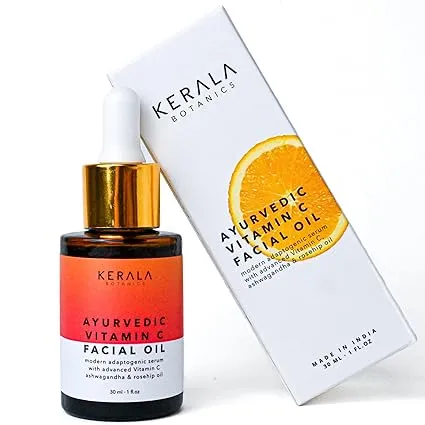
Ayurvedic Vitamin C Face Oil
Kerala Botanics
$49
★★★★☆
Instead of: Separate niacinamide serum + peptide serum + moisturizer Try: A moisturizer that leads with peptides and barrier-supporting ingredients.
The Ordinary’s Multi-Peptide + HA Serum is a reasonable consolidator here. It stacks multiple peptide complexes with hyaluronic acid so you’re covering both anti-aging support and hydration in one lightweight layer. At $18, it also makes room in your budget if you want to spend more on a quality SPF.
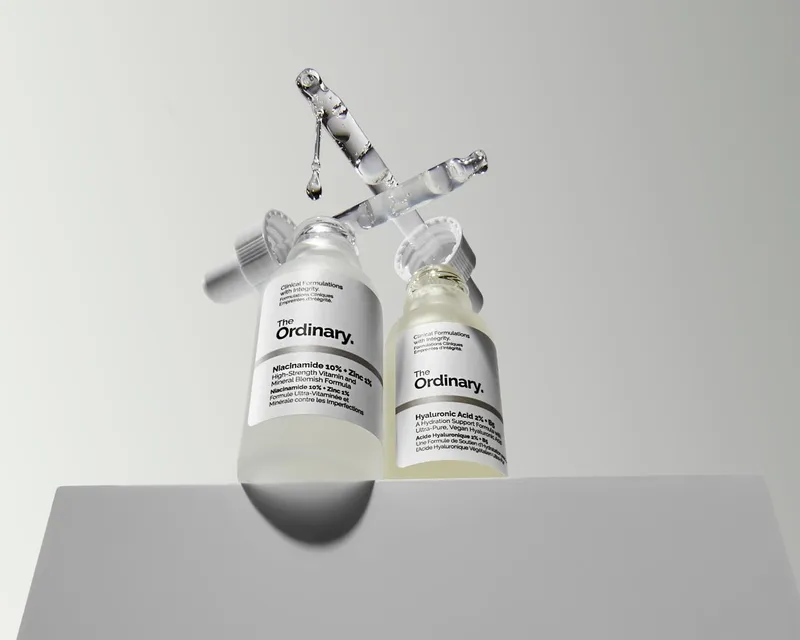
Multi-Peptide + HA Serum
The Ordinary
$18
★★★★☆
For barrier-first skin types, a moisturizer with built-in actives removes the need for a separate treatment step. Topicals’ Barrier Culture Moisturizer covers ceramides, postbiotics, and centella asiatica together — which means you’re not running a separate barrier serum underneath.
Barrier Culture Moisturizer
Topicals
$38
★★★★☆
Step 4: Don’t Touch the SPF Slot
The one rule in a streamed routine that doesn’t flex: SPF is its own step. Combination moisturizer-SPFs exist and some are acceptable for incidental sun exposure, but if you’re outside for any real duration, you need a dedicated sunscreen applied at the right amount — roughly a quarter teaspoon for your face alone. How much you apply matters as much as which product you use.
EltaMD UV Clear is worth pointing to here because it does something useful beyond basic SPF: it contains niacinamide, which helps with redness and tone. So while it doesn’t replace your SPF step, it does add a functional active to a product you were already going to use.
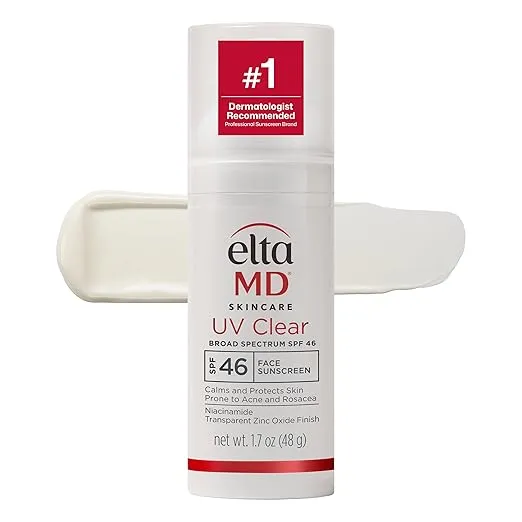
EltaMD UV Clear Broad-Spectrum SPF 46
EltaMD
$42
★★★★½
The Ingredient Compatibility Question
One concern worth addressing: when you consolidate actives into fewer products, are you losing efficacy because of incompatible ingredients?
Sometimes, yes. This is actually an argument for thinking carefully rather than just grabbing any “multi-tasking” product off a shelf. A product that combines vitamin C and a strong AHA may sound efficient, but L-ascorbic acid is already unstable, and adding more low-pH ingredients to the mix doesn’t help. Similarly, products that mix retinol with strong chemical exfoliants may over-sensitize even where individual use of each would be fine.
The formats that tend to work well for streaming are those where the actives have compatible delivery mechanisms — oil-soluble ingredients together, hydration-focused layers together, SPF as its own category. The skin cycling method is a related approach: it doesn’t consolidate products so much as it separates active nights from recovery nights, which reduces the compatibility problem by scheduling instead of formulating around it.
Who This Works For (and Who Should Be Careful)
Skin streaming works best when your skin is currently stable and you know what it needs. If you’re actively working through barrier damage, a retinoid adjustment period, or active acne, a consolidated routine can make it harder to identify what’s helping or hurting.
It’s also easier to stream when your concerns are preventive rather than corrective. Someone in their mid-20s maintaining healthy skin with antioxidants and SPF can cover almost everything in three products. Someone treating melasma or hormonal acne may genuinely need more targeted actives in separate slots to get clinical results.
Oily skin types should be thoughtful about which multi-taskers they choose. Many of the best-performing consolidated products are oil-based, which works beautifully for dry skin but can be too rich for people who are already managing excess sebum.
Putting It All Together
The simplest version of a skin-streamed morning routine: a cleanser, a multi-functional serum or treatment layer that covers your active concern, and a dedicated SPF that ideally brings something extra (niacinamide, antioxidants). Three products. Everything else is optional.
For evenings, the consolidated face oil approach makes more sense — you don’t need SPF, and a well-formulated oil can handle vitamin C, a retinol alternative, and moisturization simultaneously.
The difference from skinimalism is that none of those slots are empty. You’re not just using fewer things because fewer is philosophically correct. You’re using fewer things because each one earns its space. That’s the part worth holding onto.
For more on how to think about what goes where, the complete morning skincare routine and complete evening skincare routine guides cover the sequencing logic in more detail. If you’re deciding between actives within a streamed routine, Niacinamide vs Vitamin C is a good place to start.